Dr. Joseph A. Kéchichian to Gulan: The world is on the brink of a major shift in international relations over the War for Iran
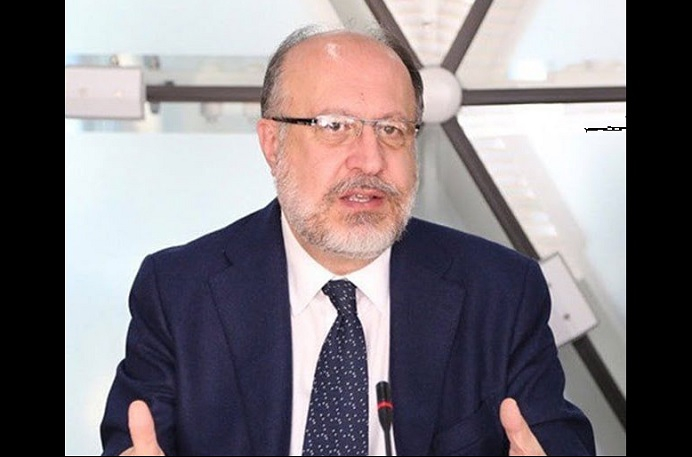
Dr. Joseph A. Kéchichian is a senior fellow at the King Faisal Center for Research and Islamic Studies in Riyadh, Saudi Arabia. The author of several books, including Legal and Political Reforms in Saudi Arabia (Routledge, 2013), Power and Succession in the Arab Monarchies (Lynne Rienner, 2008), Faysal: Saudi Arabia’s King for All Seasons (University Press of Florida, 2008), and Succession in Saudi Arabia (Palgrave, 2001), his latest work is ‘Iffat Al Thunayan: An Arabian Queen (Sussex Academic Press, 2015). In an exlusive interview He answered our questions like the following:
Gulan: For many years, Gulf governments have seen the Strait of Hormuz as both a strategic advantage and a risk. Are we seeing a more significant shift in the Gulf security order, or are the current tensions just a passing crisis?
Dr. Joseph A. Kéchichian: The world is on the brink of a major shift in international relations over the War for Iran. Regrettably, this is no ordinary crisis, and the fate of the Straits of Hormuz is still very much unsettled. Arab Gulf governments are caught in a bind: the risk of more or less permanent tensions versus a long-lasting outside presence that will determine outcomes for years to come.
Gulan: You've written a lot about Oman's autonomous foreign policy. Can Oman realistically continue to play its historic position as a neutral mediator at a time when regional actors are under increasing pressure to take sides, or is strategic neutrality becoming more difficult to maintain?
Dr. Joseph A. Kéchichian: Oman will not change its foreign policy direction because its strategic interests have, and will, not change. As a custodian of the channels that ensure relatively free navigation through the Straits of Hormuz, the Sultanate will want all parties in regional disputes to settle their differences without the excessive use of violence. Muscat will also offer its services to bring warring factions together. Its neutrality is not a luxury but a deliberate choice. And all of its GCC partners approve this wise choice.
Gulan: How may the political and economic calculations of Gulf monarchs, whose legitimacy has traditionally been associated with wealth and stability, change if disturbances in the Strait of Hormuz become more frequent?
Dr. Joseph A. Kéchichian: The creation of wealth is now a necessity in Gulf Cooperation Council states. Member-states can no longer simply rely on natural resources to thrive and prosper, which means that all political and economic calculations will require fresh updates: you create wealth by encouraging entrepreneurship. Otherwise, your putative wealth disappears—slowly but surely.
Gulan: Compared to many Arab republican governments, Gulf monarchs have proven remarkably resilient throughout history. What accounts for this resilience, do you expect that the current difficulties might put them to the test in hitherto unheard-of ways?
Dr. Joseph A. Kéchichian: Gulf resiliency is chiefly due to: (1) lack of ephemeral ideologies that aim to destroy foundations and, presumably, replace them with something better; (2) solid reliance on socio-religious norms that withstood the tests of time; and (3) small but resilient populations that accepted monarchical authority. It also helped, at least in the 20th century, to have relatively reliable foreign partners that guaranteed security. Above all else, Arab Gulf monarchies relied on patriarchy to rule, which is always a reliable tool in conservative societies—especially when fratricide is the level at which social differences are settled.
Gulan: Beyond the current crisis, what do you think will be recognized as the key issue facing Gulf monarchs in the twenty-first century: regional rivalry, succession, economic transformation, or the pursuit of a new political agreement between the state and society?
Dr. Joseph A. Kéchichian: All of the above. Conservative Arab Gulf monarchies need to address regional rivalries with Iran, Iraq, Israel and Yemen. They also need to streamline succession mechanisms although we are now in a stable period in all six countries. Naturally, the great challenge is that of economic transformation, with the creation of wealth a priority. Of course, because these are “monarchies,” few pay attention to the need to recreate the political concordat between rulers and their subjects, though the way to go is probably the establishment of constitutional monarchies. Oman is most likely to be the first to adopt such a mechanism, followed by the rest. As to when that might happen is difficult to know but GCC States will have no choice but to embark on it.
Gulan: What is the most important strategic lesson from the region's past that Gulf leaders should bear in mind as they deal with the uncertainty surrounding the Strait of Hormuz and the larger Middle East?
Dr. Joseph A. Kéchichian: That Iran, when it was a monarchy under the Pahlavi Dynasty, would remain a stable society. Arab Gulf monarchies believed that Tehran’s strategic interests were similar to theirs’ but it turned out that the mullahs shared only hegemony with the late Shah Muhammad Reza Pahlavi. Arab Gulf rulers cannot afford to ignore this lesson.
Gulan: Is it premature to say that the Gulf has entered a post-American age of regional politics? Over the next ten years, which indicators should academics and policymakers pay particular attention to?
Dr. Joseph A. Kéchichian: It is premature. The United States is not going anywhere anytime soon. Over the next decade, GCC States must recalibrate all of their international relations, if they are to survive and thrive.
Gulan: You have devoted a significant portion of your professional life to researching the connection between Gulf governance and stability. Is stability still the best indicator of effective governance, or are Gulf cultures calling for new kinds of engagement and accountability?
Dr. Joseph A. Kéchichian: Without domestic and regional stability, GCC States will be in revolutionary phases, always dangerous for any society. Even as GCC member-states search new engagements and learn to become more accountable to their own peoples, the single most important criteria for internal harmony is socio-economic stability. All Gulf countries have legitimate political rules but governments must, above all else, ensure stability. Only that will guarantee the creation of wealth.
Gulan: Regional rivalries have had a significant impact on Iraq for decades. Do you think Iraq has a chance to become a pillar of regional stability as the Middle East goes through another phase of uncertainty and geopolitical realignment, or is it still limited by the effects of previous conflicts and current power struggles
Dr. Joseph A. Kéchichian: The post-Ba‘ath Party Iraq is a work in progress that confront intrinsic challenges. Mercifully, and despite ethnic and religious tensions, Iraq’s wealths [in the plural for its human capabilities and its natural resources (oil and water)] will allow it to acquire internal stability. That is the great challenge that its leaders must surmount. In time, and because of its Arab identity, chances are good that Baghdad will get closer to both Jordan and the GCC monarchies as well as nascent republics in Syria and Lebanon. It must closely watch Iran and Turkey, its two rivals, and while it ought to maintain cordial ties with both Tehran and Ankara, it cannot entangle itself in their ideological schemes. Doing so would not be wise.