Professor Robert Mason to Gulan: Iraq could potentially serve as a useful venue for dialogue and de-escalation
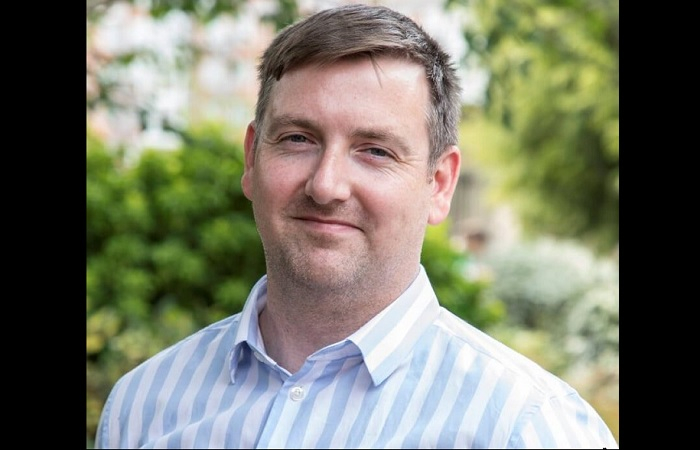
Professor Robert Mason is an Associate Professor at the Anwar Gargash Diplomatic Academy in Abu Dhabi. He is also an Associate with NATO Watch and a Non-Resident Fellow at the Arab Gulf States Institute in Washington. His previous senior appointments include Director of the Middle East Studies Center at the American University in Cairo (AUC) and Senior Non-Resident Fellow at the Gulf Research Center. At AUC, Professor Mason held formal responsibility for academic and professional staff, budgets, strategy, programme and curriculum development, quality assurance, and accreditation. He worked across the university as Chair of a center advisory board, a member of multiple academic advisory boards, and the Graduate Affairs Council, contributing to institution-wide delivery of teaching and learning. His leadership and management expertise is supported by executive education from the Sauder School of Business (University of British Columbia), the University of California, Riverside, and the Harvard Kennedy School. In an exclusive interview He answered our questions like the following:
Gualn: You contend in your book “Saudi Arabia and the United Arab Emirates: Foreign policy and strategic alliances in an uncertain world (Identities and Geopolitics in the Middle East”) that the UAE and Saudi Arabia have used economic statecraft and a variety of relationships to attain strategic autonomy. Has this tactic made them more resilient in the face of the current Strait of Hormuz tensions, or does the situation highlight the limitations of major power hedging?
Professor Robert Mason: I think so, but there are differences between economic statecraft and broader hedging with great powers. The current tensions suggest that Gulf efforts to diversify partnerships and expand economic statecraft have increased resilience, although they have not eliminated vulnerability. The various economic engagements between the UAE and international partners, including through Comprehensive Economic Partnership Agreements (CEPAs), serve not only commercial objectives but also strengthen economic resilience and potentially support defence-industrial development. Likewise, inward investment through sovereign wealth funds (SWFs) creates longer-term indigenous capabilities and expands strategic options. We have also seen a consistency in bilateral relations with major powers and traditional GCC allies, providing both short-term security support and longer-term industrial and technological cooperation. However, the Strait of Hormuz crisis also demonstrates that hedging cannot fully insulate states from geographically rooted security risks.
Gulan: In an increasingly multipolar world, the Gulf states have made a greater effort to establish themselves as powerful middle powers. When regional security problems jeopardize the fundamental logistical and economic networks that underpin their influence, how sustainable is this strategy?
Professor Robert Mason: During past shocks, such as the 2007–08 financial crisis, GCC states were often able to turn disruption into opportunity by expanding investments and deepening integration into the global economy. The current crisis is different because it directly affects the trade, energy, and logistics networks that underpin Gulf influence. The key issue is therefore resilience and adaptation. There is already greater emphasis on alternative supply routes, de-escalation initiatives, and policies that balance security requirements with economic development goals. While GCC states face different levels of exposure and diversification, their ability to remain effective middle powers will depend on how quickly they can adapt to changing geopolitical and commercial realities. It remains too early to determine the long-term consequences.
Gulan: Could we witness a fundamental reconsideration of Gulf foreign policy priorities—from projecting influence abroad to prioritizing economic and energy security at home—if interruptions in the Strait of Hormuz continue?
Professor Robert Mason: Saudi Arabia had already shifted significant attention inward through Vision 2030 and its economic transformation agenda. For the UAE, however, whose growth model is built on international connectivity and global commercial engagement, a retreat from external engagement is neither practical nor desirable. Rather than fundamentally changing foreign policy priorities, prolonged disruptions in the Strait of Hormuz are more likely to reinforce efforts to protect trade routes, strengthen economic resilience, and deepen cooperation with external partners. In that sense, economic security at home and engagement abroad remain mutually reinforcing rather than competing objectives.
Gulan: Saudi Arabia and the UAE have invested heavily in becoming global hubs for trade, logistics, finance, and technology. Does the current crisis accelerate these ambitions by demonstrating the need for diversification, or does it expose their continued vulnerability to regional geopolitics?
Professor Robert Mason: The current crisis demonstrates both the strengths and vulnerabilities of the Gulf's hub strategy. Saudi Arabia and the UAE are central to regional trade and energy flows, although Saudi Arabia possesses greater redundancy through Red Sea access. Hubs, like trade routes, are not static; they evolve in response to geopolitical and economic pressures. For example, NEOM has been promoted as a strategic hub linking Europe, the Gulf, and Africa. The lesson is not that hub strategies are flawed, but that their success increasingly depends on diversification, redundancy, and the ability to withstand geopolitical shocks.
Gulan: You have published a great deal regarding alliance patterns and threat perceptions. Has the current crisis changed Gulf leaders' perceptions of the dependability of established security allies, especially the United States, in contrast to new allies like China and India?
Professor Robert Mason: Yes, although this shift predates the current crisis. Over the past decade, concerns have emerged regarding the reliability of U.S. commitments and the growing conditionality attached to aspects of the bilateral relationship. This has encouraged Gulf states to diversify their external partnerships and engage more actively with powers such as China, India, and, to a lesser extent, Russia. However, there remains no viable substitute for the United States as the principal external security guarantor in the Gulf. Consequently, diversification is likely to complement rather than replace GCC-U.S. security cooperation, particularly as new areas of collaboration emerge in technology, artificial intelligence, and defence.
Gulan: The Saudi-UAE relationship has often been characterized as both a strategic partnership and a quiet rivalry. In a period of heightened regional instability, are Riyadh and Abu Dhabi likely to deepen coordination, or could competition for influence and investment become more pronounced?
Professor Robert Mason: There are many crossing-cutting issues between them, including economic, political and security considerations. As I have argued elsewhere, regime security remains a powerful factor binding these states together against common threats. Within that framework, economic issues - such as the UAE’s decision to withdraw from OPEC - and shifts in regional policies may create periodic tensions. However, given the pace of regional change and evolving alignments, closer coordination both bilaterally and within the GCC remains the more likely outcome.
Gulan: The Gulf is entering a post-American, but not yet totally multipolar, security climate, according to several commentators. What form of regional order do you envision developing over the next ten years, and do the current Hormuz tensions support this assessment?
Professor Robert Mason: It is premature to speak of a comprehensive regional security architecture, particularly given the setback in U.S.-Iran negotiations and the absence of sufficient trust among key actors. Over the next decade, the most plausible outcome is not a transformative new order but a gradual and uneven process of confidence-building centred on practical issues such as maritime security, energy infrastructure protection, and economic connectivity. The current Hormuz tensions reinforce the importance of safeguarding freedom of navigation and protecting critical maritime chokepoints. At the same time, they highlight the limitations of existing security arrangements and raise questions about the willingness and ability of external powers—including the United States—to guarantee regional stability on their own.
Gulan: What do you believe will be the most important long-term effect if the Strait of Hormuz crisis is a turning point in regional politics: shifts in the Gulf's power dynamics, energy markets, alliance structures, or state legitimacy?
Professor Robert Mason: The most important long-term consequence may be the erosion of deterrence and the normalization of persistent low-intensity confrontation. I have argued elsewhere that traditional deterrence mechanisms in the region have weakened considerably, creating conditions in which periodic escalation becomes increasingly likely. If this trend continues, Gulf states may place greater emphasis on diplomacy, crisis management, and coalition-building rather than relying solely on military balances. The crisis may also create opportunities for greater cooperation between European, Gulf, and Asian partners seeking to preserve regional stability and protect critical trade routes.
Gulan: Between Iran, the Arab Gulf states, and the larger Middle East, Iraq holds a special place. Do you see Iraq emerging as a conduit for communication and de-escalation in light of the present Strait of Hormuz tensions and growing regional polarization, or is it growing more susceptible to the conflicting strategic goals of regional and global powers?
Professor Robert Mason: Iraq played an important role in facilitating Saudi-Iranian normalization and remains one of the few regional actors capable of maintaining channels of communication with multiple sides. As a result, it could potentially serve as a useful venue for dialogue and de-escalation. At the same time, Iraq remains vulnerable to competing regional and international pressures. Iranian-aligned militias, domestic political fragmentation, and the risk of spillover from any future U.S. or Israeli actions against Iran continue to constrain Baghdad's room for manoeuvre. Whether Iraq emerges as a bridge or a battleground will depend largely on its ability to strengthen state institutions and diversify its economy in the years ahead.