Arun Dawson to Gulan: Drones Are More Likely to Contribute to Ongoing Pressure and Instability Than Fundamentally Alter the Balance of Power
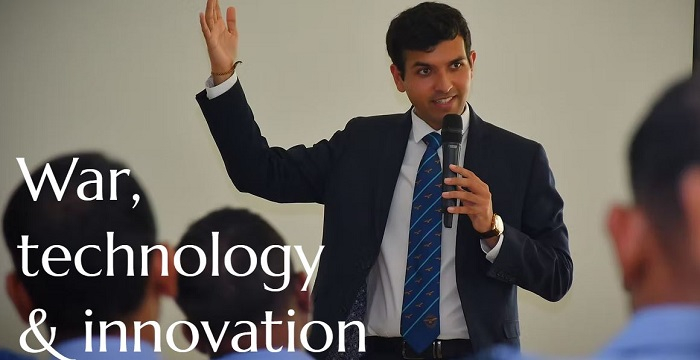
Arun Dawson is a PhD candidate at the Freeman Air and Space Institute, King's College London, and a Researcher with the RUSI-led Nuclear Deterrence Network (NDN). He specializes in defence acquisition, drone warfare, airpower, and grand strategy, with particular focus on the strategic impact of emerging military technologies and modern conflict dynamics. Alongside his academic work, Dawson serves as Parliamentary Researcher to The Lord Stirrup, former Chief of the Defence Staff of the United Kingdom. He previously held positions at NATO Headquarters, the Baltic Defence College, and the Smithsonian Institution as a Guggenheim Fellow. His expertise on drones, airpower, and military innovation has been featured by media outlets including the BBC and The Conversation
Gulan: In your analysis of how the United States replicated a relatively low-cost Iranian drone design, you highlight the speed at which military technologies can diffuse and be adapted. What does this case reveal about the changing barriers to entry in modern warfare?
Arun Dawson: This case highlights a reduction in the barriers to entry for airpower, particularly precision strike. In the past, accurate air-delivered effects depended on expensive platforms, advanced sensors and large inventories of precision-guided munitions – capabilities concentrated in a small number of countries, especially the United States.
The growing maturity of uncrewed systems is changing this. For example, at its peak, Daesh used improvised drones against US and Iraqi forces, conducting 60-100 drone attacks per month. Recent conflicts including Nagorno-Karabakh, Russia-Ukraine and Iran-Israel show that similar volumes can now be achieved per salvo. This is because drones are no longer limited to improvised or “artisanal” approaches by non-state actors; they are now being produced, modified and deployed at scale with direct support from national defence industries. This enables sustained operations using large numbers of low-cost systems and, importantly, gives the attacker a cost advantage, since defence against these threats remains expensive.
In response, Western militaries are adapting through a “high–low mix” of capabilities, combining advanced platforms like fighter jets with cheaper, expendable systems such as drones. While defensive measures still rely on costly interceptors – just see the cumulative cost to the US of using Patriot and THAAD to defend against Iranian attacks – drones can allow cheaper long-range strike, helping to partially rebalance the cost dynamic.
Gulan: Your work often explores how the development and production of military technology interact with international relations. In the case of drones, do you see innovation being driven more by technological capability or by operational necessity on the battlefield?
Arun Dawson: The primary driver behind the adoption of uncrewed systems is cost efficiency. Technology just offers new ways of solving old problems, but technologies often take root when those new ways solve old problems economically. Drones offer lower-cost solutions across a range of “dull, dirty and dangerous” mission sets. This is why they are sometimes described as a “poor man’s cruise missile,” reflecting their ability to deliver similar effects in some scenarios at a fraction of the cost.
For “dull” tasks such as intelligence, surveillance, and reconnaissance (ISR), drones provide a clear advantage. They can remain fly above a certain point for long periods at lower cost than crewed aircraft, reducing pressure on scarce and highly trained personnel. Some small drones also offer access to confined spaces that larger platforms cannot reach.
For “dirty” and “dangerous” tasks, the benefit is reduced risk. Uncrewed systems allow missions – such as inspecting hazardous sites like the Zaporizhzhia Nuclear Power Plant or operating in heavily defended areas – to be conducted without exposing personnel or expensive aircraft to direct threat.
So, drones do not replace existing systems entirely, but they often provide similar effects at lower cost. This makes them particularly relevant in large-scale, attritional warfare.
Gulan: Given your background in both engineering and security studies, how should policymakers better understand the relationship between technical performance and strategic effect, particularly when relatively simple systems can deliver outsized impact?
Arun Dawson: Policymakers should place greater emphasis on a systematic comparison of capabilities, or “net assessment,” covering adversaries, allies and other actors. As well as academic approaches, defence attaché networks and officer exchange programmes are central to net assessment efforts.
The 2019 Abqaiq-Khurais attack is a good example. Drones attacked critical infrastructure in Saudi Arabia with significant effect, demonstrating a concept later successfully adopted by Russia and Iran. However, early reporting by military personnel on these new tactics did not translate into sustained policy attention, highlighting the challenge of linking observation to strategic interpretation.
Historical context is also important, as it provides useful context for interpreting current developments. The rise of drones, for example, does not remove the relevance of artillery or armoured systems, but does point to new combinations of capabilities.
Finally, policymakers should approach emerging technologies with intellectual humility but not naivety. They should be openminded about learning how best uncrewed systems can be used in combat, but they should also be wary of their track record – drones remain labour intensive and vulnerability to weather, electronic warfare and even rifle fire. Recent US losses of Reaper drones, costing $700m in total so far, underline that technology alone is no “silver bullet.”
Gulan: Recent conflicts have demonstrated the growing role of loitering munitions and drone warfare in shaping military outcomes. From a strategic perspective, do these systems primarily enhance precision and efficiency, or do they introduce new risks of escalation due to their accessibility and deniability?
Arun Dawson: My previous answers focus on how drones can contribute to enhanced precision and efficiency, so let me concentrate here on their accessibility and deniability.
Because these systems are relatively low-cost and widely available, drones can be used by a broad range of actors, complicating attribution. In the Abqaiq-Khurais attack, for example, there was initial uncertainty over whether the strike originated from Houthi forces or Iran. Similar ambiguity in other cases (such as recent drone sightings in Denmark and Ireland) raises the risk of misattribution and, in theory, unintended escalation.
In practice, however, states tend to apply a high evidentiary threshold before assigning responsibility, which moderates escalation risks. There is also some evidence of emerging behavioural norms: incidents involving the loss or interception of drones have not consistently triggered retaliation. For instance, Iran’s shootdown of a US Northrop Grumman RQ-4 Global Hawk in 2019, and the loss of a US General Atomics MQ-9 Reaper over the Black Sea in 2023, did not lead to direct kinetic responses. But your question does require further study as these technologies evolve.
Gulan: As more state and non-state actors acquire and adapt drone technologies, how do you assess the future of deterrence in the air domain? Are traditional concepts of air superiority being fundamentally challenged?
Arun Dawson: Uncrewed systems do not overturn air superiority, but they do complicate how control of the air is achieved. This could involve attacking airbases, logistical support or aircraft directly. Drones introduce alternative methods of doing this but at lower cost. For example, Operation Spiderweb involved drones secretly transported into Russia using lorries, which were then used to destroy 20% of Russia’s strategic aircraft while they were sitting on the tarmac. This illustrates how relatively low-cost systems can impose meaningful risk on high-value air assets.
But even without causing damage, drones can disrupt operations. Mere reports or sightings of drones operating at low altitude may lead commanders to delay or restrict flight operations, particularly where there is uncertainty about the level of threat - like an aerial minefield between the ground and cruising altitude. This is similar to the reluctance of companies to send vessels through the Strait of Hormuz due to the risk of hitting a mine.
From a deterrence perspective, the fact that high-end platforms may face higher loss or disruption rates before they even leave the runway means that the focus of a future conflict may shift towards the ability of industry to sustain operations over time. This makes industry a vital part of air superiority.
Gulan: In the context of the Kurdistan Region of Iraq, where security threats increasingly include drone and missile attacks from both state and non-state actors, how might the continued diffusion of low-cost aerial technologies reshape regional security dynamics? Additionally, what implications could this have for local defense capabilities, external partnerships, and the broader balance of power in the region?
Arun Dawson: Since I am no specialist in regional dynamics I won’t comment specifically, but in general terms, I do believe that the spread of low-cost drones and missile systems is likely to increase the frequency of low-intensity, hard-to-attribute attacks against infrastructure and military targets. Such systems reduce the need for advanced airpower, allowing a wider range of actors to generate strategic effects at relatively low cost.
As I previously mentioned, drones can complicate deterrence by lowering the threshold for action and obscuring attribution. However, their effects are typically limited unless employed at scale and as part of a wider strategy. As such, they are more likely to contribute to ongoing pressure and instability than in fundamentally altering the balance of power on their own.
By Kobin Ferhad