Dr. Matthew D. Stephen to Gulan: Power is more evenly distributed amongst powers that see the world very differently
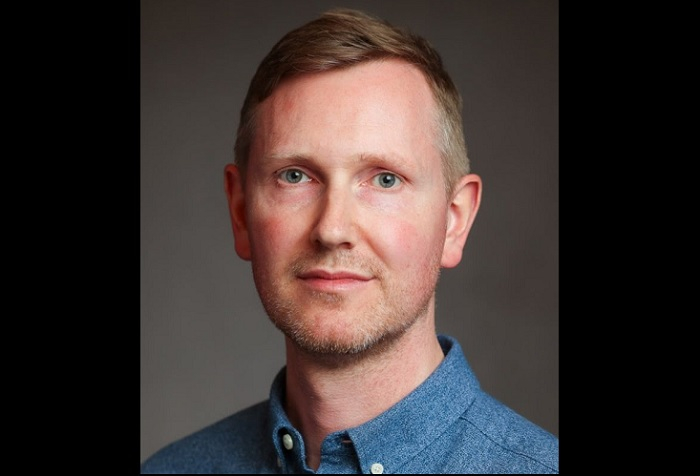
Matthew D. Stephen is the Professor of International Political Economy at the Helmut Schmidt University Hamburg and a member of the Heisenberg Programme of the German Research Foundation (DFG). Previously He was a Senior Researcher in Global Governance at the WZB Berlin Social Science Center. He Has also held visiting positions at the University of Oxford, University of Sydney, Hitotsubashi University, Ludwig Maximilian University Munich, and the German Institute for Global and Area Studies (GIGA) Hamburg. His research analyses change in global order brought about by shifting relations of power. This ranges from rising powers' impact on liberal order through to changing staffing patterns within international organizations. His current DFG-funded research project "China's Bid for Hegemony?" investigates China's role in creating new global governance institutions. He is also Principal Investigator of the project "Ideology of Empire: China’s Ideational Binding Practices in Global Governance" within the DFG-founded Research Unit "Learning Empire: Autonomy, Dependence, and China’s Emerging Imperial Practices". In an exclusive interview He answered our questions like the following.
Gulan: Many analysts contend that a type of "multipolarity without multilateralism"—a dispersion of power coupled by a decline in international cooperation—is what the world is heading toward. What threats does this represent to international stability, and do you think it's the defining task of our time?
Dr. Matthew D. Stephen: here are indeed signs of a decline in international cooperation. We see this in the faltering effectiveness of major multilaterals such as the World Trade Organization and the UN Security Council, a shift from economic integration to reducing economic vulnerabilities, and in a worsening global security situation. But I would not describe this as multipolarity without multilateralism. There are two reasons. First, multipolarity suggests a world of multiple, roughly equal great powers. But the United States and China have emerged as the key powerbrokers today. Second, multilateralism remains robust, but it takes place less in universal settings such as the UN General Assembly, and more in clubs and region-based groupings. It remains a defining task of our time to stabilize the relationship between the major powers and maximize the possibility for cooperation between them.
Gulan: Unilateral actions by major nations are increasingly justified by claims of national security, sovereignty, or civilizational interests. Are rival centers of power just reinterpreting international rules, or are they losing their influence?
Dr. Matthew D. Stephen: Some powers—such as Russia—are indeed losing their global influence and are seeking to dominate their regions. Other powers, such the United States and China, are reinterpreting international rules to suit their current interests. But in doing so, they risk undermining the rules completely because everybody can espouse their own preferred interpretation. If there is no agreement on what the rules mean, there is little the rules can do to regulate behaviour.
Gulan: Armed conflicts, climate change, technological competitiveness, migration pressures, and economic fragmentation, or weaponization of economic interdependence, all seem to be coexisting challenges for the international system. Do current international organizations have the authority and competence to deal with these interrelated issues, or does global government need to be fundamentally redesigned?
Dr. Matthew D. Stephen: International organizations would be well-placed to address many of the major challenges for world politics. The problem is rather the states and major powers that are their members. If the states themselves are not willing to compromise and invest in multilateral cooperation, there is little that international organizations can do. An overhaul of global governance would probably need to accommodate a greater role for regions and like-minded clubs.
Gulan: The escalating conflict between China and the United States is sometimes likened to earlier great-power contests. What distinguishes the current geopolitical struggle, in your opinion, and how might it change international institutions in the ensuing decades?
Dr. Matthew D. Stephen: There are historical parallels to today’s competition between China and the United States, but in many ways the differences are starker. Economic and societal interdependence remains high, territorial control has become less decisive in geopolitical competition, and ideological differences play less of a role than during the Cold War. States can also learn from the disastrous track record of the twentieth century. The outlook for international institutions is that they will remain widespread and important, but play less of a role in mediating relations between the major powers.
Gulan: A shift from an international order based on norms to one that is more transactional and power-driven is being discussed more and more. What may global governance look like in ten or twenty years if this trend persists, especially for smaller and middle-class nations that depend significantly on international organizations?
Dr. Matthew D. Stephen: It would not look very attractive. The key point is that global governance will not be able to “have it all”. It will be increasingly difficult to realize cooperation through institutions that are simultaneously global in membership, able to make binding decisions, and cover a broad range of issues. Most likely, we are heading towards a world characterized more by lightly-institutionalized “deals” and more densely-institutionalized “clubs”. Smaller and middle-class nations should seek out partners to avoid being singled-out and combine their efforts. There is safety, but also influence, in numbers.
Gulan: You contend in your paper, "The Diffusion of Global Power and the Decline of Global Governance” that the deterioration of efficient global governance is a result of the spread of global power. Have current crises strengthened your position in light of developments since the article's publication, or have you seen indications that international organizations are effectively adjusting to this new power structure?
Dr. Matthew D. Stephen: I don’t see any signs that the fundamental dilemma has been overcome. We live in a world where power is more evenly distributed amongst powers that see the world very differently. This has led to a decline of governance at the global level. There are also signs of states responding to this new reality at regional levels and in like-minded clubs. For example, the European countries may cooperate more closely, and other powers such as Canada, India and Japan are seeking out new relationships.
Gulan: According to your study, emergent powers have become more powerful without necessarily fortifying systems of communal governance. What changes would be required to bring the demands of effective international cooperation and problem-solving into line with the reality of a more distributed global power structure?
Dr. Matthew D. Stephen: There would need to be greater clarity around what the major powers can agree on and how they might go about achieving this, even when they disagree fundamentally in other areas. This will of course be next to impossible if leaders and movements come to power that reject the idea of international cooperation completely, or deny that major problems such as climate change really exist.
Gulan: Tensions around the Strait of Hormuz and the current showdown between the United States and Iran have demonstrated how regional conflicts can have immediate effects on global security and the economy. How far does this situation support your claims regarding the spread of world power and the deteriorating ability of current global governance organizations to control strategic chokepoints and stop rival powers from escalating?
Dr. Matthew D. Stephen: I don’t think that the United States’ and Israel’s attack on Iran and the subsequent regional conflagration are directly related to the spread of world power, but it is part of the worrying sign that multilateral institutions and international law are ignored. The good news is that Iran’s potential supporters—Russia and China—have shown little sign of being able or willing to intervene. This suggests that the conflict will remain regional, even if it has global consequences.