IRGC Commander Killed in Clashes With Armed Group in Southeastern Iran
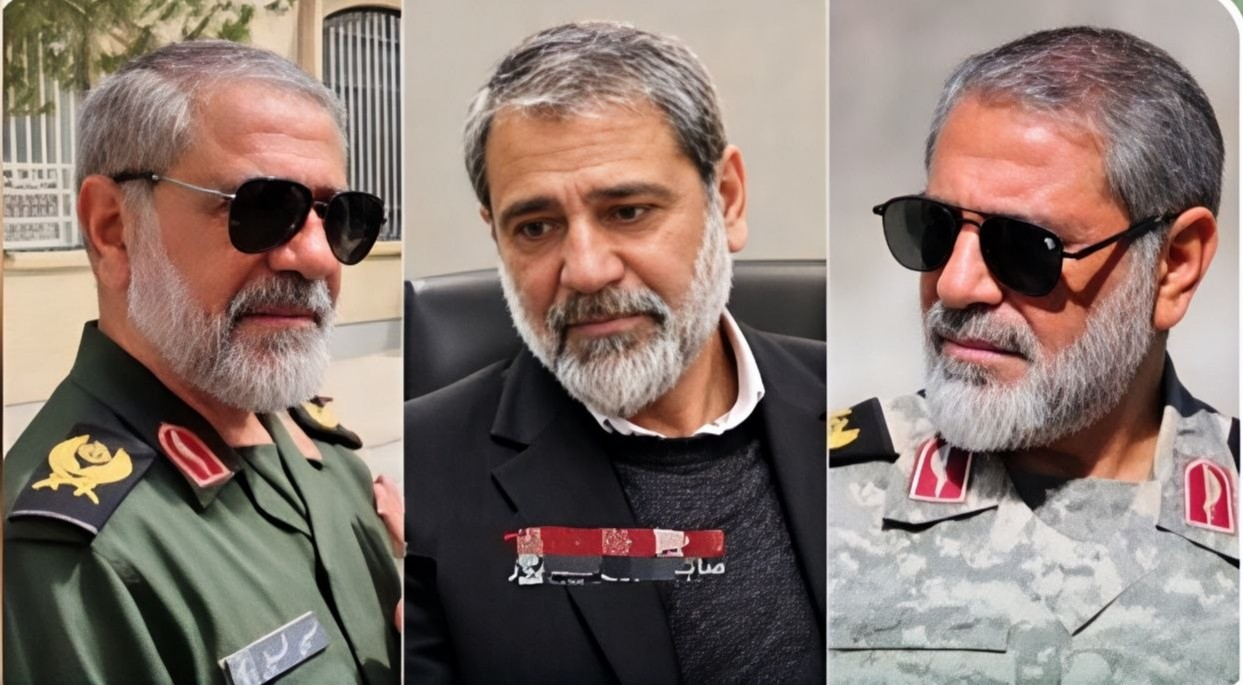
A senior commander of Iran’s Islamic Revolutionary Guard Corps (IRGC) was killed Wednesday during clashes with an armed group in southeastern Iran, marking the latest major confrontation in Sistan and Baluchestan province less than two weeks after three Iranian security personnel were killed in a separate clash in the same area.
The IRGC Ground Forces’ Quds Base identified the officer as Brig. Gen. Hossein Zarifi, commander of the Shahid Sajjad Operational Headquarters in Saravan County. Iranian state media reported that Zarifi was killed during an operation against an armed group in the Jihadabad area of Saravan, near Iran’s border with Pakistan.
According to the IRGC, its forces dismantled an armed cell during the operation, killing five of its members and arresting others. Iranian authorities also said weapons and ammunition were recovered from the group’s hideout. The reported militant casualties have not been independently verified, and Iranian authorities have not officially identified the group involved.
Regional reports and analysts have linked recent fighting in Saravan to the Popular Fighters Front, a coalition of Baloch armed factions that has emerged as a new organizational layer within the province’s longstanding insurgency.
The latest confrontation follows a deadly clash in Saravan on Sept. 12, when the IRGC’s Quds Base reported that three Iranian security personnel and four militants were killed during an operation targeting an armed cell. Iranian authorities said the operation involved the IRGC, the Intelligence Ministry and the Law Enforcement Command and was directed against a group allegedly planning an assassination operation.
The two incidents were separate, but they underscore a broader pattern of armed confrontations and security operations in Sistan and Baluchestan. A recent analysis by Al-Monitor said the Sept. 12 fighting involved the Popular Fighters Front, described as a coalition of several Baloch factions. Jaish al-Adl, one of the most prominent Baloch armed groups operating in the region, has been reported as part of the coalition, although the group continues to be identified separately in reporting on attacks and militant activity.
Sistan and Baluchestan, Iran’s southeasternmost province, borders Pakistan and Afghanistan and has experienced years of armed attacks, sectarian tensions, smuggling and economic underdevelopment. Baloch armed groups have repeatedly targeted Iranian security forces, while Tehran has responded with extensive military and intelligence operations.
Jaish al-Adl, a Sunni Baloch militant organization that has operated in the province since 2012, has claimed responsibility for several attacks against Iranian security forces. Tehran designates the group as a terrorist organization. The emergence of the Popular Fighters Front has added another layer to the province’s already complex militant landscape, bringing together several Baloch factions while Jaish al-Adl continues to be separately referenced in reports about attacks.
The violence has also raised concerns in neighboring Pakistan, which shares a roughly 900-kilometer border with Iran. The frontier has long posed security challenges for both countries because of its difficult terrain, cross-border tribal connections, armed groups and illicit trafficking.
Tensions between Iran and Pakistan escalated in January 2024, when the two countries exchanged strikes against alleged militant targets after Iran carried out attacks inside Pakistan, prompting a Pakistani response. The episode was followed by efforts by both governments to strengthen security cooperation along the border.