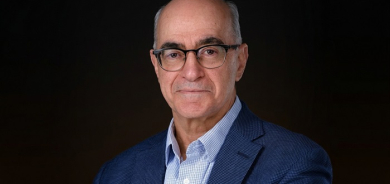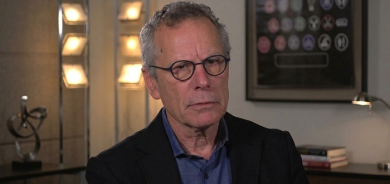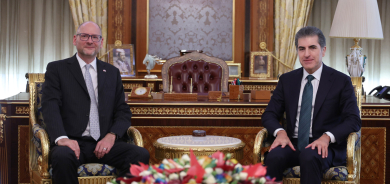
Yaniv Voller to Gulan: “I See the Peshmerga as a National Defense Force, Even a National Army”
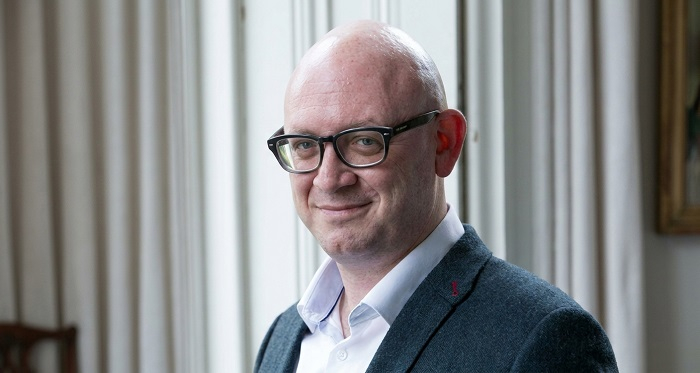
The Middle East scholar examines the dangers of armed groups beyond state control, the national role of the Peshmerga and the challenges of integration in Iraq.
Dr. Yaniv Voller is a Senior Lecturer in Middle East Politics at the University of Kent and an Associate Fellow at the Royal United Services Institute. A specialist in civil wars, insurgency, counterinsurgency and irregular armed forces, his research addresses the relationship between armed struggle, political authority and society, with a particular focus on the Middle East and Africa.
He earned his PhD at the London School of Economics and Political Science and held a fellowship at the University of Edinburgh before joining Kent. His books include The Kurdish Liberation Movement in Iraq: From Insurgency to Statehood (Routledge, 2014) and Second-Generation Liberation Wars: Rethinking Colonialism in Iraqi Kurdistan and Southern Sudan (Cambridge University Press, 2022). A recipient of the Harry Frank Guggenheim Distinguished Scholar Award for 2023 to 2025, he has published in International Affairs, the International Journal of Middle East Studies and Terrorism and Political Violence. His work combines sustained research on Kurdish politics with a wider examination of how wars reshape states and the communities within them.
Speaking to GULAN Weekly Magazine, Voller distinguishes the Peshmerga from militias and argues for caution when integrating armed groups into state institutions. He also explains why reliance on irregular forces can create lasting obstacles to reconciliation and political stability.
Militias and the security of Kurdistan
GULAN: In your book, Militiatocracies: Pro-Government Militias and Conflict in the Middle East and Africa, you examine political orders in which governments become dependent on militias while militia leaders acquire growing political influence. To what extent does Iraq fit this model today, and what are the consequences for federal authority and the security of the Kurdistan Region?
Yaniv Voller: For the sake of accuracy, my book has not come out yet. It is due to be published in the coming spring. However, your description of my key argument, as I present it in the book, is quite accurate. Iraq currently does not really represent this model. It is much more applicable to Iraq during the war against al-Qa‘eda and, to some degree, Daesh.
The armed groups operating in Iraq are far less dependent on the central government than in the model I present in my book, since many of these groups receive much of their support from Iran and, at least in some cases, are actually in discord with some elements in the government of Baghdad. This actually makes these actors a greater source of instability and threat to the Kurdistan Region, Iraq as a whole, and the region, because there is no status quo that is in their interest to maintain.
The long term costs of relying on armed actors
GULAN: In your 2025 article, Israel’s Clan Strategy in Gaza: Using Disorder to Create Order?, you examine the use of local clans as partners in security and post-conflict stabilization. What lessons does this offer Iraq and the Kurdistan Region about relying on local armed actors, and when can such actors shift from providing temporary security to deepening political fragmentation?
Yaniv Voller: It is never an ideal situation for a state to rely on actors that operate outside of official frameworks. Undoubtedly, in the short term, this tactic does offer some advantages for counterinsurgency, and in some cases governments and their armed forces may not have a choice, because they face tactical deficiencies (manpower shortages, financial constraints, lack of familiarity with the terrain they are operating in).
But when strategists decide to pursue such a policy, they should bear in mind the implications and find ways to mitigate them. These implications include not only the risk of these militias turning against their sponsors, but also the fact that such forces develop their own interests. These interests, in turn, may conflict with those of their sponsors, particularly when it comes to ceasing violence and moving toward reconciliation. Also, using such militias has long-term social implications, which could negatively affect social cohesion and attempts to rebuild the country and governance institutions in the conflict’s aftermath.
The Peshmerga as a national defense force
GULAN: In your work on the Kurdish liberation movement, you trace its transformation from an armed struggle into a state-building project. How should the Peshmerga be distinguished from militias and other armed non-state actors, and what reforms are necessary to unify the Peshmerga while preserving its legitimate role in protecting the Kurdistan Region?
Yaniv Voller: I would not describe the Peshmerga as a militia. I see the Peshmerga as a national defense force, even a national army. It’s true that the Peshmerga is not equipped as such, and that it’s missing essential components, such as an air force. But at least in terms of the Peshmerga’s ethos, the way the people of Kurdistan perceive it and its historical importance, “militia” and even “paramilitary organization” are not the right way to describe the Peshmerga.
With regard to the question of reunifying the Peshmerga, I must admit that this question is beyond me, as I have not worked directly on security sector reforms, which is a field of its own. I certainly believe that unifying the Peshmerga should be a priority for the government of Kurdistan and its people, partly because divisions negatively affect the capacity of any fighting force, and partly because I believe that this would strengthen Kurdistan and its autonomy. I suppose that creating the infrastructure in advance to ensure the absorption of fighters from both Peshmerga forces in the unified force is critical as a step toward building trust, but I don’t have any technical advice I could offer.
Integrating armed groups into the state
GULAN: Armed groups in Iraq increasingly operate across several spheres, combining military influence with political participation, public institutions and economic networks. Does formally incorporating these groups strengthen state control, or can it provide them with a more permanent source of power, particularly in disputed territories between Baghdad and Erbil?
Yaniv Voller: The existence of forces operating outside of state control is always dangerous. Even in dictatorships, regular forces such as national armies have some accountability and are subject to more scrutiny. This is the reason, for example, why even an oppressive and norm-violating government such as Omar al-Bashir’s government in Sudan still sought to delegate violence to the Janjaweed, because Bashir sought to avoid responsibility for what was happening in Darfur. And when these forces remain unchecked, you end up with phenomena such as the RSF.
It is true that there are elements within Hashd that should never get access to state power, and these elements should be demobilized and disarmed. But there are internal social and political reasons, and at least in some cases, completely disenfranchising an entire group is likely to lead to more violence. Therefore, the federal government, in consultation with the government of Kurdistan, should approach the integration of Hashd elements in the regular forces and state with great caution.