Oil Prices Slide as US-Iran Talks Raise Hopes of Easing Middle East Tensions
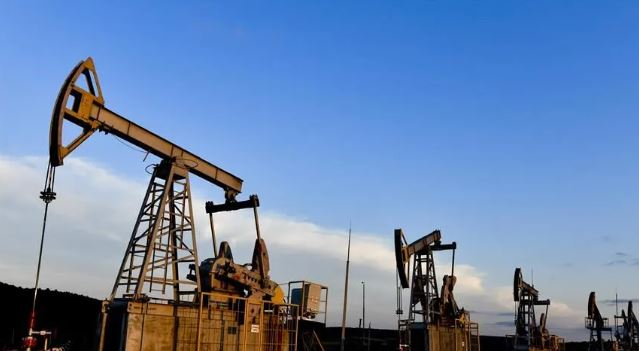
Oil prices retreated on Wednesday as financial markets responded to renewed diplomatic contacts between the United States and Iran, while reports of Saudi Arabia restoring a key export route added to expectations that pressure on global crude supplies could ease.
Brent crude, the international oil benchmark, fell 0.9 percent to around $98.41 a barrel, while US West Texas Intermediate (WTI) declined 1.4 percent to $89.23 in afternoon Asian trading, according to AFP. Both benchmarks remained below the $100 threshold that has been crossed repeatedly since the Middle East conflict began in February.
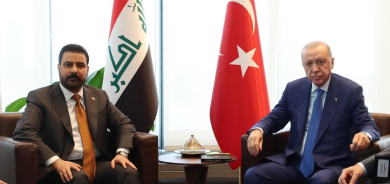
The latest decline followed comments by US President Donald Trump that American and Iranian representatives had held a three-hour meeting on the sidelines of the United Nations General Assembly in New York.
Trump described the discussions as “very good” and “very productive” and said another meeting was expected in the near future. US special envoy Steve Witkoff and Jared Kushner were reported to have participated on the American side, while the Iranian side has not publicly provided detailed information about the participants.
The diplomatic development came only hours after Trump's address to the UN General Assembly, where he presented negotiations with Iran alongside the possibility of further military action. He said he faced a “big decision” over whether to reach an agreement with Tehran or “annihilate” the Islamic Republic.
The contrasting signals — renewed diplomatic contacts alongside continued threats of escalation — have left energy markets highly sensitive to developments between Washington and Tehran.
Stephen Innes of Quintex Intel said the three-hour meeting was significant because it moved market expectations away from a scenario dominated solely by escalation and toward the possibility of a diplomatic process, although he noted that a final agreement remained uncertain.
The conflict has placed the Strait of Hormuz at the centre of concerns over global energy supplies. Iran has kept the strategic waterway closed, while the United States has maintained a blockade of Iranian ports, according to reports.
The wider regional conflict has also affected energy infrastructure and shipping. Fighting involving Saudi-backed government forces and Iran-backed Houthi forces in Yemen has contributed to security concerns around Saudi Arabia and disrupted energy flows through the Red Sea.
For oil traders, any change in the status of Hormuz could have a major effect on expectations for available crude supplies, making developments in US-Iran diplomacy particularly important for prices.
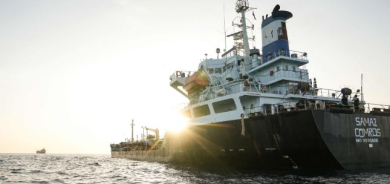
Oil prices were also pressured by reports that Saudi Arabia had restarted operations along its East-West Pipeline, a major route designed to transport crude from the kingdom's eastern oil fields to the Red Sea port of Yanbu.
The pipeline had been shut following drone attacks that damaged pumping facilities. Saudi Arabia has indicated that it intends to resume exports through the route, although the volume of crude that will initially move through the system remains uncertain.
Reports also said Saudi oil giant Aramco had informed some Asian refiners that they could soon receive crude through Yanbu. At the same time, European customers were reportedly told that Saudi crude would not be allocated to them for October.
The reopening of the pipeline is significant because the route provides Saudi Arabia with an alternative path for exporting oil without relying entirely on the Strait of Hormuz.
The movement in crude prices came amid mixed trading across Asian financial markets.
Hong Kong's Hang Seng Index fell about 1 percent, while Shanghai's Composite Index declined 0.4 percent. South Korea's Kospi gained 0.9 percent and Taiwan's Taiex advanced 0.8 percent, according to AFP.
Investors were also monitoring developments in the technology sector. Chinese technology company Alibaba announced plans to expand its overseas data-centre operations in Europe and the Middle East, while the artificial-intelligence sector remained active following new model announcements from Anthropic and OpenAI.
European markets opened higher, while attention was also turning toward an expected meeting between Trump and Chinese President Xi Jinping, with trade relations between Washington and Beijing among the issues under discussion.
Despite the latest decline, the oil market remains exposed to several major sources of uncertainty.
The direction of US-Iran diplomacy, the status of the Strait of Hormuz, the security situation around the Red Sea and the restoration of Saudi Arabia's alternative export infrastructure could all influence crude prices in the coming days.
Kyle Rodda, senior financial market analyst at Capital.com, said the Middle East conflict remained particularly important for energy markets and highlighted the potential role China could play in efforts to influence Iran.
For now, traders are watching whether the latest US-Iran contacts develop into sustained negotiations and whether Saudi Arabia can restore more of its disrupted export capacity. Those developments could determine whether the recent decline in oil prices continues or reverses.