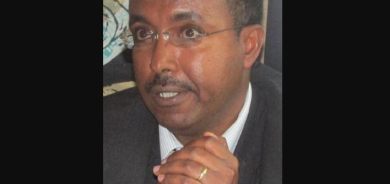
Dr. Assefa Fiseha to Gulan: Identity becomes a problem only when you push it to the margins
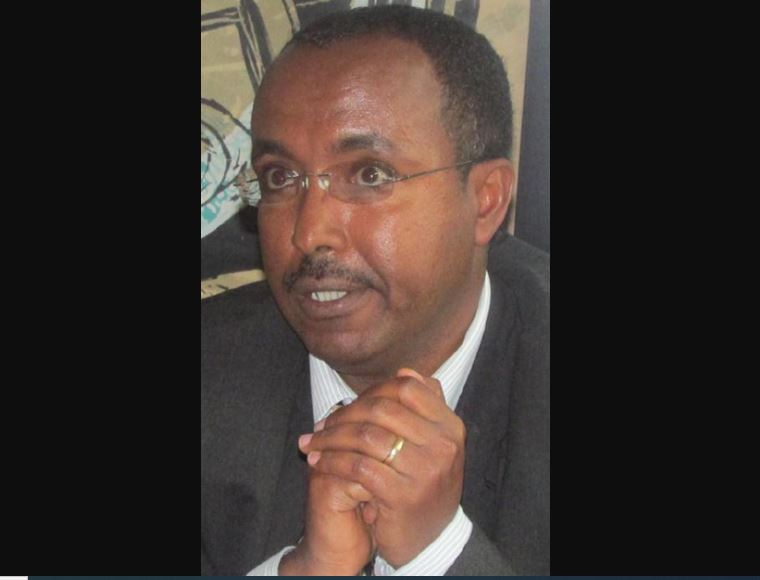
Dr. Assefa Fiseha is currently professor of Law and Governance at Addis Ababa University. He is a leading expert on comparative federalism and devolution in Africa. He earned his first degree in Law in 1995 from Addis Ababa University with honors and his postgraduate degrees from the University of Utrecht, the Netherlands. He has served as a Dean and Director and participated in many national and international seminars and conferences. His areas of Interest are Comparative constitutional law, Federalism and Devolution in Africa, Managing diversity, Human Rights, Traditional Justice, Judiciary and constitutional adjudication. We interviewed Assefa Fiseha, a renowned authority on African government, federalism, and comparative constitutional law. Dr. Fiseha examines the underlying causes of political instability and violence throughout the continent, the benefits and drawbacks of federalism and the devolution of power in various societies, and the influence of outside players on state-building processes using his vast study and expertise. He also considers how crucial it is to maintain the rule of law, strengthen institutions, and promote inclusive governance as the cornerstones of long-term peace, development, and democratic resilience in Africa.
Gualn: In “contemporary governance challenges in the Horn of Africa”, you argue that the region's turmoil and instability is due largely to a crisis of governance, rather than simply ethnic or societal divisions. So, to what extent do you believe policymakers in the Horn have misdiagnosed the root causes of conflict?
Professor Dr. Assefa Fiseha: I think within the broader African and Middle East countries, but more specifically also in the context of the Horn of Africa, it's possible to argue that the crisis of governance remains very critical, and what that means is that the political elite in power comes from a narrow ethnic or clan base, and once it controls power, it prolongs its control over power and resources and tries to marginalize others. This is the situation in Ethiopia, in Somalia, in Sudan, also in South Sudan. More or less can be explained on the same level, albeit to varying degrees. So, there is a political elite in power, it does not have a wider social base, and once it controls power, it uses the army, security, and other informal militia forces to terrorize others, to marginalize others, and more importantly, it does not deliver on most fundamental issues like ensuring safety and security of citizens, ensuring economic development, infrastructure development, you know, socioeconomic justice. So, it does not deliver socioeconomic justice, and even the bare minimums of statehood like ensuring safety and security. This also creates a legitimacy crisis within the system, and the fact that most of these leaders are authoritarian leaders makes it that the system is very much vulnerable to internal challenges because those who are marginalized, whether they are clans in Somalia or ethnic groups in South Sudan or major ethno national groups in Ethiopia, they cannot accept injustice, political injustice, economic injustice in the system, and so, sooner or later, they will organize themselves to reverse the hegemonic political order which is put in the center, and that center-periphery conflict. In the absence of political settlement and acceptable, and inclusive political dialogue, often leads to conflict, and in the worst case, as is happening now in Ethiopia, to open war between the center and sub-national forces, and that's exactly what's happening in Sudan as well. So, it's a very tragic situation, more or less, but can be explained along this broader framework of center-periphery relationships which is based on hierarchy, injustice, and inequality.
Gulan: So, can we safely say that these are the consequences of treating identity as the problem rather than governance failures?
Professor Dr. Assefa Fiseha: In my reading over the last 30 years, let me say that I have been writing and publishing about how to accommodate different kinds of cleavage, whether they are ethnic groups, clans, national groups, etc. And I was also looking into experiences, positive experiences like India, where over the last 50 years, 60 years, it has done quite a massive progress in terms of accommodating different identities. So, identity becomes a problem only when you push it to the margins. Identity in itself it's not a problem. In fact, in many Western countries, for example, in that very tiny, beautiful, democratic Switzerland, or in India, a massive country, which is a continent on its own with roughly about 1.4 billion people, you see different ethnic, religious, and caste groups living peacefully, by and large accommodated into the political system. So, when the political system marginalizes, whether they are clans or identity groups or religious groups, that's where identity becomes politicized, because it mobilizes itself along that identity in order to reverse an unjustified political order. So, it's the failure to accommodate which creates a problem, not the identity per se.
Gulan: in your writings about federalism, devolution, and territorially-based cleavages, you examine whether an institutional design can functionally or effectively manage diversity. So, can well-designed federal institutions overcome, let's say, a lack of political commitment to power sharing, or does the success of federalism ultimately depend on political culture than constitutional architecture?
Professor Dr. Assefa Fiseha: I would say both are important. For example, I read a lot about South Africa. I have colleagues in Cape Town where we do annual conferences together trying to understand how different systems operate within the African continent. So, if I talk about South Africa, for example, where you see the African National Congress (ANC), one of the most powerful political elites within the African continent, fought against apartheid and designed an accommodative parliamentary integrationist form of federalism in South Africa, where you see the different groups were mobilized together as an entity, not as ethnic groups, but as South African citizens fighting against white apartheid minority rule. And there you see the South African constitution respects individual liberties. It is very much committed towards social justice, although there is a lot to do along those lines.
It's also partly democratic in the sense that over the last 30 years they have done a lot of progress towards democratization in South Africa, so much so that the ANC has lost hegemony, and now you have a coalition government in the country. And so, you have softer cleavages there which are not politicized, and a softer form of constitutional design works perfectly well in South Africa. Then you come to Ethiopia, where over the last six decades, an authoritarian center has marginalized a large part of the country's different groups, and that has resulted in a more radical form of national liberation movements, in which case then you cannot transplant the South African model into Ethiopia because they are very different contexts. In Ethiopia, ethno national groups demand for inclusion and self-rule is very high and a constitutional design that does not this issue into account is nonstarter.
So design is important, but design alone cannot ensure the implementation of whatever designs you have put in the constitution, because at the end of the day, what has been promised in the constitution has to be implemented, and for this you need first and foremost a political will by all actors, and importantly you need very strong institutions, which when political leaders violate or fail to implement, then they are countered by strong institutions, like the constitutional court of the type we have in South Africa, check and balance among the political branch vertically and horizontally, a system of protection for human rights. So, you need a political commitment, but beyond that you also need strong institutions, which, you know, make sure that personal authority does not prevail over the institutions. And so, strong institutions matter. So, it's both about design, political will, and strong institutions which make sure that personal rule is not a dominant feature of the system.
Gulan: But the federalism in your Ethiopia has been criticized as it has institutionalized ethnic divisions or identities. So, is this a fair critique, and is there a point at which the recognition of ethnic identity through federal arrangements begins to undermine the development of a broader, let's say, national identity?
Professor Dr. Assefa Fiseha: I'm aware of the argument that, in fact, I have a colleague in South Africa who has written about this in the negative sense, stating that the major problem in Ethiopia is design and the design is an original sin. He calls it an original sin in the sense that ethnic federalism per se, is the source of all political ills in post-1991 Ethiopia. I have a very different understanding of that. My argument comes from the fact that Ethiopia is very distinct. It has never been colonized, at least a larger part of the country. And that means that the different groups have existed for centuries, enjoying their own culture and language, and also exercising some level of autonomy for centuries. Nevertheless, over the last century, a centralized system came in and liquidated all forms of autonomous dynasties we had for centuries, and they are not happy about that. So, they came back in the 1970s with a more organized form of national liberation movement. They liquidated the center in 1991 and put in place a federal system which they thought would respond to their demands. Therefore, we have these groups which have existed for centuries, and they want to enjoy more autonomy and included in the center. But what we have is an authoritarian ethnocratic rule that resorts to violence to address political demands, not dialogue and bargain. The result is massive violence and war throughout the country. So, yes there are some issues related to design but that is not the whole story. I understand, because, for example, when you empower subnational groups in the states, they might not well protect the right of minorities and individual citizens. That is a design issue. But beyond that, I think a large part of the issue is about failure to implement the design, a lack of political will to implement that. And of course, as countries grow and prosper economically, which we were doing before the start of 2018, you also have to do some reforms, political reforms. You need to democratize the system. You need to ensure socioeconomic justice. And because we have not done any of this, we see that now we have a lot of, disappointments, discontents, and even wars and conflicts throughout the country. So, it's not merely a design, it's also a failure to implement and build institutions, as well as a failure to ensure the implementation of the system and ensuring socioeconomic justice as well.
Gulan: What lessons can countries such as Sudan, South Sudan, or Nigeria, or even Iraq, draw from Ethiopia's experience with federalism?
Professor Dr. Assefa Fiseha: I think the first lesson is that whatever federal systems you have, it needs to come from grassroots-based consultation with the major stakeholders. An inclusive political system should first be engaged actively in the design process. Once, you consider the various contending views, you know, if there are people who want to have a more centralized system, and others who might want to have a more decentralized system, there must be a compromise. Therefore, the political elite need to arrive at the negotiating table with some form of acceptable compromise. Extremes are always there, but I think the compromise is always a better option. Once you do the design process, then the next important point is that you need to have, political actors which are committed to the implementation of the system. The system should also remain open for reform. Federalism as we say is a continuous seminar in governance. It has to adapt to new realities.
And I think in the context of Africa and the Middle East, the basic concern is there are always big men at power who are not accountable to the political system, to the system of check-and-balances, et cetera. So, I think that a system of check-and-balances with strong institutions such as constitutional courts will have to play their own role and evolve into a system where it evolves beyond personal individuals. You know, when rulers come and go, that should not, destabilize the system. And that is only possible if the system evolves along building strong institutions, functioning institutions, which is very important. For example, look at Somalia. You have a federal government in Mogadishu. You have six federal member states. But the federal government could not really enforce its decisions beyond the capital. And you cannot run a government by helicopter. Unless you have roads, infrastructure, buses, airports, which connect the local government with the capital, a federal government sitting in the capital cannot do anything. So, you need to build institutions. Building state institutions is equally important as you build also the federal system. I mean state building and federalism building should go hand in hand. And this is, I think, very critical in areas where you have conflict. The same with South Sudan. You have in Juba a central government, but you have ten states, and there is no road that connects the provinces with the capital. And, you know, that creates a lot of gaps in terms of opening schools, clinics, industries, or doing some kind of agricultural development. As the result, state building is also very critical, which is often not discussed in many emerging federal systems. The institutions need to be built. Services have to be delivered. Otherwise, then the federal government, as I said in Juba and Mogadishu, will remain only on air, and that does not contribute to the development of the country and society.
Gulan: Does the digital age change the traditional rationale for decentralization and local self-government?
Professor Dr. Assefa Fiseha: Yes, I mean, unfortunately, for example, in South Sudan and Sudan and Somalia, where, the minimum infrastructure, city infrastructure is not there. I mean, digitalization alone can perhaps play a great role in the capital. I can tell you, for example, also in Ethiopia now, in the federal capital in Addis Ababa, the government is very much digitalizing everything. And, you know, you can pay your taxes online. You can apply to renew your passport or ID number online. But outside of the capital, digitalization does not exist because even the bare minimum infrastructure of statehood does not exist in Sudan and Somalia, or in South Sudan. So, digitalization helps when you have the minimum infrastructure of statehood, like roads, like schools, like clinics, outside of the capital. And then if you add digitalization to it, then it becomes very much helpful. So, digitalization for sure can bring the government closer to society, but that's only if you have the well-trained, educated, IT-based experts. If you don't have universities or schools, as in Juba, Sudan, for example, South Sudan, for example, where do you digitalize if you don't have the IT graduates or, you know, short-term trained students from a certain IT technology or college, etc.? So, it all boils down to having a minimum state infrastructure.
Gulan: To what extent external influence or interference has complicated internal dynamics towards building a more inclusive and effective governance?
Professor Dr. Assefa Fiseha: This is quite a very important question because now in the Horn of Africa where the United Arab Emirates, Egypt and saui Arabia are creating serious impact on internal governance. For example let's talk about Sudan. You have the military led Abdel Fattah A-Burhan which represents the national government, basically based now in Port Sudan, but also slowly moving into the capital, Khartoum. On the other hand, you have the rapid support forces, which are largely based in Darfur, but also doing a lot regarding the conflict in the expanding the conflict beyond Darfur. Now, if you see that the General Al Burhan is backed by Egypt, Saudi Arabia and Turkey to a certain extent. And then you have the rapid support forces, which are basically backed by the United Arab Emirates and to a certain extent also by Ethiopia. So, if the key political issues of Sudan, about how do you do a political settlement, whether Sudan should have a decentralized form of government, whether it should devolve its political and economic system, etc., are decided either in Egypt or in UAE, the Sudanese people do not have a say on the destiny of their own future. And this really robs the political autonomy of each Sudanese, because the key decisions are being made outside Sudan. And you see that this has significantly affected Sudan's stability. The same can be said for Somalia. You see the United Arab Emirates has signed several agreements with Somaliland, which is a breakaway province of Somalia, which has remained de facto independent since 1991. Recently, the State of Israel has recognized Somaliland, whereas Mogadishu, the federal government says that the unity and territorial integrity of Somalia should never be compromised. And the federal government in Mogadishu is backed by Turkey and by Saudi Arabia and several other countries, whereas you have Somaliland, which is backed by, for example, United Arab Emirates and Israel. So, the major political and economic issues of Somalia are now decided elsewhere. And this affects the political autonomy of Somalia and the Somalis. So, geopolitics has significantly affected the stability of countries in the Horn of Africa because the Horn of Africa is very much significantly located in a very geopolitically sensitive area. The crisis in Iran is now also part of the game because more global actors and middle authoritarian actors are also looking for other alternative ways of ensuring the safety and security of their business and the Horn of Africa is one of them.
As the Horn of Africa continues to fail to fix its internal governance issues, the central government becomes sandwiched by both rebels from inside and external geopolitical actors. The Horn of Africa is very much exposed to that kind of vulnerability. So, geopolitics continues to play its own significant role, destabilizing the countries in the Horn of Africa, whether it's Ethiopia, Sudan and Somalia. Improving internal governance goes miles in reducing geopolitical concerns but cannot fully keep geopolitics away.
Gulan: looking ahead, do you believe that the future of governance in Africa lies in stronger federal systems, stronger unitary states or some hybrid model?
Professor Dr. Assefa Fiseha: I think federalism is here to stay. It needs to develop further in terms of building institutions, in terms of ensuring also rule of law, ensuring also check and balance politically, and in terms of state building, as I mentioned already, for example, in South Sudan and Somalia. But I think regional integration should also emerge alongside with it. You know, Africa in general and the Horn of Africa in particular are colonial constructs. Except Ethiopia, you have the Somali people divided into five countries. Part of it is in Kenya. You have Somali speaking in Djibouti, Somali speaking in Ethiopia. And then you have also in Somaliland in Somalia. You have similar divides between Ethiopia and Eritrea, between Ethiopia and Sudan, and between Ethiopia and South Sudan. So, if we were able to have responsible leadership in all these countries, the first major development should have been to develop, you know, regional institutions like economic and political cooperation, which could take a loose form of political and economic cooperation that facilitates free movement of people, goods and services. Make borders less important so that people can do business without borders. Ensure that they can mobilize easily without requiring a visa.
And for that you need to build infrastructure, economic networks, and more political and economic integration. So, if you combine federalism with regional integration, I think there is a lot of potential for these countries to evolve towards more development and peaceful political context. So, I would argue, democratizing them, more federal systems, and then also a little bit of regional integration.