Professor Dr. Harihar Bhattacharyya to Gulan: Indian Federalism Is Both Symmetrical and Asymmetrical
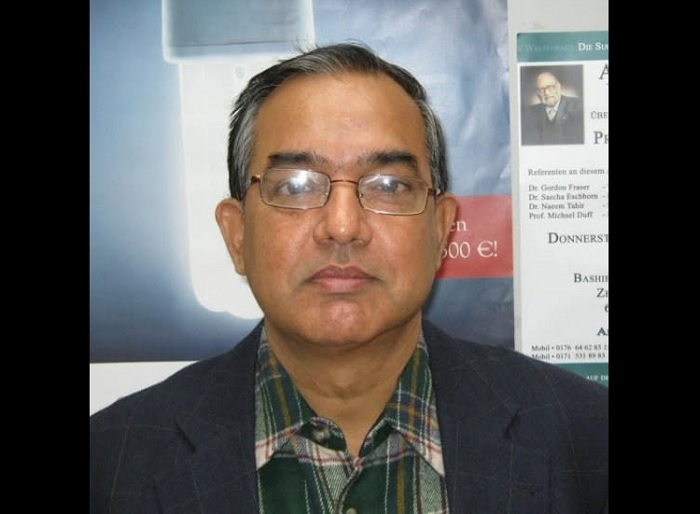
Harihar Bhattacharyya was until 2024 a Professor of Political Science, the University of Burdwan, West Bengal (India). He received his Ph. D in Government from the London School of Economics and Political Science. He joined the university in May 1990 and became a professor in 2004. He has visited many countries such as UK, Germany, Switzerland Canada, Mexico, Norway, Sweden, Italy, France, Belgium, the Netherlands, Austria, USSR, Tanzania, Singapore and Nepal in connection with visiting assignment and conference and workshop. He taught in the University of Heidelberg’s South Asia Institute (Germany) in 2009-10; The Institute of Federalism, Fribourg, Switzerland in 1998-99 (one year); Hull University, UK and Delhi University. He presented over 100 hundred papers as resource person in international and national conferences; delivered many Keynote Addresses, and special lectures. He has also acted as an international expert in ethnic conflict resolution and constitution making for many countries. In 2025 he was conferred the prestigious Publius Distinguished Scholar Award by the International Political Science Association in its 38th World Congress at Seoul. In an exclusive interview he answered our questions like the following:
Gulan: first of all, we would like to know, you have critically engaged with the concept of cooperative federalism. So, how do you define it, and what are the key characteristics of this concept? And then, do you believe that this concept reflects genuine or real institutional practice in India, or it's just normative aspiration?
Professor Dr. Harihar Bhattacharyya: Well, it's a good question. India as such is known as a case of cooperative federalism because cooperation between the centre and the states, and also between the states are embedded in the constitutional provisions. That's how the whole constitutional structure was designed. And I say this because when Indian Federation was built, it did not follow the classical model of US, Swiss, or Austria, or other classical federations. Actually, the Indian federal units we called ‘states’, they were created after the Federation was announced in 1950. So, therefore, it's a different kind of system. On the one hand, the union government we call the ‘centre’. has been given huge power, immense power, most powerful items, as per the Union List, that the union can legislate on. The states also have been given significant powers, but then there is something interesting here: that union government in India does not have what we call ‘line administration’. In other words, many of the federal legislations are to be implemented not only in the states, but by the states too. So, this is legislatively highly centralized federation, but at the same time administratively highly decentralized. So, cooperation is embedded in the body politick of Indian federalism, that demands collaboration among different government units. The states have to cooperate for their own interest and centre also in turn are dependent very much on the states for implementation of many of their important legislations.
Gulan: Do you consider India's federalism as asymmetric federalism? And does India's asymmetry function through constitutional design or political necessity?
Professor Dr. Harihar Bhattacharyya: Well, first question, first: Indian Federation is symmetrical as well as asymmetrical. Symmetrical, why? Because most of the states in India, enjoy the same status and have the same powers. But in certain areas, particularly in international borders with Pakistan on the western front and northeast India on the eastern front bordering with China, Myanmar, Bangladesh, there are asymmetric states de jure and de facto. In those states, in the periphery, they enjoy asymmetric status and asymmetric powers. That is to say, they have more autonomy; they have more control over their own affairs. These are constitutionally guaranteed.
Take the case of Nagaland, for example, it enjoys constitutionally a special status, a kind of semi-sovereignty in terms of land, land use, customs, religions, local matters so on and so forth. So, it is a combination of both symmetry and asymmetry. I have written extensively on Indian federalism as you can check from the internet and I have also published a book on asymmetric federalism in India in 2023 where I have explored in detail the areas of asymmetry, different kinds of asymmetry in Indian federation. I talked about the asymmetric states but in the mainland India within the federation there are also large areas of asymmetry in terms of, for example, representation of the states in the parliament. Say for example there are states which send only one or two members to parliament while there is a state, the largest state in India, Uttar Pradesh, which sends as many as 80 members of parliament. So, there are such asymmetry but in most other states such asymmetry is not there because their representation to parliament from the states are determined on the basis of the size of the population of the states.
Gulan: one of the other concepts you have engaged or examined is the “regionalization of politics”. So, do you believe that this regionalization strengthens federal stability or risk fragmenting national policy coherence?
Professor Dr. Harihar Bhattacharyya: In the Indian National Congress (India’s most ancient national party) which was the main party of independence, it was actually a coalition of various regional identities and therefore there are various committees based on various regions, their culture, their identity, their language. So, that was historically embeddedness in short. From the 1980s there has been renewed regionalization of Indian politics so that there were region-based parties which are still there in India and they are also ruling in many states until very recently. So, regionalization has not been detrimental to India's unity or India's federalism or India's democracy because without regionalism the country really cannot hold itself together because it's a large country and each of the regions or States are large in population. To give one example, the population of West Bengal to which I belong, has population larger than that of Germany. So, regional forces are functional, not dysfunctional, to India's unity or stability. But I know why you ask this question you. You may have in mind the BJP. The BJP (Bharatiya Janata Party) which has, of late, has become dominant and ruling in India, and most of the states including my state West Bengal since May this year. But then if you look at the party unit in all these states they are actually the regional version of the party because they actually adapt themselves to regional culture, food habits, regional practices so that way from outside it may look like a centralized party controlling all the regions, in effect, the party itself has become regionalized. In West Bengal, for example, the party had to be a Bengali party to win the elections. The problems for all pan-Indian parties are that the community structure, the political loyalties, identities, vary enormously from one state to another, and even if you call the majority of population, Hindu but as Hindus they are very plural within themselves and divided along many social and cultural faultlines. I would argue that the way the BJP has come to power in most of the states the regional parties are having a bad time, it is partly true in electoral politics, but then it requires more region specific analysis to inquire what happened, how it happened and what was the nature of the regional party that ruled in a particular state; the regional parties often have not performed the way they should in a democracy. It requires a lot of state specific analysis.
Gulan: You have emphasized on the importance of this also how do you assess the Indians federalism in this regard do you believe it has been successful, and where exactly it has performed poorly?
Professor Dr. Harihar Bhattacharyya: In one word it has been successful now how do we measure the success? In India conventionally until about 2000 we measured the success in terms of the resolution of most ethnic conflicts because India is a vast multi-ethnic country but then there are lots of differences ethnic identities, linguistic identities and those identities corresponded with their own territory so what was necessary after the British had left was to right size the territory of India and that actually happened in a long drawn multi-pronged processes in 1956, 1960 1966, 1972, 1987, 2000 and the latest being 2014 so that way it has been continuously been resized to right size so that way the ethnic people they got their own territories so therefore we don't see much movements. There are some movements for more states or more territorial autonomy from below but in most cases such ethnic conflicts have been resolved. The second question is the question of governance actually it has also been a relative success in the sense that once the yesterday's rebels become today's stakeholders or tomorrow's stakeholders, then the onus is on them to maintain the law and order as well as to deliver things, deliver goods to the people so there you can measure their success and there is a competition among the states to do better to better service delivery to attract investment more business trade and commerce to develop the infrastructure so the states have become now competitive and this has happened after 1991 when India adopted the policy of neo-liberal reforms and the market was open up internationally. The states were actually given more freedom of action, more autonomy to go their way in terms of, as I said, for investment, trade, commerce and development and there is a continuous measurement about who is doing what, how much foreign direct investment has been received by a particular state so that way without changing the basic structure of the constitution, i/.e, in terms of executive federalism, that is, in terms of the ministerial allowance, the states actually have been in competition and many of the states have benefited from India's neoliberal reforms, I can give you examples of Gujarat, Maharashtra, Tamil Nadu, Haryana, Delhi and many others, although there are certain states some states, which because of different political parties ruling in those states, sometimes the Marxists, sometimes some regional parties against globalization, they have not fared as much but they are also catching up. Indian federalism thus has got actually a new lease of life, if I may say so, unlike the period of command economy until 1991. What has happened during the period of when Congress was the dominant party and when the same party was ruling at the centre as well as in most of the states, so many of these inter-governmental conflicts or inter-state conflicts were resolved within the party framework before taking it down to the governmental level. And beyond that, the Indian Supreme Court, which has original federal jurisdictions, Indian Supreme Court also has intervened in many famous cases involving a conflict between the Union and the states. So, that way, Supreme Court also has come into the picture in resolving conflicts. As far as the peripheral states are concerned, it is not just inter-state council or the party, but because the peripheral states economically are dependent very much on central funding. For example, in the north-east of India, except Assam, which is still a poor state, most of the states actually do not have adequate resources. These hilly states, with very little resources, are dependent on central funding. And this funding is covered by the Finance Commission of India, which disburses the tax revenues in every five years between the Union and the states, following certain formula, which is diversity, sensitive. I give one example, say, Arunachal Pradesh in India’s North-East, very large state with a very small population, in India's north-east, bordering with China. Therefore, it cannot have the same amount of disbursements from the Finance Commission as others, because the administrative cost in the state is too high. So, there is this distance formula, as well as the type of population living there, they also get special funding. So that way, there is this accommodation of various criteria, various factors in funding those regions.
Of late, from 2012, a new ministry at the Union level has been formed for north-eastern region as a whole, which is called DONER (Department of the North Eastern Region), which is now rechristened MDONER (Ministry of Development of the North Eastern Region) for taking care of development of the north-eastern region as a while. Prior to that, there were small regional bodies, which were advisories like North-Eastern Council. But this ministry has pooled together all the resources from various ministries and engaged in developing the region as a whole.
And I have surveyed, and examined the reports, have interviewed in course of my recent research, and evidenced developments in infrastructures, and development in terms of other perimeters; these states have become more developed, better than before. And beyond that, there are also different other types of funding, like say Border Regions Development Fund, and the Backward Regions Development Fund. So, all these different funds actually get into those areas for development, because they don't have their own resources. And at the same time, they are peripheral and located strategically on the international borders on the eastern side.
Gulan: In your comparative reflections on federal systems, I think you often draw attention to European models of federal systems. What are the lessons that can be genuinely transferable to India and what are not?
Professor Dr. Harihar Bhattacharyya: Right. Well, I wrote a book long back comparing Swiss and Indian federalism, when I was based in Switzerland for one year at the Institute of Federalism in Fribourg, And there, of course, it would be a daunting task and a bit of adventure to compare the two federal systems, India with Switzerland. But what I looked at the Swiss case then was their accommodation of multiple identities, multiple identities within the same system on the very basic assumption that diversity is not a problem. On the contrary, it is a resource. And the fact that the Swiss state after 1848, it was not typically a nation-state like France, Germany, and Italy on the borders. But it was a very decentralized kind of system, bottom heavy, For example, Bern, is known as the Swiss capital. But if you look into it, actually, it is not taken as the federal capital. The Swiss case is a three-tier federalism with each east-tier, federal, cantonal, and municipality. East-tier collects more or less the same percentage of taxes, and spends more or less the same amount of taxes collected. So, although the cantons were already sovereign before they joined the federation, my point of comparison with India and also with Pakistan (as a relative failure), as well as Malaysia, I have also referred to other Asian cases, was that this identity thing and the diversity, and the approach one takes to diversity. That is, if you speak a different language, if you have a different food habit, if you have a different discourse, it's not a problem. Because we all have different cultures and identities, therefore, we do not clash. Diversity in India was not also considered as a problem. So, diversity protected in the Indian constitution; Indian traditional culture and writings do not abhor it. I have written about that. Therefore, diversity here also is not considered as a problem, but also as something to be maintained and protected. So that's how in India, the states have been created, 28 states have been created, that was only to honor diversities, different identity, different culture and languages. So, they were given autonomy, their own state. And beyond that, there are also cases in India's northeast dominated by tribal people, various sub-state arrangements, that is tribal autonomous district councils are also provided for in the Indian Constitution. In constitutional structure such District Councils enjoys autonomy, to legislate, and have the powers to execute them; they also enjoy some judicial powers. Then there are tribal ethnic states, as I mentioned before, with asymmetric powers and status. So, there are various kinds of diversity accommodation, territorially as well as non-territorially. In India, if you ask me, what is the national language of India, I have no answer. We do not have one national language. We have 22 official languages. Sometimes people mistake Hindi to be the national language, which is not true. Hindi is the official language of the Union government, along with English. But we do not have any national language. India’s linguistic diversity can be spotted in the Indian currency nates on which various languages are inscribed. That makes them very beautiful, actually, very decorative. So, the point is that there is non-territorial accommodation of diversity India. We have one constitutional schedule, in which these 22 languages have been officially acknowledged. What it means is that, if it is an official language, anybody can demand any official communication, documents, judicial pronouncement, legislation etc to be translated into his or her language because that is part of the official languages. Of course, there are official languages which do not have a state. I give you an example: Urdu is an official language, but there is no state based on Urdu language. It is spoken in various states, in Uttar Pradesh, in Bihar, in Telangana, in Calcutta also. So, it is an official language. Santali, for example, it's a tribal language, as it is called. It's an official language, but there is no Santali state. So, the symbolic recognition of one’s language as an official language, it actually matters a lot for the people, even though they do not have any state of their own. So that way, diversity has been acknowledged, maintained, protected and honoured. And what happened in Switzerland historically, the close relation between identity and territory, in India, it had to be recreated after the British left, to right sides, because many of these regions are very old regions. I give you one example from Pakistan, which could have been a better federation, if you like, because in India, most of the states had to be recreated after independence. But in Pakistan, their regions were historical regions, say Baluchistan, Sindh, and Khyber Pakhtunkhwa, (Pashto speaking people), or Punjab. So those are already states with historical origin, development, culture. Unfortunately, it did not work. Federalism did not work. It does not work properly in Pakistan for a host of reasons which I have explored elsewhere. But in India, we had to recreate the states that this diversity, identity, language, culture, etc., they get the territory where they live, where they inhabit. So that was also this comparative element. I believe that it is also comparable with other regions in the world where diversities have problems, where the state, and the dominant power, do not recognize them; in fact, suppresses them. In India, that has not been the case. Indian examples can be a lesson to other cases in the world too.