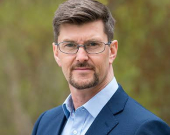
Dr. Klaus Dodds to Gulan: There is a creative element to geopolitics which is about narrative-making and public culture

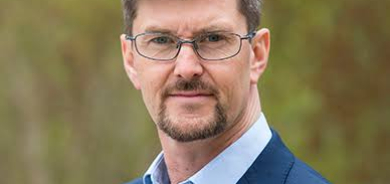
Klaus Dodds is Professor of Geopolitics and Faculty Dean at Middlesex University London and author of Border Wars (Penguin 2022). He researches in the areas of geopolitics and security, ice studies and the international governance of the Antarctic and the Arctic. He has published many authored and edited books including Ice: Nature and Culture (Reaktion 2018). His newest books are Border Wars (Penguin 2022) Ice Humanities (Manchester University Press 2022 co-edited with Sverker Sorlin) and a third very short introduction this time on the Arctic with Jamie Woodward (Oxford University Press 2021). He has acted as external/visiting examiner for University College London, University College Dublin, the Politics Department's two masters programmes at Birbeck College, London and MPhil Polar Studies at the University of Cambridge. He is editor in chief of Territory, Politics and Governance (a journal of Regional Studies Association) for the period 2019-2024. Klaus is a former Trustee of the Royal Geographical Society and current trustee of the Regional Studies Association as well as Hon Fellow of British Antarctic Survey. He has worked for the UK Parliament as specialist adviser to a House of Lords Select Committe on the Arctic and the House of Commons Environment Audit Committee. And continues to regularly provide testimony/evidence to parliamentary committees as well as advise the European Parliament's Foreign Affairs Committee. In an exclusive interview, he answered our questions as follows:
Gulan: You contend in a number of your writings, most notably "Geopolitics," that geopolitics is about the political narratives that governments create rather than just geography. With the resumption of great-power conflict involving the United States, China, and Russia, are we witnessing the rebirth of classical geopolitics, or have artificial intelligence, and information warfare fundamentally altered the nature of geopolitical power?
Professor Dr. Klaus Dodds: Geopolitical power can be expressed in multiple ways. One of the points I made in my book, Geopolitics: A Very Short Introduction (Oxford University Press 2019, Third edition) is that the subject matter of geopolitics is not determined by location and physical geography alone. This is not to say that geography is not important – it matters, for example, that the Strait of Hormuz is a relatively narrow waterway, but its importance is extraordinary because of the nature and volume of shipping that passes through it.
There is a creative element to geopolitics which is about narrative-making and public culture. In the midst of great power rivalries involving the US, China, Russia and other regional actors such as Iran, we are witnessing a profusion of popular and practical geopolitical narratives and strategies – Russia’s full-scale invasion of Ukraine in 2022 was explained and justified by reference to Russia’s revanchist ambitions including denying the self-determination of Kyiv. In the fifth year of conflict, both Ukraine and Russia have deployed all-encompassing information warfare and in-field warfare using leverage machine learning and autonomous systems to target, jamming, decoding, protect critical infrastructure and deploy facial recognition to identify combatants.
Gulan: Many observers contend that a more divided and multipolar world is replacing the liberal international order of the post-Cold War era. From your perspective, does the current geopolitical situation reflect a short phase of volatility, or are we entering an entirely new international order in which old institutions struggle to restrict great powers?
Professor Dr. Klaus Dodds: We are clearly at an inflection point where the liberal international order associated with the post-1945 settlement is under sustained threat – and arguably made worse by the unilateralism of President Trump. What is emerging is a multi-ordered world where we have an enduring global rules-based order, a Trumpist order which is preoccupied with western hemispheric dominance, a Chinese order which is built on One Belt, One Road, a Russian Euro-Asian order and a regional-global order led by swing states such as Turkey, Brazil, India and Iran that are perfectly capable of asserting their strategic autonomy and geopolitical ambitions.
In other words, I think it is more helpful to frame this moment as indicative of a "multi-order world" where we have evidence of multiple competing, overlapping, and parallel systems in operation. One example would be the way Iran is circumventing sanctions and using a suite of international currencies to by-pass the US and the dollar-based financial system.
Gulan: With regional conflicts increasingly interacting with the interests of global powers, the Middle East has once again emerged as the center of international strategic competition. How might critical geopolitics help us comprehend the current crises?
Professor Dr. Klaus Dodds: A critical geopolitical framework could be used to consider how and where the Middle East is being framed as indicative of international and regional strategic competition. But what critical geopolitics does is to draw attention to how the Middle East itself is a disputed region – it is one where the fixed boundaries of states do not convey well the more fluid realities such as the role of diasporas (in European, Asian and North American cities), non-state actors, extra-territorial interests and portfolios of state-sanctioned actors such as the Iranian Revolutionary Guard and cross-territorial groups and ethnic minorities such as Kurdish peoples.
Critical geopolitics tends to be cautious about how dominant powers construct threats and enmities and asks who benefits from geopolitical framings and whose interests are being empowered. There is a long-established tradition in geopolitical writing to think of the Middle East as either a near-permanent flashpoint or a chessboard at the mercy of great powers. If uncritically accepted it would mean that the interests, wishes, and agency of local communities and other actors would be neglected.
And we might miss interesting new developments such as Israel and Finland developing a defense-based relationship because of a shared perception that the US is not a reliable security partner and that both countries share a threat perception –Iran and Russia as near-constant adversaries respectively.
Gulan: Your considerable research on the Arctic and Antarctic demonstrates how environmental change reshapes political geography. Do you think climate change has emerged as one of the key geopolitical drivers of the twenty-first century, capable of changing alliances and rivalries as deeply as ideology once did, as it creates new shipping routes and increases competition for crucial resources?
Professor Dr. Klaus Dodds: Climate change is multi-faceted and can attract its own controversies, but what seems clear is that the world will face more extremes of heat and water. It means that in the Arctic, we have a region that is being terra-formed – less sea ice, more glacial retreat, further wildfires, and thawing permafrost. And that in turn appears to be heightening interest from extra-territorial powers such as China and generating concern from Arctic states, such as Canada and Denmark that their sovereign capacity will be scrutinized further. A warming Arctic means a more expensive Arctic, as a wetter and less reliably frozen environment is more challenging to operate in.
An Arctic with less sea ice is not a safer and easier environment. Shipping lanes may appear to open in the Central Arctic Ocean, but it will not be hazard free. What is possible is that as parts of the world become less inhabitable, we will see richer countries hedging in the future – looking to purchase and grab land and resources as a way of coping with uncertainty. As the world continues to warm and become wetter, there is a real possibility that more of the world will become unlivable.
Gulan: Often, your study questions accepted notions of security. Should governments radically reconsider national security strategy in an era increasingly dominated by cyber threats, artificial intelligence, pandemics, migration, and climate change? If military might is no longer adequate, what does true security imply in the twenty-first century?
Professor Dr. Klaus Dodds: What counts as national security is not self-evident and increasingly subject to competition and contestation in many countries, especially liberal democracies. In the UK for example we have had heated debates about what is an appropriate amount to spend, on what, and how quickly. Increasingly the focus is on AI and automation and how that might help to mitigate and adapt to emerging threats in the future. In the UK, recent opinion polls suggest that young people would not be as eager to defend the country as their equivalents in Finland leading to debate about whether there might be a case for national service to be resurrected.
Security itself has been understood in multiple ways and for many communities in the Arctic, having access to affordable food and reliable access to the internet or energy supplies would be of first order importance. The militaries in the Arctic often provide vital support for remote communities so security in that sense intersects with both civilian and military priorities.
Gulan: With programs like the "Global Britain" strategy and increased participation in NATO and the Indo-Pacific, the UK has attempted to redefine its international role in the wake of Brexit and amid escalating geopolitical competition. What unique role can the UK actually play in forming the future global order, in your opinion?
Professor Dr. Klaus Dodds: The UK is both a regional European power and a global actor because of its economic size, nuclear weapon status, and global portfolio of overseas territories ranging from the Falkland Islands to the Sovereign Base Areas in Cyprus. The challenge for the UK is how to balance a suite of competing interests ranging from the close but challenging relationship with the US, the intersection of the EU and NATO, regional alliances such as ANKUS and overseas territories in the Atlantic, Indian and Pacific Oceans as well as Mediterranean.
Russia is the UK’s number one geopolitical adversary and that will remain so in the immediate future. And countries such as China are geoeconomic competitors. And London is a global city which attracts overseas financial investment and geopolitical interests. All of which is to say that our geopolitical and geoeconomic environment is a complex one.