Arshin Adib-Moghaddam to Gulan: Iran, Strategic Doctrine, Regional Escalation, and the Collapse of Pax Americana in West Asia
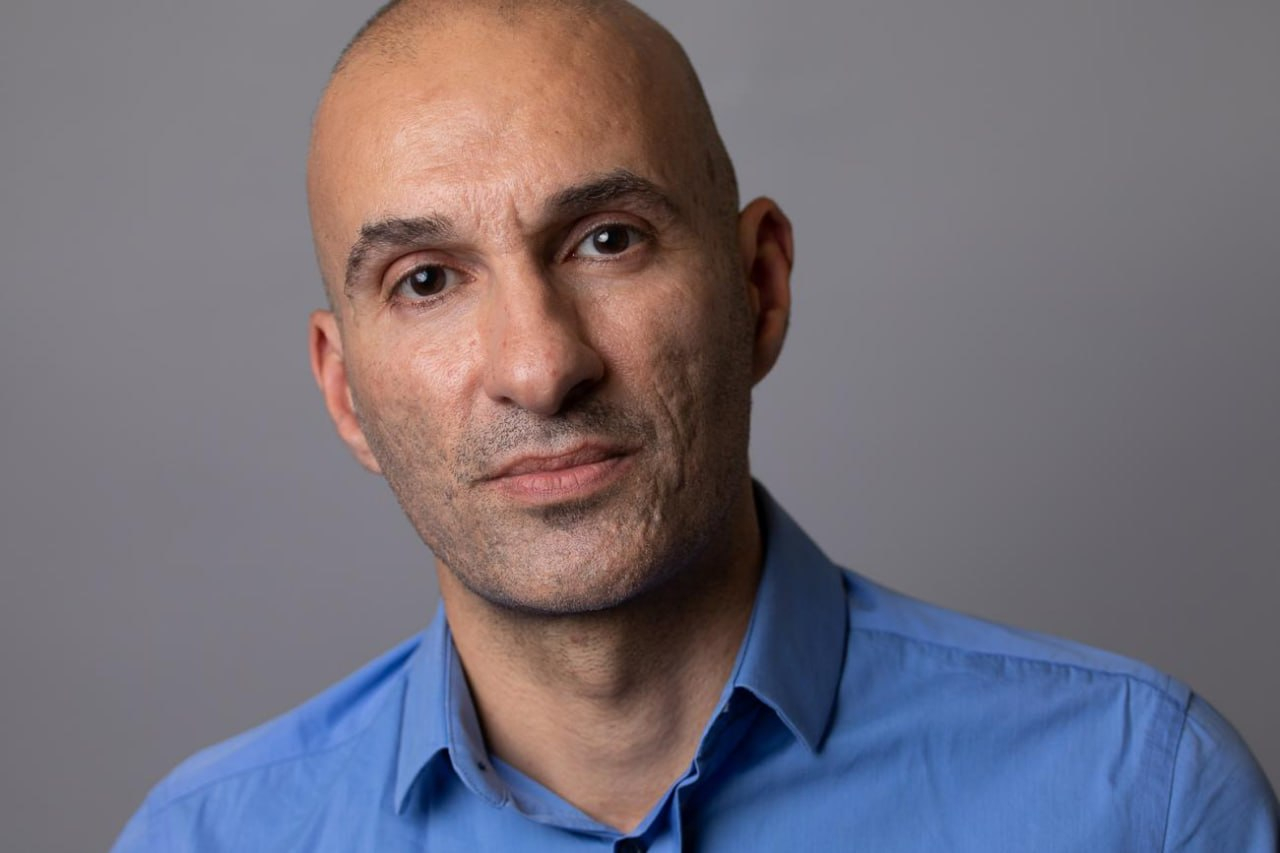
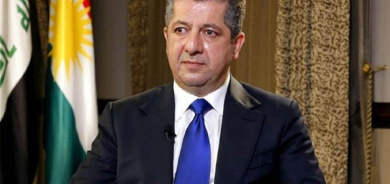
Arshin Adib-Moghaddam is a Professor of Global Thought and Comparative Philosophies at SOAS University of London and a Fellow of Hughes Hall, University of Cambridge. He is an internationally recognized scholar of world politics, comparative philosophy, and the ethics of artificial intelligence. Educated at Hamburg, American University (Washington DC), and Cambridge, he has held academic positions at Oxford and Cambridge and is the author of several influential books, including What is Iran? (2021) and Is Artificial Intelligence Racist? (2023). He is also a public intellectual and co-director of the SOAS Centre for AI Futures.
Gulan:
In your recent article, you argue that Iran’s threat to close the Strait of Hormuz is part of a long-standing defensive doctrine rather than a sudden escalation. However, in the current conflict, we have seen extensive missile and drone strikes across the region, including repeated attacks on the Kurdistan Region of Iraq. From your perspective, how should we reconcile this long-term strategic doctrine with the reality of sustained regional strikes, and does this suggest a shift in Iran’s behavior or the application of its existing strategy?
Arshin Adib-Moghaddam:
In fact, Iran’s tactics and overall strategy are easily analysed. The country was attacked by two nuclear powers administered by two states with a long history of war and destruction. Iran, like any other country, witnessed the genocidal campaign pursued by the Benjamin Netanyahu administration in Palestine which led to the indictment of the man for war crimes. Donald Trump is complicit and I think it should be obvious to any sane individual that he has a particularly sadistic approach to politics. Again, I don’t think there is any doubt that for both Netanyahu and Trump the ability to kill and destroy is a marker of great power. Both got away with it in Palestine marketing the destruction of Gaza as a great success and joking about rebuilding Palestine as a theme park. As journalists, intellectuals activists we have the moral duty to call a spade a spade, so to my mind calling their conduct in war – jus in bello - sadistic is analytically correct. It is certainly a factor in explaining why neither Netanyahu or Trump even mentions the murder of168 civilians, mostly little girls, caused by the US strike on an elementary school in Minab right at the start of the attacks on Iran. It also explains why Trump would say that he would bomb Iran’s Kharg Island “just for fun.” These are not the words of a person that the sane majority should deem normal.
So the Iranian tactics are commensurate to that nature of the threat. Iran’s strategic doctrine furthers these tactics as they were geared to retaliating against US aggression by hitting US and Israeli military assets and interests where Iran can reach them and were they cause the main problem: in the Persian Gulf area. The Kurdish areas of Iraq were targeted for a similar reason, as they were seen as staging grounds for various insurgencies. Again, concepts and theories tell us exactly why any sovereign state would want to address direct threats to its territory by outside forces. Iran is no exception to this analytical rule.
Gulan:
The Kurdistan Region of Iraq has been subjected to repeated missile and drone attacks targeting both military and, at times, civilian areas, despite not being a direct party to the broader confrontation. How do you interpret these strikes within Iran’s broader strategic logic, and what do they reveal about the risks faced by smaller or non-central actors caught in regional conflicts? Much of your scholarship highlights the role of narratives in international politics. In the current crisis, do dominant narratives about Iran’s actions risk oversimplifying the situation, or is there a danger that analytical frameworks focusing on “defensive strategy” understate the impact of its actions on regional stability?
Arshin Adib-Moghaddam:
First and foremost, I see the attacks as a manifestation of two factors in Iran’s strategic culture (or foreign policy culture): First, it was a response to an immediate (real or perceived) threat to Iran’s borders which was issued by some movements in Iraqi Kurdistan immediately after the Israeli and US attacks on Iran. These threats even prompted Donald Trump to declare that he did not need the help of these factions in Iraqi Kurdistan. The Times of Israel only just reported that Israeli intelligence hoped for such an insurgency as a part of the ill-fated “regime change” effort in Iran. Apparently, the plan was leaked and it was therefore called off when Iran responded with force. Of course, this would not have been the first time when such factions in Iraqi Kurdistan would have become a pawn in power games between Iran, Iraq the United States and Israel. It happened in the 1970s under the Shah and thereafter. The tragedy for many Iraqi-Kurds has been written in the annals of Halabja and Sardasht, the ultimate horror unleashed on them by Saddam Hussein aided and abetted by western companies who supplied him with the infrastructure for chemical weapons that he readily used against Iraqi-Kurds and Iranian soldiers. We don’t have enough emphasis on the cross-border solidarity between Iranians and Iraqis at the time and no common memorial festivities to mark that history.
This brings us to the second factor. This second factor is related to what may be called strategic memory and the immediate confrontation between some of those separatist factions and the emerging Islamic Republic after the Iranian revolution in 1979. This strategic memory explains why at the beginning of the US/Israeli attacks on Iran a few weeks ago, the country’s leaders immediately proclaimed that any “separationist” group would be confronted with full force. I do think, on this point, that the breakup of Iran is the ultimate goal of this Israeli government, as the extremist Netanyahu administration can only implement its declared goal of “Greater Israel” without a powerful counterforce such as Iran and its allies as well as the Palestinians and Erdogan’s Turkey.
Gulan:
Beyond the Strait of Hormuz, the current tensions involving Iran, Israel, and the United States appear to be expanding geographically, with Iraq increasingly becoming a space of confrontation. Do you see this as a contained strategic contest, or as part of a wider pattern of regional spillover that risks transforming localized tensions into a broader conflict?
Arshin Adib-Moghaddam:
Anyone with a minimal education in the history of this region could have seen the regional and global dimensions coming. I am in no doubt that the pattern of maximal escalation will not be broken by Iran on this occasion, exactly because previous efforts to de-escalate, for instance in response to assassination campaigns of Iranian nuclear scientists and military personnel, bombing of Iranian embassies, massive sanctions, and the 12 day war unleashed by the United States and Israel last year, did not deter this ongoing attack on Iran. I don’t think it hyperbolic to frame this conflict as a global one, given Iran’s control over the Strait of Hormuz and its capabilities to disrupt the free flow of oil and gas from the wider Persian Gulf region. In the 1970s, the courageous then oil minister of Saudi Arabia, Sheikh Ahmed Zaki Yamani, did it through coercive economic diplomacy, when Saudi Arabia lead the oil boycott against the US, Israel and its allies in response to the Arab-Israeli war of 1973. Today, Iran and its allies see themselves forced to follow a “boycott” strategy, too - to provoke concessions and to prevent further wars in the future. In the absence of a capability to coerce the enemy through economic means as Saudi Arabia could during the Arab-Israeli war in 1973, Iran and its allies have deemed it necessary and prudent to employ their military capabilities to disrupt the flow of oil and to maximize the costs for the US and its regional allies.
Gulan:
Your work emphasizes the importance of historical experience and strategic culture in shaping state behavior. To what extent is Iran’s current approach informed by its past conflicts, including the Iran–Iraq War, and how does this historical memory influence its use of asymmetric tools such as drone and missile warfare today?
Arshin Adib-Moghaddam:
States are like individuals writ large. They have perceptions, interests, perform identities etc. So the state of Iran carries those normative and material markers, too – analysing them gives us an entry into the psychology of Iranian nationalism and strategic doctrine. In fact, much of Iran’s current behavior can be rooted in a “meta-history” of encounters with imperial domination, war, and misrecognition. In this framework, events like the Iran–Iraq War are not just past episodes but formative experiences that shape how Iranian elites interpret threat, sovereignty, and survival. The Iran-Iraq war reinforced a perception of strategic loneliness, as Iran fought largely isolated, against a better-armed Iraq backed by regional and global powers. In particular, the western support to Saddam Hussein after Iranian advances in 1982 compounded that sense. I mean the support to Saddam Hussein was systematic to the degree that German - and companies from other western countries - supplied Saddam with chemical weapons materials which he readily used at the front and against his own population leading to the mass-murder in Sardash and Halabja in 1987 and 1988 respectively. I have detailed these atrocities in my books about the region and I have constantly criticised why Iranians and Iraqi Kurds did not get enough support for reparations from those companies.
From this sense of strategic loneliness we can discern a clear material and doctrinal continuity from the 1980s to today: Iran began experimenting with early UAVs during the war itself. The war exposed vulnerabilities in air power and naval capacity, pushing Iran toward low-cost, domestically producible systems. Over time, this evolved into a doctrine cantered on missiles and drones as core deterrent tools. Therefore, today, drones and missiles are not auxiliary—they are central instruments of Iranian strategy, enabling sustained pressure on adversaries that can exhaust more advanced enemies economically and logistically, also through Iran’s alliance system which has mitigated the sense of strategic loneliness translating it into the axis of resistance narrative. Crucially, then, historical memory in Iran is not passive—it is institutionalized and operationalized, as the Iran–Iraq War is continuously commemorated and taught as a lesson in national resilience.
Gulan:
Given that the Strait of Hormuz remains a critical global chokepoint, any disruption carries immediate international consequences, particularly for energy markets and global trade. Do you believe that global powers are adequately prepared for such disruption, or would a prolonged crisis expose deeper structural vulnerabilities in the international system?
Arshin Adib-Moghaddam:
Again, the analytical facts about this question are clear. It is just that we are confronted with two administrations in Washington DC and Tel Aviv, who believe in their own delusions - or relatedly - who are convinced that they can simply create facts on the ground by owning the narratives framing their war. This is what I deem these administrations pathologically delusional. My notion of delusion permeates my newer research into Artificial Intelligence (The myth of Good AI, Manchester University Press, 2025). In accordance with my notion of such pathological “delusion” as a self-reinforcing political narrative detached from empirical reality, the Trump administration can be understood as privileging internally coherent stories over verifiable evidence. Claims about the viability of regime change in Iran, victory, obliterating the country’s nuclear energy program etc. operate as closed belief systems, sustained through sympathetic media loops that amplified selective representations until they displaced more complex facts. This dynamic was reinforced by a rhetoric of sovereign exceptionalism, portraying the United States as uniquely wronged or perpetually victorious, thereby justifying abrupt policy shifts while obscuring global interdependence. At the same time, truth became increasingly personalized, with authority grounded in the leader’s assertions rather than institutional validation. In this sense, the administration’s politics reflects not merely isolated falsehoods, but a broader normalization of epistemic instability in which strategic narrative shades into collective self-deception. This is not only a politics of delusions then – it is exactly a manifestation of a particular pathology that is distinctly irrational because it has nothing to do with reality. Whatever Trump and Netanyahu keep saying: There is no military solution to the safe passage through the Strait of Hormuz if Iran doesn’t want it. All it takes is a few drones launched from within Iranian territory to continuously disrupt shipping through the strait and to prevent safe passage.
Gulan:
Looking ahead, with ongoing strikes, rising regional tensions, and increasing involvement of multiple actors, do you see realistic pathways toward de-escalation, or are we entering a period of sustained instability that could reshape the Middle East for years to come?
Arshin Adib-Moghaddam:
I am in no doubt that the greater West Asian area will never be the same. Several paradigms are breaking: The security umbrella of the United States erected after Operation Desert Storm in 1990/1991 has failed to bring about the strategic stability that the Arab monarchies of the Persian Gulf have paid for in the billions. The model of exclusive security in the Persian Gulf espoused by the GCC, which was created in 1981 in response to the Iran-Iraq war, is failing, too. It must be clear to even the most anti-Iranian analyst, that it has been simply irrational to assume that the country with the longest shoreline in the Persian Gulf (Iran) can be attacked by Israel and the United States without any repercussions for those countries that house US military installations. To my mind, it has been equally counter-productive to assume for such a long time that both Iran and Iraq could be excluded from a functioning security architecture in the Persian Gulf by outsourcing “security” to the United States. In many ways this so called “pax Americana” was a short-lived imperial experiment. The US and Israeli attack on Iran showed its limitations. Ironically, Donald Trump will go down in history as the President who destroyed the notion that an alliance with the United States brings about sustainable security for any country in the world. In reality, China and Russia will be the real winners of his ill-fated presidency.
By Kobin Ferhad