Professor O’Leary to Gulan: Kurdistan must have full autonomy, control its own resources, and defend itself
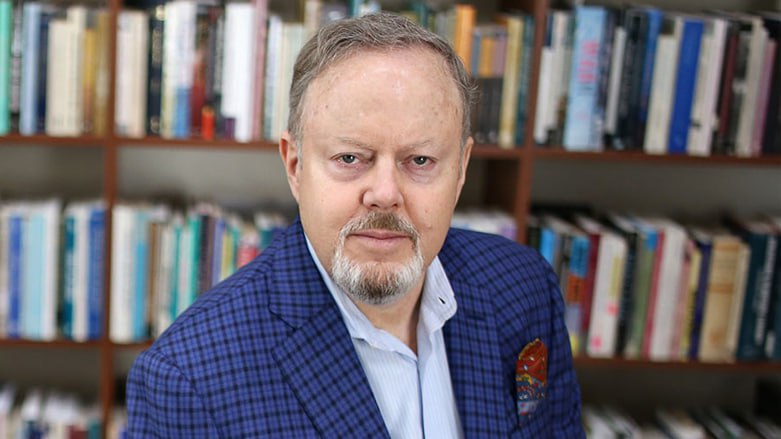
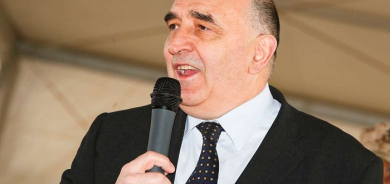
Brendan O’Leary is the Lauder Professor and Chair of Political Science at the University of Pennsylvania. An internationally recognized expert on Northern Ireland, power-sharing, and multinational societies, he has authored over 30 books, including A Treatise on Northern Ireland and Making Sense of a United Ireland. O’Leary has advised the UN, EU, UK, Ireland, and the Kurdistan Regional Government, and holds honorary membership in the Royal Irish Academy and an honorary professorship at Queen’s University Belfast.
Gulan: Professor O’Leary, as an international constitutional advisor, you played a pivotal role in drafting both the Transitional Administrative Law (TAL) and the 2005 Constitution of Iraq. Nearly two decades later, we observe that many of the Constitution's most crucial articles remain unimplemented by Baghdad. From your academic and political perspective, what are the primary reasons behind the Iraqi state's failure to consolidate a genuine federal system?
Professor O’Leary: Fundamentally the political parties representing the Arab majority do not believe in federalism. Specifically, they do not believe in the federation negotiated in 2005 and ratified in the October 2015 referendum. Most of them are instinctive centralists: they associate federalism with secessionism, and, of course, they thereby make secessionism a self-fulfilling prophecy. The Sunni Arabs were initially the most opposed to federalizing Iraq. They organized an insurrection against the US-led occupation, and the constitution. That led the Shi‘a parties, notably DAWA, to become even more centralist in a securitized response.
Externally federations work best when supported, or at least not threatened, by their neighbors. Baathist Syria supported the Sunni insurrection; the Saudis did so less overtly. Turkey strongly opposed the formation of the KRG, though it relented between roughly 2007 and 2012, when it judged that the KRG was its most reliable energy and business partner in Iraq—a position to which it periodically returns. Iran backed the new Shi‘a dominated government in Iraq for its own security and sectarian interests. Initially, it preferred a weak and chaotic Iraq, then it preferred a centralized Iraq, partly modeled on Iranian practices—multiple militia, support for the so-called “Axis of Resistance” in the Middle East. Above all, Iran sought to neutralize American interests, particularly through its militia and intelligence operations.
Ironically, and tragically from a Kurdish perspective, the bulk of American policymakers in the State department and the Pentagon also preferred a centralized Iraq, in the conviction that a centralized Iraq was the best means to “balance against Iran.” America never full-throatedly endorsed the Constitution of 2005. They argued that constitutional disputes were an internal matter; some Arabists in US think tanks argued that the “Kurds over-reached.” According to this mentality, the Kurds should stay in Iraq to mediate Sunni and Shi‘a interests, and to avoid upsetting America’s NATO ally, Turkey. Therefore, Iran and the US, ironically, both ended up in practice supporting an entirely centralist “interpretation” of Iraq’s constitution and thereby jeopardizing the real negotiating gains made by the Kurds which had promised to remake Iraq as a multi-national, multi-ethnic and multi-religious federation.
Last, but not least, the constitution of 2005 has been subverted by those supposed to uphold it. Neither the court nor the second chamber have been legislated in accordance with the constitution. That is a deliberate failure of the Iraqi parliament—and numerous pledges made to Kurdish parties. The so-called “supreme” court, left over from the transitional period, but without any valid constitutional standing, purported to outlaw Kurdistan’s laws, presenting infantile and incredible arguments in its decision. And, of course, the major Arab parties who have controlled the executive in Iraq have exploited internal Kurdish divisions—through encouraging governorate-focused relations rather than inter-governmental relations between the federal and regional government, through the informal corruption of patronage, and through symbolic political ‘gifts’, such as the now toothless presidency, which is now primarily used as bait to encourage Kurdish infighting.
Gulan: In your previous research, you posited that should Iraq fail to function as a "pluri-national federation," an alternative would be to adopt a "federacy" model. Given Baghdad's ongoing constitutional violations and centralization efforts, do you believe it is time for the Kurdistan Region to officially shift its strategy and demand a federacy arrangement?
Professor O’Leary: Politically I would no longer use the “federacy” concept, because it is not widely understood, which is not to say that it is a false notion. And I would argue that since no one understands the misleading expression “semiautonomous,” both federacy and semiautonomous should be avoided. But I would argue for federacy in practice—with a qualification. Whereas before I foresaw the possibility of a more-centralized Arab Iraq co-existing with a more autonomous Kurdistan within a federal Iraq, I would argue that the Kurdistan Region should seek recognition as having a distinct relationship with Iraq, which would be confederal. The KRG should have complete domestic law-making autonomy, complete control and ownership over its own petroleum resources, and its own security forces. It should have an annual budgetary allocation from Iraq’s oil and gas revenues—say two-thirds of what it would be entitled to as a share of Iraq’s population, to allow for so-called “federal expenses” and to allow the KRG to extract, produce, and export its own oil and gas, and keep the revenues. And if that budgetary allocation is breached, it should consider withdrawing from Iraq’s institutions until it is restored. It should participate in Iraq’s parliament, perhaps at a reduced rate, but only vote on questions related to Kurdistan, and executive-formation. It should consider abandoning the presidency unless there is an agreement to restore the three-person presidency with a veto power for each president. It should seek special status for Kirkuk governorate and city. It should have a common market with Iraq and consider whether a customs union is in its interests. It should seek to be known as the State of the Kurdistan Region of Iraq to enhance international understanding of its status. It should complete and ratify its constitution—eliminating any references which imply any subordination to Iraq.
Gulan: Currently, the Kurdistan Region is facing continuous and severe attacks from outlawed armed groups and militias. How do you assess the Iraqi federal government's silence and structural inability to protect a region that is constitutionally part of its sovereign territory? Furthermore, under international law, what rights does the Kurdistan Region possess to defend itself against these non-state actors?
Professor O’Leary: The silence speaks for itself: either Arab parties in Baghdad parties approve the pro-Iranian attacks, or they feel impotent to prevent them, and in some cases, they might even be organizing them. A government that does not enforce its security authority for its so-called co-nationals or co-citizens ceases to be recognized as a government. Baghdad parties must decide whether they are an independent government or a client state of Iran—or an unhappy client state of both the US and Iran (the peculiar position in which it finds itself). Kurdistan has lawful authority under Iraq’s Constitution to provide its own security. It would be within its lawful rights to seek all assistance to do so.
Gulan: In your book Courts and Consociations, as well as in your extensive research on the security sectors of deeply divided places, you emphasize the critical importance of the balance of power. Today, Baghdad frequently withholds the budget and rights of the Peshmerga—a constitutionally recognized defense force—while simultaneously funding paramilitary groups. Concurrently, the Federal Supreme Court issues rulings aimed at dismantling the Region's autonomy. Have Iraq's state institutions, specifically the judiciary and the military, been weaponized to systematically destroy the Kurdistan Region's constitutional entity?
Professor O’Leary: Quite simply, yes. And Kurdistan has tried several re-sets since 2005. That is why it should seek a new path.
Gulan: Regarding recent developments in Syria and Rojava (Western Kurdistan), President Masoud Barzani has played a highly strategic role, particularly in his coordination with Tom Barrack, the US President's Special Representative. As an expert on Kurdish geopolitics in the Middle East, how do you evaluate President Barzani's efforts to safeguard Kurdish achievements in Rojava and prevent a broader humanitarian and political catastrophe?
Professor O’Leary: Some of the Kurds of Rojava made mistakes, though they were not alone in making them. The PKK-influenced Kurds believed their own ideology too much: their Arab allies have melted away like “the snows of yesteryear.” They were naïve in assuming they would be able to keep their own security forces on the basis of promises. As far as I can tell, they have not even insisted on Kurdish language rights. As President of the KDP Masoud Barzani did his best to prevent a humanitarian catastrophe. Syria’s stability is by no means secure. It seems likely that a new Sunn-Arab majoritarian dictatorship will rise from the ruins of Baathist Syria, underpinned by Turkish support. The American betrayal—Trump’s betrayal, to be accurate—of the Kurds of Syria is an awful warning. Is it likely to be reversed?
Gulan: The President of the Kurdistan Region, Nechirvan Barzani, is currently engaged in intensive diplomatic efforts, playing a mediating role among French President Emmanuel Macron, SDF Commander Mazloum Abdi, and the Syrian Foreign Minister. To what extent can such high-level diplomatic maneuvering by a sub-national entity like the Kurdistan Region help secure international guarantees for the survival of the political entity in Rojava?
Professor O’Leary: Nechirvan Barzani is a very skilled diplomat with decades of political experience: if anyone can achieve diplomatic success he can. President Macron remains in office until April 2027: it would be important that any diplomatic accomplishments with his assistance are credibly secured for the long term, ideally with support from other EU member-states. It is my understanding that the Syrian transitional government is centralist, regards federalism as secessionist, and that its leaders have no track-record of respecting minority rights—religious, linguistic, ethnic or national. They insist that Syria is “one nation.” Preserving Rojava is a tough mission in these circumstances. What’s left? The Turks have “cleansed,” Afrin; the Syrian army is in the other cantons.
Gulan: You have frequently testified as an expert witness before the US Congress and served as an advisor to both the US and UK governments. Given that the Kurdistan Region in Iraq and Rojava in Syria are currently facing existential threats, what strategic shifts do you believe the new US administration must implement in its approach toward the Kurds, recognizing them as a vital regional ally?
Professor O’Leary: The Trump administration does not do stable foreign policy-making. It is volatile and unpredictable—and prides itself on these traits. If the US wants reliable pro-American allies in the region, it has them in the Kurds of Iraq in particular. But, as saw in the first administration, Rex Tillerson and others allowed the outcome of the referendum of 2017 to be determined on the battlefield, and did not intervene when Iran allied with Shi‘a militias to take Kirkuk and the disputed territories. So, the KRG desperately needs a stable and secure US orientation towards their interests—an overt strategic partnership, and full public support for their constitutional objectives. In their absence, Kurds should “keep their powder dry.” I cannot tell you who will survive longer: the Trump administration or the Khamenei II regime. What I can tell you is the obvious: the rump of Iran—its Persian heartland—is always going to be a neighbor of Kurdistan, so the KRG must think long-term.
Gulan: You are the author of the award-winning book Making Sense of a United Ireland and possess deep expertise in territorial restructuring and national reunifications. Observing the leadership of the Kurdistan Region actively advocating for the survival of Rojava, could one argue that cross-border Kurdish nationalism has matured to a point where regional states can no longer easily fragment or isolate these communities from one another?
Professor O’Leary: Broadly speaking most Kurds, not all, have made a choice. They back parties which seek territorial autonomy in Iraq, Iran, Syria and Turkey. In their hearts they’d prefer independence, and a greater Kurdistan, but that is not feasible without all “the four wolves” being maimed or collapsing simultaneously. So, the wise policy for Kurds everywhere is to advance the cause of autonomy in each jurisdiction, as best they can, and establish or argue for strong cross-border institutions and relationships, including freedom of movement of people and commerce, and educational exchanges. The KRG is the best political attainment of the Kurds in the last century: its survival, and that of its citizens, is and should be the first priority of its parties.
Gulan: As a political scientist who has extensively researched state formation, secession, territorial restructuring, and the legacies of empires: given the systemic failure of the Iraqi state, the ongoing turbulence in Syria, and mounting pressures from neighboring countries, do you foresee the Kurds being inevitably pushed toward pursuing full, outright independence? Or is there still a viable prospect for Kurdish survival and success within the framework of the Sykes-Picot borders under a radically new structural format?
Professor O’Leary: A demanding question. Independence occurs through the defeat or collapse of empires, as with the Habsburgs, the Czars, and later the Soviets—path one. It occurs through “down-sizing,” when the host state decides to let go, as the French left Algeria, and the British left most of Ireland in 1922—path two. And it occurs through negotiated independence, after self-determination referendums recognized by the host state—path three. Kurds must assess whether Iran is an empire—I think it is, but is it on the verge of collapse? Too early to say. Are there potential down-sizers among the Arab parties in Iraq? Yes—provided the Kurds secede within the existing Kurdistan Region, and abandon their ambitions for Kirkuk, and obtain the grudging acceptance of Turkey. But the Arab parties refused negotiated independence in 2017, admittedly when the Kurds wanted Kirkuk. I see no evidence that the Arab parties have changed their minds, yet. The Baathist dictatorship in Syria has just been replaced by a Sunni Arab dictatorship, opposed to autonomy. Kurdish predicaments are therefore extremely tough: they must cautiously seek maximum autonomy where they can and be as wary of their allies as their enemies.