Marsin Alshamary to Gulan: Iraq Could Mediate the Region, but Faces Political, Security, and Governance Challenges
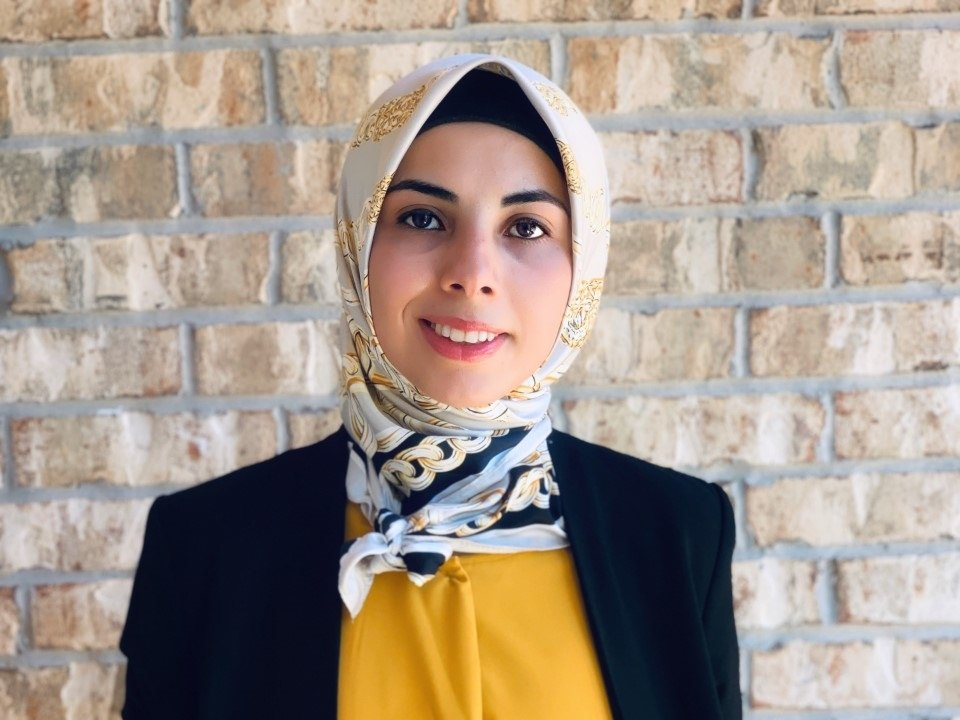
Marsin Alshamary is an assistant professor of political science at Boston College and a research fellow at Harvard Kennedy School. She studies the role of Iraq’s Shi’a religious establishment in politics, protests, and civil society, and is working on her book A Century of the Iraqi Hawza. Her analysis has appeared in The Washington Post, PRI, and on major international media including Al Jazeera, BBC, and CNN.
Gulan: There is increasing discussion about shifting alliance structures in the Middle East. In this emerging regional landscape, what position does Iraq occupy? Has Iraq become an independent actor, or does it still function primarily as a battleground where regional rivalries are played out?
Marsin Alshamary: Iraq has displayed potential to become an important regional mediator. In the past, it played an important role – alongside Oman – in setting the groundwork for the rapprochement between Iran and Saudi Arabia. Iraq has a very unique identity that allows it to play a unique role in the region – it has a large Arab and large Shia population which ensures proximity to both Iran and the Arab world, but it also houses the largest American consulate and embassy in the world. Its ideal position is to be a regional mediator, but of course it has faced many challenges in achieving this, including the use of its territory as a proxy battleground repeatedly.
Gulan: Since 2003, Shi’a political rule in Iraq has largely operated on the basis of consensus and power sharing among different factions. However, under the current government of Mohammed Shia’ al-Sudani and the growing dominance of the Coordination Framework, can we say that Iraq is moving toward a model of more centralized or single-bloc governance, signaling the end of intra-Shi’a political pluralism?
Marsin Alshamary: Among the Shia, the major division is between the Coordination Framework and the Sadrists. The Sadrists have positioned themselves as anti-establishment. However, the remaining Shia groups are still working together, which suggests that the consensus model within Shia political parties is still operating.
Gulan: The current government in Baghdad appears to be pursuing a strategy that could be described as “services in exchange for political quiet.” Do you believe this approach can successfully restore legitimacy to Shi’a political authority in southern Iraq, or is it merely a temporary solution that fails to address deeper structural issues such as corruption and unemployment?
Marsin Alshamary: To be clear, “services in exchange for political quiet” is a strategy used by all Iraqi politicians, not just the Shia. In fact, in political science it is often referred to as “clientelism” or “patronage” and we see it operate in many settings, inside and outside of Iraq. As a strategy, this generally works so long as the government is able to provide citizens what they want. However, many things are outside of the government’s control and the minute they are unable to provide their end of the bargain, the people may easily protest or rebel against the government. In general, this is not a sustainable long-term model, but it is a common one.
Gulan: We are also seeing armed groups, particularly the Popular Mobilization Forces, expand their activities beyond the military sphere and increasingly develop economic networks and institutions. Some observers compare this to the model of Iran’s Islamic Revolutionary Guard Corps. What risks does this growing economic influence of armed groups pose for the future of the Iraqi state, civil governance, and democracy?
Marsin Alshamary: You can look at this from the perspective of the inclusion-moderation hypothesis as well which argues that Islamist groups become more moderate when they are included in the government. Of course, these are not just Islamist groups – but armed actors – but there is an argument that their inclusion in a government changes their priorities and makes them more malleable than they previously were.
Gulan: From the perspective of an observer of Iraqi politics, do the current pressures coming from Baghdad toward the Kurdistan Region represent a temporary political tactic to extract concessions from Erbil, or do they reflect a longer-term strategic project among some political forces in Baghdad aimed at weakening federalism and re-centralizing authority?
Marsin Alshamary: Shia politicians in Iraq have no desire to centralize authority or to weaken federalism, as the federalist model was one agreed to in the days of the Iraqi opposition by Shia and Kurdish actors. However, what Baghdad seeks is an equilibrium in which the Kurdish leadership maintains its control over its territory and is able to be represented equitably in the Iraqi state, but without having foreign policy control.
Gulan: Kurdish leaders have often argued that their Shi’a political partners in Baghdad have not consistently honored political agreements. Is this primarily a problem of mutual distrust, or does it reflect a deeper shift in the balance of power in which Baghdad no longer feels it needs Kurdish political support to maintain authority?
Marsin Alshamary: Both sides are not honoring political agreements which contributes to further distrust. The root of this lies in the fact that the outlines of federalism are unclear in Iraq.
Gulan: For nearly two decades the Kurds were widely seen as one of the closest regional partners of the United States. Today, as relations between Baghdad and Washington have normalized to some extent, has the position of the Kurdistan Region declined within U.S. foreign policy priorities? Is Washington willing to sacrifice Kurdish autonomy in favor of maintaining a unified Iraqi state?
Marsin Alshamary: The U.S.-Iraqi relationship is very unstable currently, with the attacks by Iranian-backed armed groups escalating across the country. The Kurdish leadership in Iraq has fostered a strong relationship with the United States and likely a stable and long-term one, however we must keep in mind that the US does not consider Iraq or the Iraqi Kurds as one of the major political actors in the region, so the relationship will naturally be limited.
As I previously mentioned, Iraqi leaders do not want to diminish Kurdish autonomy, but only to address the issue of foreign policy monopoly. Constitutionally, only Baghdad can present Iraq or Iraqi interests in the international arena, but Kurdish leadership is constantly defying this through illegal representative offices abroad and contradictory foreign policy, despite having control over the Iraqi Ministry of Foreign Affairs. Once the issue of foreign policy is addressed, there is no desire to centralize control as the federal model works well in Iraq.
Gulan: Iraq is facing significant demographic and environmental challenges, including a rapidly growing youth population and the accelerating impacts of climate change. Do you believe Iraq’s current political elite have a long-term vision for governing the country over the next decade, or is there a risk that Iraq could gradually move toward the characteristics of a failed state?
Marsin Alshamary: Unfortunately, most of Iraq’s leaders prefer to firefight rather than to make any long-term planning, whether Arab or Kurdish. I don’t necessarily think that Iraq will be a failed state, but it will struggle tremendously and be forced to adapt quickly.
By Kobin Farhad