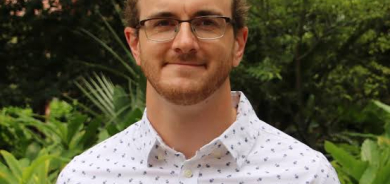
Dr. Kristian Coates Ulrichsen to Gulan: None of the Gulf States have yielded to U.S. pressure to take sides in relation to China
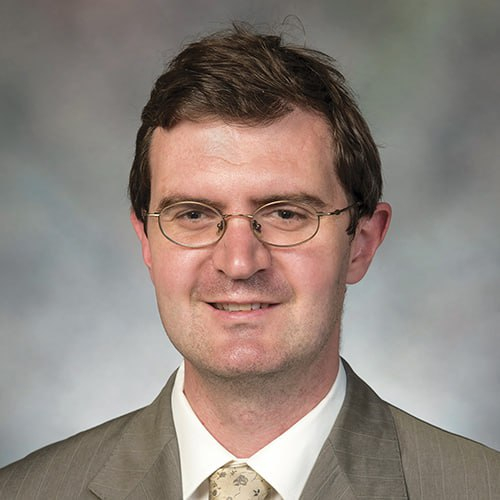
Kristian Coates Ulrichsen, Ph.D. is a fellow for the Middle East at the Baker Institute and co-director of the Middle East Energy Roundtable. He specializes in the evolving role of Persian Gulf states in the global order and long-term nonmilitary challenges to regional security. Previously, he served as senior Gulf analyst at the Gulf Center for Strategic Studies and co-directed the Kuwait Program on Development, Governance, and Globalization at the London School of Economics. He is the author of several books, including Insecure Gulf (2011), The Gulf States in International Political Economy (2015), The United Arab Emirates: Power, Politics, and Policymaking (2016), Qatar and the Gulf Crisis (2020), and Centers of Power in the Arab Gulf States (2023), and his research appears in journals such as Global Policy, Journal of Arabian Studies, and Third World Quarterly. He holds a Ph.D. in history from the University of Cambridge.
Gulan: In your research you have frequently examined the evolving position of the Gulf states within the international system. At a time when strategic competition between the United States and China has intensified, do you believe the Gulf states can continue to pursue a strategy of “hedging” between the major powers, or will they eventually be compelled to align more clearly with one side?
Dr. Kristian Coates Ulrichsen: None of the Gulf States have yielded to U.S. pressure to take sides in relation to China and they have all made clear that they do not wish to get drawn into great power competition or strategic rivalries that do not concern them. This is a departure from the Cold War era in the twentieth century when the Gulf States stood within the anti-communist camp, albeit that Kuwait was more non-aligned in its approach. Given the volume of energy, trade, and investment flows between the Gulf States and China, I expect this hedging to continue.
Gulan: There is growing discussion about a possible decline in the United States’ long-standing commitment to Gulf security. In your view, have Gulf states begun to question whether the U.S. will remain the primary “security guarantor” of the region, and are they therefore exploring new security partnerships or strategic alternatives?
Dr. Kristian Coates Ulrichsen: To varying degrees, and to the greatest extent in Riyadh and Abu Dhabi, officials in Gulf capitals have started to question the credibility of U.S. security guarantees and the long-term reliability of the U.S.as an engaged partner. This has developed cumulatively across two decades and four presidential administrations – Bush, Obama, Trump, and Biden – and the current U.S./Israeli military operations against Iran are likely to accelerate such questioning, as they have left the Gulf States exposed on the frontline to blowback from a way they tried so hard to avert. It may well be the case that Gulf States’ officials will seek to explore strategic alternatives or at least ways to have greater agency and diversified ties.
Gulan: In your book Centers of Power in the Arab Gulf States (2023), you analyze the structures through which political decisions are made in Gulf monarchies. In recent years we have seen power become increasingly concentrated in the hands of individual leaders rather than institutions, particularly in countries such as Saudi Arabia and the United Arab Emirates. What risks, if any, does this model of governance pose for the long-term stability of these states?
Dr. Kristian Coates Ulrichsen: The centralization of power within individual leaders, together with the shift toward systems of primogeniture in successions from father to son (but not necessarily the eldest son) is a significant shift in recent years. While such a shift can offer the prospect of stable leadership over decades, in the case of Saudi Arabia, it could also raise the risk of individual miscalculation should things go wrong. Part of the reason for the durability and resilience of Gulf monarchies has been the strength of the ruling family as an institution.
Gulan: Saudi Arabia’s Crown Prince Mohammed bin Salman has promoted what he describes as a transformative vision for the country’s future. To what extent do major initiatives such as Vision 2030 and projects like NEOM represent a realistic economic pathway toward a post-oil economy, and to what extent might they also serve as instruments for consolidating political authority and domestic legitimacy?
Dr. Kristian Coates Ulrichsen: Vision 2030 has certainly served as an instrument for consolidating Mohammed bin Salman’s domestic legitimacy, as the man with the plan for transforming Saudi Arabia. There is a risk that overpromising initial ambitions risks under-delivering and this is especially the case in the giga-projects such as Neom and The Line which, along with others, have been scaled back significantly in recent months. The downsizing of grandiose projects which were always more fanciful than realistic may be no bad thing if it results in the reallocation of capital around objectives that make more of a direct impact for Saudis themselves rather than the foreign investors and visitors they were intended to attract.
Gulan: In your work on the foreign policy of the United Arab Emirates, you have examined the country’s increasingly active regional role. Do you see the UAE continuing to pursue an assertive regional strategy, sometimes described as becoming a kind of “little Sparta,” or has its approach shifted in recent years toward de-escalation and normalization with neighboring states?
Dr. Kristian Coates Ulrichsen: The UAE’s response to the standoff with Saudi Arabia in Yemen in December and January was instructive, as the initial gains by UAE-backed forces in southern Yemen suggested that Abu Dhabi was continuing its policy of supporting groups across the region it felt were best placed to bring about local order, regardless of whether they were state-linked or armed non-state groups. A similar approach has been observable in Sudan where UAE backing for the Rapid Support Forces has continued despite the mounting international backlash. However, in the Yemen case, once Saudi leaders made it clear that a red line had been crossed for their own national security, the UAE opted to withdraw from Yemen rather than directly confront Saudi Arabia, which suggests that there are elements of both risk-taking and risk-awareness that continue to feed into the conduct of Emirati foreign policy-making.
Gulan: In your book Insecure Gulf, you discuss the erosion of many of the assumptions that once underpinned regional security. With energy prices rising again in recent years, has the renewed influx of oil revenues risked reinforcing economic dependence on hydrocarbons and slowing the momentum of diversification reforms in Gulf economies?
Dr. Kristian Coates Ulrichsen: Insecure Gulf was written in 2009 and published in 2010, during the decade-long boom in oil prices that lasted from 2003 to 2014, with the exception of a sharp dip in 2009. There followed a period of prolonged lower prices from 2014 to 2021 and then several years of much higher prices that lasted until 2024 when they settled into a pattern that is too low to meet the breakeven prices of budgets in most of the Gulf States. Such swings in energy prices and government revenues have led governments in most GCC states, with Kuwait lagging behind, to accelerate plans to diversify, but progress in developing genuinely non-hydrocarbons-related sectors has been harder to achieve, and there is still a way to go.
Gulan: Iraq and the Kurdistan Region are direct neighbors of the Gulf states, and we have recently seen increased Gulf interest in Iraq through investment, infrastructure projects, and development initiatives. Do Gulf governments increasingly view Iraq as part of their broader regional security architecture, or primarily as a strategic buffer zone in relation to Iran?
Dr. Kristian Coates Ulrichsen: Gulf governments see Iraq in several ways. One is as a strategic buffer zone in relation to Iran but we have seen governments in Gulf States increasing their investments across Iraq and in engaging with Iraqi officials and entities in ways which suggest that the future and success of Iraq is seen as an important part of the broader regional security dynamic.
Gulan: Finally, looking ahead to the next decade, what do you believe represents the most significant challenge that could potentially undermine the stability of the Gulf’s political systems: domestic social pressures such as youth dissatisfaction, economic vulnerabilities, or intensifying geopolitical competition in the wider Middle East?
Dr. Kristian Coates Ulrichsen: Intensifying geopolitical competition and the steadily rising threat of all-out war, or at least an uncontrolled regionwide escalation of tensions and hostilities, would put at risk the long-term plans for economic diversification and investment underway across the Gulf. This is an elevated risk in part because the parties driving the conflict(s) are external to the region and thus it is harder for those in the Gulf to influence or determine decision-making. At least with issues such as domestic social pressures of economic vulnerabilities, officials in Gulf States have policy options that they are fully in control.