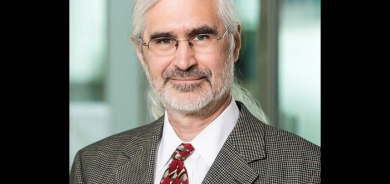
Dr. Amy Dru Stanley to Gulan: democracy is threatened worldwide and human rights grow ever more precarious

Amy Dru Stanley is a historian of the United States, with particular interest in law, capitalism, freedom and unfreedom, human rights, the relationship between the household and economic life, and the historical experience of moral problems. Her work has appeared in scholarly books and journals, as well as in the New York Times, the Washington Post, the Nation, Dissent, Slate, and Jacobin. She has received the Quantrell Award for Excellence in Undergraduate Teaching and the Faculty Award for Excellence in Graduate Teaching and Mentoring. In 2018, she was the jury chair for the Pulitzer Prize in history. In an exclusive interview she answered our questions like the following:
Gulan: According to your research, the home is an important place where moral and economic reasoning converge. If we focus on the household rather than the market as the main unit of analysis, how can we reconsider current economic inequality?
Professor Dr. Amy Dru Stanley: Focusing on the household enables understanding of economic inequality that is not measured strictly by monetary forms wealth — that is wages and income. It enables insight into the diminished life chances of all family members, parents and children, stemming from unequal access to housing, food, health care, education, and cultural goods. Focusing on the household also reveals how economic inequality may intensify the pressures of unwaged domestic labor – housework done mainly by women -- that supports social reproduction and the maintenance of family life. Reconsidering economic inequality in the present, as in the past, requires attention not only to the workplace and marketplace but also to the familial, generational, and gender relations of the household.
Gulan: The "historical experience of moral problems" is something you highlight. How can historians ethically negotiate the conflict between moral judgment and historical contextualization in a time of revived discussions about historical justice and reparations?
Professor Dr. Amy Dru Stanley: I’d caution against grand generalizations. However, I’d note that historical inquiry tends to be animated by moral concerns and considerations of justice – perspectives that are shaped by events of the present. It is a truism to say that all history is contemporary history, that history is rewritten by each generation. I don’t see any ethical tension between historical work that may lend support to claims for reparations and that offers fact-based analysis of experience and context. Certainly, this is the case with scholarship on the history of American slavery and its afterlives. Historians tend not to make explicitly normative claims (unlike moral theorists), but normative claims are often supported by historical accounts that reveal the facts of past wrongs.
Gulan: Your work casts doubt on the notion that freedom is an inherent byproduct of capitalism. Do contemporary labor regimes around the world—especially migrant labor systems—indicate that lack of freedom is a fundamental aspect of capitalism rather than an anomaly?
Professor Dr. Amy Dru Stanley: Especially because historians examine contingency and change, we tend to doubt assertions about “inherent” characteristics. Accordingly, my work has challenged the notion that freedom is an “inherent byproduct” of capitalism — a notion advanced by classical liberalism and neoliberalism. My work traces how the development of capitalism and ascendence of waged employment in the U.S. have abridged freedom. Certainly, therefore, unfreedom has not been an anomaly under capitalist systems of labor. Migrant labor, sweatshop labor, low-wage service labor – all illustrate the exploitation made possible by unregulated market relations and heightened by globalization. But it’s also worth noting that, in some instances, entrance into wage labor has offered women an alternative to subjugation and dependence within patriarchal households, a paradoxical form of liberation.
Gulan: You demonstrate how liberation changed the legal representation of coercion rather than eliminating it by charting the shift from slavery to contract labor. Do you believe that these 19th-century presumptions of autonomy and consent are still present in modern labor law?
Professor Dr. Amy Dru Stanley: Absolutely, despite legal guarantees of workplace rights and protections for unionization (dating from the New Deal era), modern U.S labor law is still pervaded by principles of formal contract freedom –-that parties to the labor contract stand on a footing of equality, bargain as autonomous agents, and that work relations are based on individual consent. My work has revealed that contract freedom in the workplace is illusory, given the inequality of power between corporate employers and individual workers. Meanwhile, in the U.S. today, corporate interests demonize the collective activity of labor unions as coercive, as allegedly interfering with the “right to work.” And the illusions of free contract are augmented by the legal protections afforded to private property that underwrite the authority of employers.
Gulan: Your work often resists clean separations between moral economy and market economy, how can historians more effectively explain how profit-seeking and moral reasoning coexist to form capitalist institutions?
Professor Dr. Amy Dru Stanley: My work has illustrated how the market economy has been morally justified by polemics that contrast the free market with chattel slavery. The evils of slavery – property in human beings, destruction of family, violence, coercion – are said to represent the polar opposite of the market economy in which profit-seeking is based on principles of formal freedom and juridical equality. One way that historians can explain how capitalist institutions rest on both profit-seeking and moral reasoning is by examining such rhetorical strategies and methods of reasoning that operate through contrasts. The profit-maximizing practices of “free markets” have acquired moral legitimacy when counterposed to enslavement and other forms of extreme and brutal domination.
Gulan: How do you understand the connection between legal citizenship, exclusion, and economic belonging in light of contemporary political changes, such as the emergence of populist nationalism during Donald Trump's presidency? Do these changes signify a break with or an extension of the United States' broader history of conditional freedom and rights?
Professor Dr. Amy Dru Stanley: The history of the US has bound together conflicting tendencies – aspirations for freedom and equal rights of citizenship with practices of exclusion and discrimination. Ours is a history of conditional freedoms, yes; but also of resistance to injustice and demands for democratic belonging. The coexistence in the U.S. today of populist nationalism and of opposition to the MAGA regime exemplifies the longstanding dualities of American history. For centuries, American history has been marked by nativism and racism but also by aspirations for equal justice and recognition of human rights. Those dualities are acute today.
Gulan: Do you see a viable path toward a form of capitalism that is truly detached from coercion and inequality, given your historical analysis of how capitalism has long coexisted with—and even depended upon—various forms of unfreedom, or does the history you trace indicate that these tensions will continue to be reproduced in new legal and social forms in the future?
Professor Dr. Amy Dru Stanley: As a historian, I hesitate to make predictions about the future. But if what’s past is prologue, as it is said (the words are Shakespeare’s in The Tempest) it’s hard to imagine that unfreedom will cease to coexist with capitalism development, particularly as democracy is threatened worldwide and human rights grow ever more precarious.