Professor Dr. Alain-G. Gagnon to Gulan: For Iraq, asymmetrical federalism is likely the best path forward
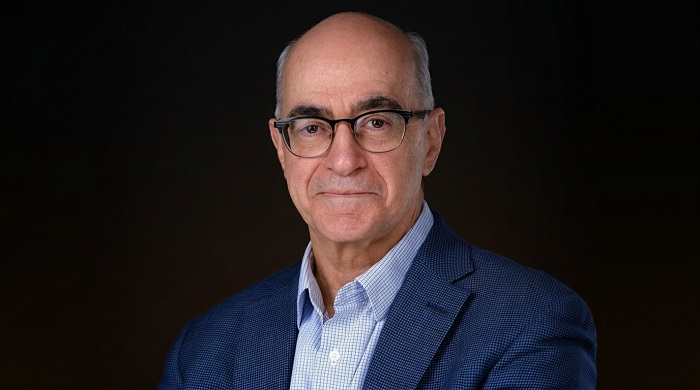
Alain-G. Gagnon is a professor at University of Quebec at Montreal, Department of Political Science, and Montreal-based scholar who serves as President of the Royal Society of Canada and Vice-President of the International Association of Centers of Federal Studies. Since the 1980s, when he published his first major academic works, Gagnon has been an active participant in debates surrounding the constitutional status of Québec amid struggles for sovereignty and negotiations to reform Canada's federal system. He is a well-established figure in the study of Québec and Canada and in the theorization of contested systems of national recognition
Gagnon has held visiting professorships at a number of European institutions, including the Universitat Autònoma de Barcelona, the Universidad Carlos III de Madrid, Sciences Po Paris, Sciences Po Bordeaux, and the Université Sorbonne Nouvelle. But he is principally based in Montreal. He served as Director of the Quebec Studies Program at McGill University from 1992 until 2003, when he joined the Political Science Department of the Université du Québec à Montréal. At UQAM he holds the Canada Research Chair in Québec and Canadian Studies. Using a comparative approach that draws on theories and concepts from political science, law, sociology and history, Gagnon and his team are analyzing how these phenomena affect intercommunity dynamics and cohesion in the context of relationships between citizens and their institutions.
A significant figure in the internationalization of research partnerships in Québec, Gagnon is well known for institution-building in his fields of publication and study. In 2018, he founded a research centre at UQAM that focused on the study of constitutional politics and federalism. Other Montreal-based research centers that Gagnon has led include the Centre for Interdisciplinary Research on Diversity and Democracy (CRIDAQ) and the Research Group on Plurinational Societies (GRSP), which he helped to establish in 1993. In an exclusive interview He answered a series of key questions:
Gulan: Across your distinguished career, you have dedicated much of your scholarly work to examining federalism not just as a mechanical system of government, but as a philosophy of human coexistence and mutual respect. To begin our conversation, looking back at your four decades of research, how do you personally define the core promise of federalism—and to what extent has Canada fulfilled that promise?
Professor Dr. Alain-G. Gagnon: the key question concerns the promise of federalism and to what extent federalism is a proper tool to recognize community and promote diversity. In the Canadian context, although there have been tensions from time to time, Canada remains a very established democracy. There is a capacity to tolerate deep diversity. By deep diversity, I mean there are different traditions that exist and cohabit. We have an important group of First Nations, and in an Ancient times, Aboriginal communities negotiated arrangements with the British Crown. Following that, with the occupation of the land by French settlers and later by the British settlers, there were as series of rearrangements of community relations. As we moved forward, the country was essentially built on a compact between the French and the English— with too little consideration for the first inhabitants.
The fact that the French and the English did not pay enough attention to the original inhabitants created a lot of worries, tensions, and discomfort over the long haul. Nevertheless, the country has been built on the principle of what my colleague James Tully calls ancient constitutionalism. My reading and writing are not always based on all the institutions; it is more about the normative dimension—normative considerations that ought to exist if people are to live together.
The ancient constitutionalism that my colleague James Tully is referring to has been a major inspiration for my work. Now, what does he mean by ancient constitutionalism that ought to be at the root of power relations and exchanges between communities?
There are three elements. The first one—and definitely the one that grounds that relationship—is about the mutual recognition of communities living on a given territory (Canada at large). So primarily, mutual recognition between the Aboriginal nations, the Québec nation, the Acadian nation, and the English-speaking Canadian nation.
Thus, we need to be in a position to recognize each other. Based on that, we will be able to move forward with trust—not a blind trust, but what I call a conditional trust. That is, to the extent that we recognize each other—the more we do that—the more there will be trust. If we, do it very superficially, there will not be trust. Accordingly, we need to find ways by which recognition can be granted, appreciated, and institutionalized through a variety of mechanisms that federalism has the capacity to produce.
Therefore, the first dimension of this ancient constitutionalism has to do with mutual recognition. The second element has to do with consent. The principle of consent is a major principle: you cannot force a minority group simply to stand up or sit down, nor can you determine for them how they want to act. You need to be able to find a fair alignment of forces; for instance, in the case of Iraq, the Kurds themselves need to be able to come to terms with their own differences, and they need to come to term with the way they negotiate with the majority group.
And you cannot force consent; that would be a contradiction. But again, it doesn't mean that all Kurds will agree on a given policy, because if they are democratic, which they are, they will need to discuss what is best for them and what is the optimal way to promote a given vision or worldview. Based on that, they'd be able to enter into a real dialogue with the majority group. Therefore, it's not the number that matters. What matters is the principle on which you will ground the relation—the relation between the communities that cohabit on a given territory.
Hence, as I mentioned, we have mutual recognition, consent, and the third element: the historical continuity of the group. Consequently, you cannot ask a minority group simply to disappear. They're there to stay. There exists an original sovereignty, and this sovereignty continues with them, accompanies them, unless a minority group decides to renege, to give up on the sovereignty they used to exercise. If they have not given up voluntarily this sovereignty, it remains in place. It needs to be taken for what it is: a sovereignty that is assumed by a given people within a multinational state or multinational federation.
All of these relations and dimensions of constitutionalism, if you have the three of them together, result in a much more democratic setting where everyone is appreciated for whom they are. No one is treated improperly; everyone is considered from the very integrity of their community, which are the key principles.
As a Francophone Quebecer, I am very sensitive to this issue because when the Canadian constitution was patriated in 1982 from Britain to provide Canada with a new constitution, many of us felt that ancient constitutionalism was not respected. Because of that, there have been tensions between Francophone Quebecers in particular and what we call ROC—the Rest of Canada—which is the majority group formed by the English-speaking communities. These tensions have existed, although they have been managed reasonably well because there has been no violence—primarily because we trust our public institutions and political institutions.
And we feel that even if there are grievances, the rights of citizens are still being respected. In Quebec, there is a Charter of Rights and Freedoms, and in Canada, there is also a Charter of Rights and Freedoms for the entire country. These charters provide protection for the citizens of the country as a whole and for Quebecers as a whole.
In some ways, the charter compensates for the lack of political and constitutional accords that date back to the 1982 repatriation. From time to time, there are uproars in Quebec. Currently, we are going through a provincial general election in Quebec. The aspiring party is an independentist party, but there are other parties advocating internal sovereignty, internal self-determination, autonomy, and asymmetrical federalism. Additionally, there are also people are very pleased with the federal system itself.
We are going to see the result on October 5. My hint is that the independentists might win the election, but I do not think they will get beyond 40 percent of the popular vote. Therefore, they will not be able to proceed with moving toward independence, though perhaps they might decide to call a referendum down the road. This suggests that the matters not settled in 1982 are still being discussed, debated, and so on.
There is still the possibility that Quebec could ask its population how they feel about living in the country or about renegotiating a new arrangement with it. This is possible because we have a democratic system, and the federal government has never considered stopping Quebecers from asking themselves whether they want to stay, leave, or choose another path. That is quite important. On August 20, 1998, the Supreme Court of Canada delivered a major ruling on the secession of Quebec. In this ruling, the Supreme Court highlighted a variety of elements that needed to be addressed. It never questioned the right of Quebec to consult its people, but it noted key principles that must be respected.
Among these elements was the idea of democracy, first and foremost: Canada is a democratic state, so Quebecers are in a position to consult their population. The second element concerned federalism: we have a federal state with a federal culture, meaning there is a diversity of traditions and communities that must be fully respected. The third element was the respect for minority rights: were Quebec to secede, there would need to be guarantees for minorities inhabiting the Quebec territory that they would be protected and not taken for granted in a new Quebec state.
There was also an ultimate element concerning the rule of law and constitutionalism. The rule of law needs to be respected and abided by, along with constitutionalism. Constitutionalism refers to the principles I evoked at the very beginning of our discussion: you need mutual recognition, consent, and historical continuity. It is a balance of these three dimensions alongside the rule of law. The Supreme Court, therefore, provided a strong framework upon which Quebec can build a case to be viewed as a credible negotiator at the constitutional table. I think this made a significant difference—after that, most Quebecers felt they were freer in Canada than before. 1998 was a key moment with the Supreme Court ruling stating that in Canada we have two major majorities—the French and the English—and that it is possible for the French, residing primarily in Quebec, to have the right to self-determination internally and perhaps externally. However, a variety of conditions must be respected. If these conditions are met, then we need to enter into genuine dialogue and negotiation to ensure democracy is upheld.
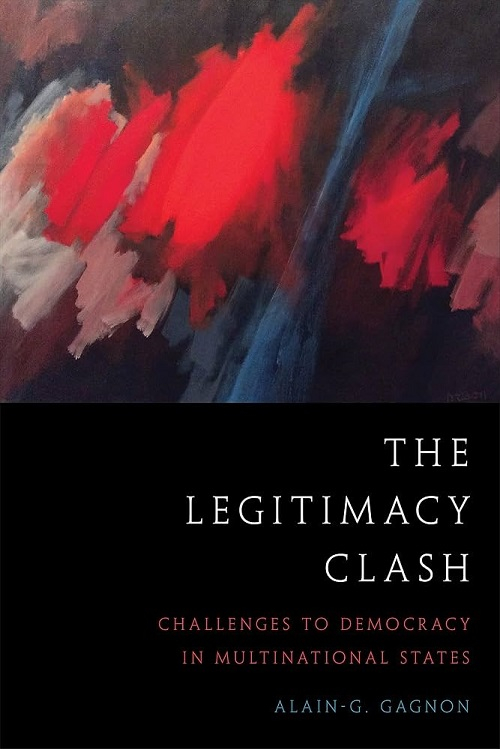
I would say there are valuable lessons for Iraq in this. In my book, “The Legitimacy Clash Challenges to Democracy in Multinational States”—which my colleague Tevfik Bayram translated into Kurdish. I analyze the clash of legitimacy claims between minority and majority nations. This serves as a solid foundation; the book has been well received in Kurdistan and within Kurdish communities at large.
Gulan: Throughout your extensive scholarship, you have consistently argued that Canadian political institutions tend to view federalism primarily as an administrative mechanism for territorial division rather than focusing on a genuine partnership between distinct national communities. Looking back at the evolution of the Canadian state, in what specific historical or institutional contexts has Canada succeeded in acknowledging its multinational reality—and where has it most fundamentally failed to move beyond a strictly territorial model?
Professor Dr. Alain-G. Gagnon: For me, I make a clear distinction between the concept of federation and federalism. A federation is about the administrative dimension: Canada is a federation. The core question is how we ensure that within this set of institutions, a culture or ideology called federalism is actively attached to it.
When referring to the state, it is more complex and needs to be unpacked so we understand its functioning. We should speak specifically of the federal state, as the member states themselves possess autonomy across a variety of fields. They hold specific competencies in multiple domains, and these competencies express the reality that they are sovereign in areas such as welfare, social policy, education, and infrastructure.
While member states are not sovereign regarding currency or national defense, they possess full sovereignty over domains like education. The underlying idea of federalism centers on the non-subordination of power: attempting to subordinate the power of a member state through non-constitutional strategies is illegitimate. Often, tension arises because the federal government possesses what we call the spending power—a capacity to spend significantly more money than the member states. It has the capacity to levy income taxes and so forth. Consequently, it often times uses that money to force member states to act according to the central government's desires. This creates tension because Quebec does not access at ease this type of forcing. For instance, if you want to receive money to build a hospital—even though healthcare is an exclusive sphere of provincial competence—Ottawa, the central government, will say, 'If you want this money, you will need to act according to my desires; otherwise, you will not get it.'
This creates a situation of potential blackmail. Nowhere in the Canadian constitution will you find the concept of fiscal federalism or the spending power of the central state, yet it exists in practice. It is nowhere written, but Ottawa remains capable of using that money to force a member state to act according to the desires of the central government, even within the province's own exclusive fields of jurisdiction. This is a way to undermine the power of the member states. Obviously, as a federalist, I do not think this is respectable, nor do I think it ought to prevail. Therefore, on this issue, Quebec, Alberta, and other provinces will often stand together as one to push back against the central government.
Administratively, we have seen during the Trump administration that while I wouldn't call it a state of panic, there are definite concerns that the U.S. is attempting to strongly influence the situation in Canada. Canadians are coming together as one. Quebecers, in fact, are endorsing the Prime Minister of Canada probably more than any other segment of the country at the moment—not because they are more federalist, so to speak, but because there exists a bigger threat: President Trump. It fosters a lot of positive unity when you have an elephant on your doorstep, and you are much smaller, 'If the elephant turns around, you are in trouble.' So, Canadians are setting aside rivalries and animosities to rally behind the current Prime Minister—perhaps even more in Quebec than in any other region, which is fascinating to see and suggests that dynamics can adapt.
Gulan: What about the lessons for Iraq in managing the dynamics of federalism and the tension between the central state and the Kurdistan Region of Iraq, which is a constitutionally recognized entity?
Professor Dr. Alain-G. Gagnon: Well, I wish I knew more about the Iraqi situation. I was invited to speak at Kurdistan University in Erbil, but there were too many local events taking place at the time, so I decided to postpone my visit. Earlier in my career, I visited places like Lebanon and India. As for the lessons for Iraq: the primary lesson is that democracy must be the prevailing force. For me, that is the foundational principle.
Even if there are tensions, democratic institutions need to be buffered, consolidated, and respected. If you look at the Canadian case, federalism can take many forms—there is not just one model. For Iraq, including the Iraqi and Kurdistan contexts, asymmetrical federalism is likely the best path forward. The needs of the Kurds differ from those of other communities, so it is beneficial to develop a policy process that adjusts to the specific needs of each group. If Kurdistan requires particular public policies, other communities should not automatically oppose them simply because they differ from their own.
You need to find ways to accommodate your specific policy requirements while simultaneously recognizing the rights of other minorities living within your territory. Kurdistan is not entirely homogenous; other groups reside there, so mechanisms must exist to respect the rights of individuals—including those belonging to the national majority group. Ensuring these protections prevents international institutions from questioning your right to internal self-determination. This is the core claim: not necessarily external secession, but the right of the Kurdish people to exercise internal self-determination through federalism.
Another relevant concept is consociationalism, which is used in countries like Belgium and Switzerland, where sovereignty is exercised much more locally at the canton, state, or provincial level. Ultimately, the essential ingredients are diversity, segmental autonomy, the non-subordination of power, and the right of veto. At the same time, certain commonalities must be shared across the entire population of Iraq, such as citizenship rights. You need shared national touchpoints alongside the assurance that whether you are in your home region or elsewhere in the country, your rights are respected both as a Kurd and as an Iraqi.
Gulan: Drawing on your influential work in the sociology of intellectuals and elite behavior, political and academic figures have played a decisive role in defining the terms of Canadian federal debates. Reflecting on recent decades, how have intellectuals actively shaped or contested the dominant national narratives in Canada and Quebec? Have they acted primarily as creative architects of constitutional compromise, or have they reinforced institutional rigidity and polarization?
Professor Dr. Alain-G. Gagnon: In fact, I have written quite extensively on the role of intellectuals—going back to my early work (The Role of Intellectuals in Liberal Democracies), I think I have published four or five books on the subject. In the case of Quebec, it has been primarily about the role of social scientists in the policy process. Outside of Quebec, across Canada, it has been driven more by technocrats.
In Canada, there was an influential book by Doug Owram titled The Government Generation, which examined the role of public servants around the 1940 and how they developed the Canadian state to make the country what it is today. In Quebec, the trajectory was different. The bureaucratic apparatus was not as prominent at the start. However, by the early 1960s—when Quebec began to mobilize, organize, and build its own state—the role of intellectuals became crucial in conceptualizing what the country and federalism were about. A modern public service then developed in parallel.
It was this convergence of intellectuals and public servants that transformed the Quebec state into a remarkably powerful institution to help Francophone Quebecers secure a full place within Canada. Universities expanded significantly during this period as well. The 1960s brought about the creation of several new universities in Quebec, turning the province into a dynamic hub for intellectual development that attracts people from around the world. Ultimately, both intellectuals and bureaucrats were instrumental in shaping the Quebec state and fostering a highly educated, pluralistic, and well-trained society. Education served as the driving voice for the nation, equipping it better to face global challenges effectively.