Dr. Ian Lustick to Gulan: President Trump is too erratic to base analysis on his policies
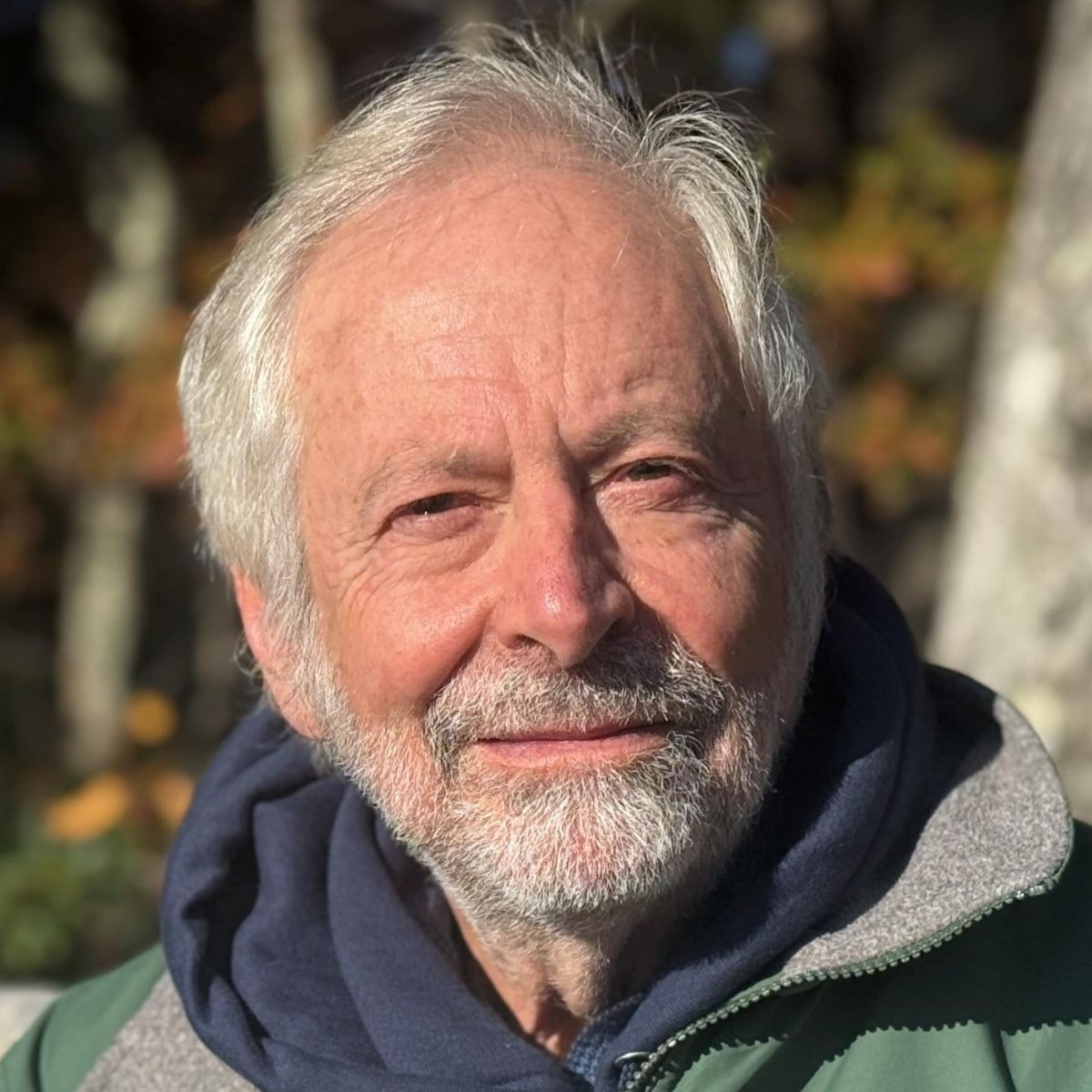
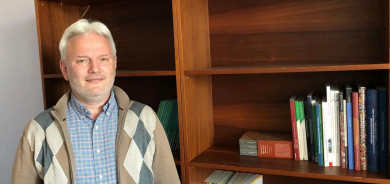
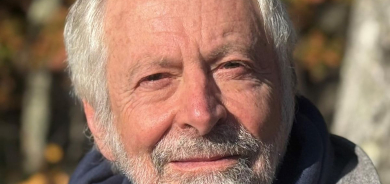
Dr. Ian Lustick holds the Bess W. Heyman Chair in the Political Science Department of the University of Pennsylvania. He teaches Middle Eastern politics, comparative politics, and computer modeling. He is a recipient of awards from the Carnegie Corporation, the National Science Foundation, the National Endowment for the Humanities, and the Social Sciences Research Council. Before coming to Penn he taught for fifteen years at Dartmouth College and worked for one year in the Department of State. His present research focuses on the implications of the disappearance of the option of a negotiated “two-state solution” to the Israeli-Palestinian conflict and techniques of counterfactual forecasting. He is a past president of the Politics and History Section of the American Political Science Association and of the Association for Israel Studies, and a member of the Council on Foreign Relations. Among his books are Arabs in the Jewish State (1980); For the Land and the Lord (1988, 1994); Unsettled States, Disputed Lands (1993); Trapped in the War on Terror (2006); and Paradigm Lost (2019). In an exclusive interview He answered our questions like the following:
Gulan: The recent pause in fighting between the U.S. and Iran has lowered the chance of a bigger war in the region for now, but the main problems between them are still not fixed. From your point of view, what factors in the structure of the situation will decide if this ceasefire leads to a lasting political solution or just becomes another short break before fighting starts again?
Dr. Ian Lustick: President Trump is too erratic to base analysis on his policies, the leadership in Iran could change as a result of Israeli assassinations, and in Israel itself Netanyahu could be removed from power as a result of October elections. Structurally, the situation remains dangerous as long as Israel is not deterred from using its military dominance in the region and its political clout in the United States to treat fundamental political problems as if they had coercive and kinetic solution and as long as Iran is organized to seek revenge and distract attention from internal discontent.
Gulan: In your work, you have argued that policymakers frequently misunderstand the political situation in the Middle East because they depend on outdated ideas about strategy. Has the recent clash between the United States and Iran changed the balance of power in the region, or are we just seeing another round of the same old cycle of tension, rising conflict, and eventual talks to ease things?
Dr. Ian Lustick: The outcome of the fighting in June 2025 and this spring has adjusted assessments by regional and international actors of the credibility of American threats to use force to achieve secondary objectives in the region. But it has also solidified perceptions of Israel as nearly a rogue state. Meanwhile, Iran has shown that Washington under Trump is extremely sensitive to the economic and domestic political costs which Iran can impose on America, that the Arab Gulf states can be easily terrified that war could jeopardize the luxuries their citizens enjoy, and that relying on the United States and Israel for protection carries serious risks. In the short term this makes unilateral Israeli strikes more likely than joint US-Israel actions, but perhaps in the longer term makes it more likely that the idea of establishing a nuclear weapons free zone in the region will increase in salience.
Gulan: The ceasefire has brought hope that talks might take the place of fighting, but there are still big problems left, like Iran's nuclear program, the sanctions, and Iran's power in the region. Which of these problems do you think is the biggest challenge for a lasting agreement, and what kind of give-and-take, if any, could work politically?
Dr. Ian Lustick: A “lasting agreement” is very unlikely without change in American beliefs about Iran and, probably, some kind of change in the Iranian regime that could help achieve belief change in United States. But an arrangement similar to the JCPOA agreement can be achieved, whether officially signed or not, and tougher US policies toward Israel can prevent escalation. Still the question of who controls, protects, and/or benefits from shipping traffic through the Straits of Hormuz,the Iranian-Israeli proxy war in Lebanon, the desperate situation in Gaza, and Iranian commitments to seek revenge against the U.S. suggest trouble ahead.
Gulan: You have written a lot about the unexpected problems caused by U.S. policies in the Middle East. Has the recent conflict made America stronger or weaker in the long run when it comes to its position in the region?
Dr. Ian Lustick: The conflict has definitely and significantly weakened the position of the United States in the region. See my answer to Question 2. The US military is in danger of losing its bases in the Gulf and is finding itself caught between Turkey, a NATO ally whose leader is attractive to Trump, and Israel, whose Lobby in the United States, though under fire, is still extremely influential. Against a backdrop of wider U.S. policies that have weakened international law and international institutions, the drawdown of American forces in the Middle East will give those in the region with the capacity to fill that vacuum more power than they have had previously.
Gulan: If we look five to ten years into the future, do you think the Middle East will develop a more stable system for regional security, or are we heading into a long time of fragmented competition with frequent crises and changing alliances?
Dr. Ian Lustick: I see no evidence that encourages me to believe that in only five to ten years the regional security situation in the region will be more stable than it is now except perhaps that for some years the U.S. and perhaps even Israel will be inoculated against the propensity to believe that large political problems can be solved quickly by using military force.