KRG Releases Massive Statistical Summary Tracking Seven Years of Ninth Cabinet Governance

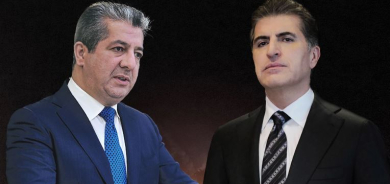
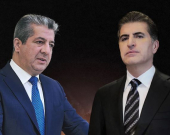
ERBIL, Kurdistan Region — The Kurdistan Regional Government’s (KRG) Department of Media and Information has published its most comprehensive statistical record to date, documenting seven years of infrastructure development, institutional reform, and economic shifts under the administration of Prime Minister Masrour Barzani.
The report, titled A Summary of the 9th Cabinet's Projects in Data (2019-2026), compiles hundreds of performance metrics spanning nearly every sector of public administration. Government officials state the publication is intended to provide a consolidated, measurable benchmark of the cabinet's performance for researchers, journalists, and the general public.
According to the Department of Media and Information, the Ninth Cabinet assumed office during a highly volatile period marked by the global COVID-19 pandemic, a severe crash in international oil prices, regional security instability, and intense political friction both internally and externally. The report frames its findings around a long-term strategy to move the region away from hydrocarbon dependency by modernizing public services, strengthening infrastructure, and expanding non-oil investments.
Water Security and Agricultural Resiliency
Amid rising regional climate pressures and recurring droughts, water infrastructure emerges as one of the largest focal points in the administration's data.
The report states that the Ninth Cabinet constructed nine dams with a total investment of 265.7 billion Iraqi dinars (IQD), expanding the region's total water storage capacity by 252.8 million cubic meters.
Major Dam Projects Completed or Initiated:
Dwin Dam: 100 million cubic meters capacity
Gomaspan Dam: 97.5 million cubic meters capacity
Other sites: Bastora, Dewana, Khinis, Aqoban, Toorajar, Shawger, and Chamrga.
Additionally, the government completed 30 smaller ponds, with 57 more currently under construction, augmenting the 98 ponds that existed prior to 2019. In terms of municipal utility supply, the report highlights the 720-billion-dinar Erbil Emergency Water Project, which provides 480,000 cubic meters of drinking water daily, alongside major network overhauls in Sulaimani, Duhok, Halabja, and various rural sub-districts.
This water infrastructure heavily intersects with the region's agricultural shift. The report reveals that agriculture's share of total investment in the Kurdistan Region surged from 1.8% in 2018 to 12% by 2025. To bolster domestic supply chains, four new grain silos were built in Qushtapa, Kalar, Rovia, and Halabja—adding 160,000 tons of storage capacity at a cost of 90 billion dinars—while five more are underway in Duhok, Zaxo, Kifri, Koya, and Harir. The report also tracks the expansion of local produce exports—including honey, pomegranates, apples, and tahini—to central and southern Iraqi markets as well as international destinations.
Transportation and Municipal Expansion
The statistical review outlines a massive, region-wide transportation footprint. The Ninth Cabinet launched 1,271 road projects representing a planned capital allocation exceeding 5.3 trillion dinars, intended to span nearly 5,940 kilometers.
Road Project Status (2019–2026)
Number of Projects
Total Distance Covered
Completed
810 projects
3,055 kilometers
Under Implementation
461 projects
2,885 kilometers
Within local municipalities, the government records 2,747 general infrastructure projects valued at 3.4 trillion dinars, alongside roughly 3,100 targeted water and sewerage initiatives designed to upgrade urban mobility and public safety.
The "Runaki" Project and Energy Transition
Power generation metrics show a significant increase in capacity over the seven-year period. Installed electricity generation rose from 2,360 megawatts in 2019 to 4,334 megawatts in 2026, an increase of 1,974 megawatts driven by new power plants in Khurmala, Khabat, Garmian, Deralok, and Bazian, alongside newly introduced solar plants. Natural gas now fuels 83% of the region's power generation.
The report highlights Project Runaki as a major institutional achievement, noting that more than 5.46 million residents (including 1.25 million households, 153,000 commercial entities, and 54,000 industrial/agricultural consumers) now receive uninterrupted, 24-hour electricity. According to officials, the continuous power initiative is roughly 90% complete across the region, resulting in the retirement of approximately 6,000 noisy and polluting neighborhood diesel generators.
Administrative Reform and Digital Transformation
The report dedicates substantial data to the structural modernization of public institutions. Financial and payroll systems underwent significant changes, led by the "MyAccount" (Hesabi) banking initiative, which transitioned over 950,000 public sector salary earners into formal bank accounts. The administration reports 1.1 million electronic payment transactions via digital systems and the establishment of a National Bank capitalized at 250 billion dinars.
Anti-Corruption & Audit Metrics: Government audits reviewed over 357,000 civilian employee records and 1,500 senior administrative files, resulting in the elimination of more than 4,100 unlawful "double salary" cases and the recovery of 2.13 trillion dinars in historical debts and advances.
In terms of institutional restructuring, the KRG launched more than 29 interconnected digital systems—including e-VISA services, the KRDPass, the Company Registration System, and electronic archives—to reduce red tape and increase financial transparency. On the security front, the administration reports that 88,900 Peshmerga personnel across 38 brigades and nine divisions have been systematically reorganized under the unified command of the Ministry of Peshmerga.
Public Services, Investment, and Environment
The report details a broad range of social and economic indicators across the region:
Investment Portfolio: The cabinet facilitated 778 private sector investment projects valued at $22.7 billion, with tourism securing the largest share of capital, followed closely by housing and industry.
Education: 273 new schools were built, approximately 3,000 renovated, and over 42,000 previously out-of-school children were integrated back into classroom learning.
Healthcare: The network expanded to include 79 standard hospitals and eight specialized thalassemia centers, alongside the introduction of barcode traceability to regulate pharmaceutical supply chains.
Social & Local Governance: The government formally recognized eight religious and ethnic communities, supported the hosting of over 853,000 refugees and internally displaced persons (IDPs), and altered local administrative boundaries to create the new independent administrations of Soran and Zaxo.
Environmental policies implemented during the Ninth Cabinet include mandatory 25% green-space requirements for new residential developments, resulting in an overall increase in the region's greenery ratio from 15% in 2018 to 20% in 2026. Additionally, mine-clearing teams neutralized over 180,000 unexploded ordnances, clearing 14 million square meters of land.
The report concludes with updates on the Erbil Green Belt Project, an ambitious eight-phase initiative designed to encircle the capital with a two-kilometer-wide environmental corridor. Once fully realized, the project aims to plant 7.7 million saplings and reduce regional carbon dioxide emissions by up to 210,000 tons, serving as the administration's primary defensive strategy against expanding regional desertification.