World-renowned Flamenco dancer Nati James to Gulan: I am deeply impressed by Kurdish dance; it is an extremely powerful art with a profound shared energy
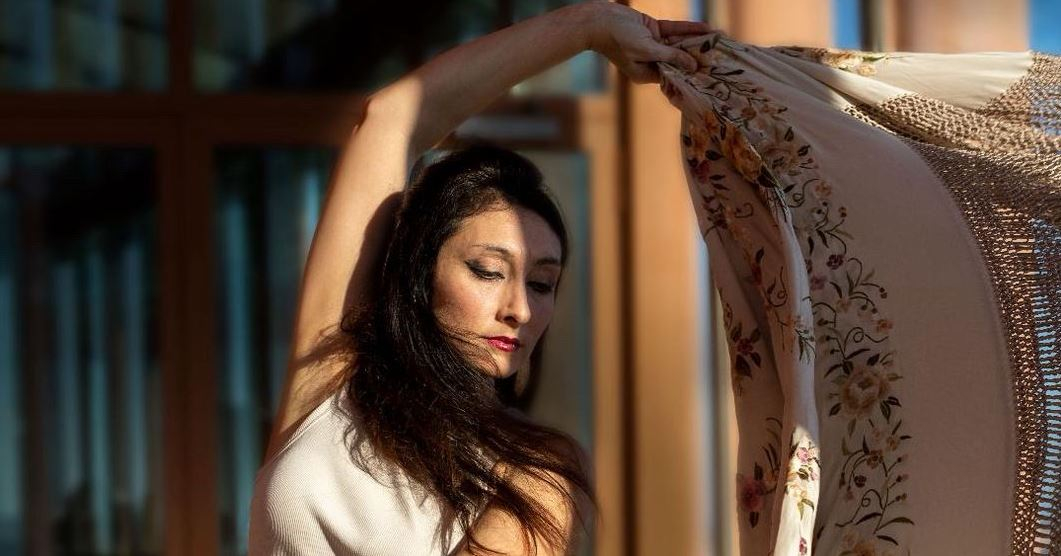
Nati James is a flamenco Dancer and choreographer, jazz singer and composer from Paris. “La Nati” conveys the energy, emotion, and passion of flamenco through the power and beauty of her dance. “Anger, strength, and beauty define the true essence of La Nati’s dance.” She has continuously performed in Seville, as well as at international theaters and festivals such as UK Mela Festival, Alegrias Theater in New York, Pafos Festival in Cyprus, Nomads Festival in Morocco, Dubai, and Festival Arte Flamenco de Mont-de-Marsan, and in several well-known Paris venues such as Sunside, La Chapelle des Lombards, New Morning, Cirque Romanès, Café Universel, and La Cigale.; In 2017, she released her first JAZZ FUSION album ¡Asín Sí! WITH THE NATI JAMES ORCHESTRA featuring twelve musicians. We directed several questions to Nati James regarding the history and characteristics of flamenco and its relationship with Kurdish art.
Gulan: How did you become interested in flamenco?
Nati James: Music has always been part of my life; I started singing and dancing from a very young age. I grew up in a French household full of classical and pop music. I also find my Celtic roots in my grandparents’ dances accompanied by accordion music. I was seven years old when I first heard a flamenco guitarist in a remote tavern; the beauty of that moment still lives vividly within me.
Later, when I discovered Paco de Lucía and Camarón de la Isla, I was deeply moved. I even cried.
Flamenco became a deep passion for me. Perhaps it was a search for a “nomadic” cultural identity that I have always felt within myself. Before flamenco, I had already built a career as a jazz singer in Paris. I had a master' s degree in Musicology at the University of Paris, trained at the Bill Evans Piano Academy, Conservatory and performed in jazz clubs. But to create my jazz flamenco fusion album, I went to Spain. My first approach to Flamenco was through singing with Esperanza Fernández. And finally, I moved into dance, and learned from great artists such as Farruquito, Juana Amaya,Carmen Ledesma, Farruco, Adela Campallo and more, during years.
Since 2012, when I performed my first show in Seville, I never stopped. my journey truly began as both as an art form and as a lived experience.
Gulan: Flamenco is known as a “dance of the soul.” Has it become a means of expressing your artistic identity?
Nati James: I really like the phrase “dance of the soul.” I think it truly reflects what Flamenco is.
For me, Flamenco is about transmission—a deep connection between earth and sky, and sentimiento, beyond pure movement.
I experienced this on stage and in rehearsals, especially in moments of improvisation, where something takes over that goes beyond technique and control. It is very close to what I associate with trance: a state where you are carried by the movement rather than directing it.
On stage, all the worries of daily life disappear, (What matters is presence, truth, and the act of giving in the moment).leaving only presence and honesty. Flamenco is a channel for expressing emotion in its most direct form. I felt this for the first time in a tablao in Seville. I realized flamenco had already existed within me— something deeply inherent rather than external.it was not only something I learned.
In 2017, when I released my album ¡Asín Sí!, I was able to combine composition, singing, and dance. From there, my personal and artistic identity began to form as a unified expression.
Gulan: What distinguishes flamenco from other movement arts, and what does it require?
Nati James: Flamenco is not only dance; it is a complete musical language where movement, rhythm, singing, and guitar come together within a structure called “compás” (rhythmic cycle). This interaction is continuous and is what distinguishes flamenco from other movement arts.
Technically, it requires intense daily practice—"zapateado (footwork), coordination, strength, precision, and expression. Physically, it is as demanding as high-level sports, but spiritually it is deeply musical and emotional. Its essence lies in “listening” and “transmitting emotion”; it is a living dialogue with musicians that requires awareness, sensitivity and presence.
On a psychological level, it demands discipline, patience, and humility. You must accept that progress takes time. As they say: “Flamenco hurts,” but at the same time it contains a life force that keeps you moving forward, because it is an art that is constantly evolving. For me, Flamenco is complete because it is not just technique, not just music, not just expression—it is all of it at once, in constant interaction.
Gulan: Flamenco has a spiritual state called “duende,” where the dancer loses control. How do you describe it?
Nati James: When “duende” is mentioned, one inevitably thinks of Federico García Lorca, who described it as something deeply rooted, something that cannot be explained or controlled. It is indeed a form of transcendence, but at the same time, it is very difficult to define. For me, duende feels like a moment of total surrender—where something beyond the conscious mind takes over, as if the body becomes a channel for more instinctive, rawer, almost like a pulse that emerges and guides the movement or the music in the present moment.
This state cannot be deliberately produced; it either appears or it does not. I have felt it while watching artists like Farruquito—something truly unique happens, almost like a sudden surge of energy.
That feels like a form of transcendence. It comes unexpectedly, like a flash, and completely transforms the moment.
That is precisely what makes it so powerful. It cannot be held or repeated—it exists only in the moment.
As a performer, I do not go on stage thinking about duende; I focus on being present, on giving, and on creating a sincere and intense moment. I do not go on stage thinking about duende. But I believe the beauty of it lies exactly there: in the fact that you never know when it will happen, or with whom.
This openness creates the conditions for that mysterious energy to appear.
Gulan: Is flamenco still tied to Spain geographically, or has it become a global art?
Nati James: UNESCO recognized flamenco in 2010 as an Intangible Cultural Heritage of Humanity. While its roots are in Andalusia (particularly in the heart of the region, between Sevilla, Cádiz, Jerez de la Frontera, Granada) and it remains the center of authenticity, flamenco has crossed geographical borders and become a global language that can be felt, understood, and expressed by people from many different cultures.
Respecting tradition is essential, as it preserves depths and authenticity, but it does not prevent fusion with other artistic and cultural expressions. Flamenco belongs to anyone who approaches it with sincerity and respect.
Gulan: Does flamenco still maintain its spirit in modern music styles?
Nati James: Flamenco is still alive because it it carries something deeply rooted, embodied, and authentic. IT expresses human emotion.
There is a sense of intensity, and truth in Flamenco that continues to attract audiences, including younger generations. While styles such as waacking, voguing, hip-hop, heels, and electro dance culture are very present among younger dancers, alongside commercial dance, which has also become highly visible in mainstream spaces, I do not see this as competition but as cultural richness. These forms are vibrant, expressive, and closely connected to contemporary culture, and they naturally attract a large number of young artists today. ,where multiple dance languages coexist and evolve side by side.
Flamenco offers something stronger than temporary trends: deep emotional connection. I see a new generation of artists who creatively carry this tradition forward while still inspiring human emotion.
Gulan: Why are Eastern cultures strongly connected to flamenco?
Nati James: Flamenco has deep historical links with Arab-Andalusian influences and nomadic cultures, particularly the Gitanos.
It is part of a long history of cultural exchanges, migrations, and encounters that have shaped Andalusia over centuries,
This background has created strong resonance in so many different regions of the world, including Arab and Asian cultures.
There is also a shared emotional expression of sorrow and passion between flamenco and Arabic and Persian music. The vocal expression can carry a similar sense of depth, pain, and beauty. It is not about saying they are the same, but rather that there are emotional resonances that feel familiar across traditions.
Similar depth can also be seen in Japanese art or ballet. This shows that flamenco, though Andalusian in origin, belongs to a wider human emotional experience beyond borders.
Gulan: What impact does social media have on flamenco and traditional arts?
Nati James: social media has helped introduce flamenco to a wider audience and created interest in experiencing it more closely (For some, this can create curiosity and even the desire to come to Andalusia to experience it more deeply) However, there remains a fundamental element that screens cannot replace: presence.
Flamenco lives in the moment. Its true essence lies in physical presence and shared human energy, shared spaces such as fiestas flamencas, where music, dance, and human connection come together.As we say in Spanish, “compartir y convivir” (sharing and living together)—this human dimension can only truly be felt through real presence.
For me, social media is therefore a tool for diffusion and discovery, but Flamenco ultimately needs to be experienced, practiced, and shared in real presence to be fully understood AND cannot be replaced by any screen
Gulan: Does mixing music with technology negatively affect traditional arts?
Nati James: The fusion of modern technology and electronic music with flamenco opens new horizons and acts as a bridge to attract new audiences. I am personally exploring this fusion in my work.
However, it must never replace traditional flamenco authentic, rooted deeply in history. The success of this fusion depends on how it is done; if approached with respect, artistic intention, sensitivity, it becomes a gateway for introducing flamenco to new audiences without harming its essence.
Gulan: How familiar are you with Kurdish art?
Nati James: I am deeply impressed by Kurdish dance; it is an extremely powerful art with a profound shared energy. In Paris and London, I had the opportunity to experience it with Kurdish musicians. What impressed me most was the collective “body unity” created through rhythm and movement, which reflects a strong sense of community.
I felt as if Kurdish music lifted me into a collective emotional state. This dance strongly reminds me of traditional Celtic dance from my mother’s family heritage, as both share a deep connection to land and ancestry.For me, Kurdish dance, like many traditional forms, carries this ability to bring people into a shared emotional and physical state. And I experienced it in a very natural, joyful, and almost trance-like way.
Gulan: Kurdish dance is group-based, while flamenco is individual. Is there a possibility of fusion between them?
Nati James: The beauty of flamenco is that it allows you to develop your own personal language and express emotions individually. But There is also for sure, a collective energy in Flamenco, especially in cuerpos de baile, in classical Flamenco or in contemporary productions, where there is real group cohesion and unity. That is so powerful. Kurdish Dabke energy is different: it is based on continuous group movement, hand-holding, and a shared rhythm that creates a powerful collective emotional state.
A fusion between these two worlds could become a very interesting artistic project that combines group energy with individual expression.
Gulan: What is your advice for young artists who want to pursue traditional arts?
Nati James: All forms of dance require daily training and full commitment to refine movement. What makes flamenco unique is that it does not matter what your body looks like or where you come from; there is always space to express yourself.
Because in Flamenco, it is not only the body that speaks—it is the soul.
Your strength, and fragility, your sensitivity, your uniqueness—this is your true beauty.
My teacher La Farrona used to say: “Hasta las uñas” (to the fingernails), meaning expression must reach every part of the body. Flamenco shakes you internally and forces you to connect with your raw emotions.
My advice to young people is: dance as you ARE , tRUST in yourself, and do not be afraid to show what is inside you to the world. sHARE IT, LIVE IT, Express yourself fully and with honesty.