Kurdistan Region Produces 2.56 Million Cubic Metres of High-Quality Clean Water Daily
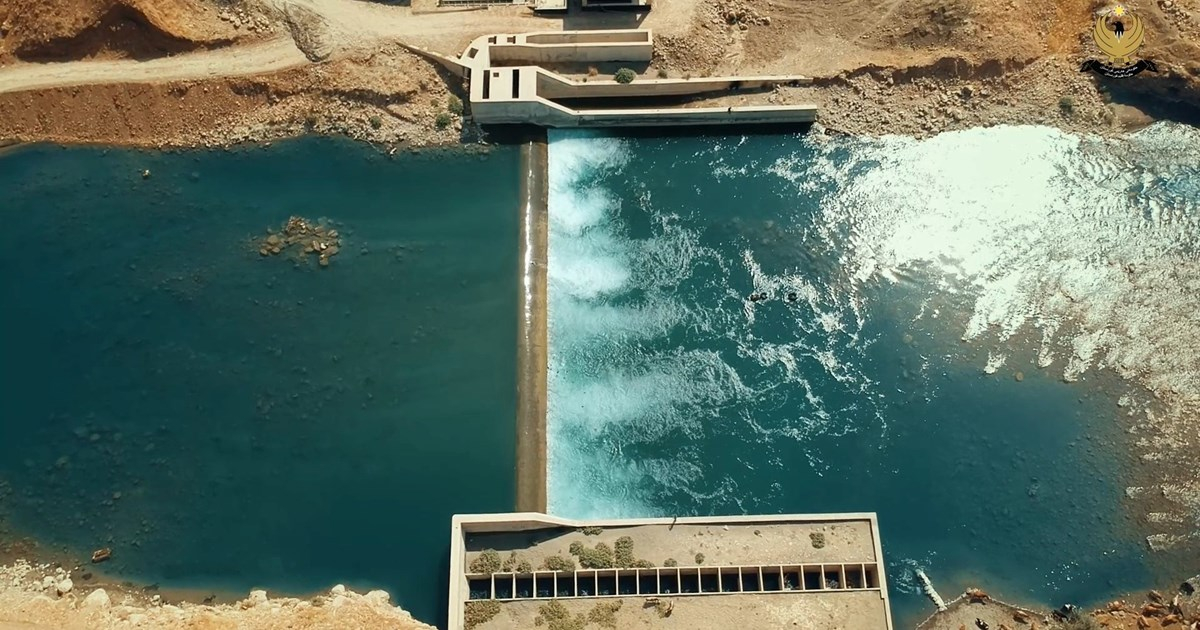
As part of its strategic efforts to eliminate water scarcity and provide clean water to citizens, the Kurdistan Regional Government (KRG) has introduced major reforms in the water sector. Through dozens of large-scale projects and modern treatment plants, it supplies millions of cubic metres of clean water to households across the Kurdistan Region.
To ensure the delivery of clean water in line with international standards, the Kurdistan Region currently provides water to citizens in cities, towns, and villages through 25 strategic projects and filtration plants, 4,946 water wells, and 536 natural springs.
Through these sources, an average of 2,564,000 cubic metres of high-quality clean water is produced daily.
Over the past five years, several key strategic projects have been completed, including the Erbil Emergency Water Project and the Qushtapa, Pirmam, and Barzan water projects. These initiatives have played a significant role in addressing decades-long water shortages and have led to the decommissioning of more than 1,000 water wells, marking an important step towards preserving groundwater resources.
Work is currently underway on several additional strategic projects across different areas, most notably:
- The Goptapa–Chamchamal Water Project
- Water projects in Akre, Khanke, Ranya, Bardarash, and Darbandikhan
- The installation of the third Dukan–Slemani water pipeline
- The Erbil Wastewater Recycling Project
In addition, water projects in Koya, Soran, and Kalar are expected to begin in the near future. Upon their completion, the KRG will have taken major steps towards achieving a long-term and sustainable solution to water shortages in the Kurdistan Region.