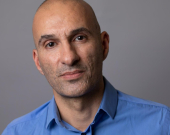
Gregory Jackson to Gulan: “We Are Not Moving Toward a Single Global Model of Capitalism”
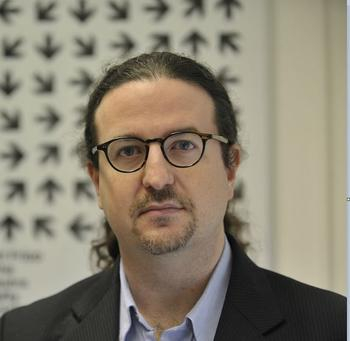
Gregory Jackson is a Professor of Comparative Business at King’s College London. His research examines how capitalism is organised and governed across firms, markets, and states, with a focus on corporate governance, corporate social responsibility (CSR), employment relations, and civil society. He studies how institutions shape business behaviour, its impact on inequality and the climate transition, and how governance can improve social and environmental outcomes. His work takes a sociological and cross-nationally comparative approach that extends to countries of both the Global North and South. Recognition for his work includes the JIBS Decade Award, an Einstein Research Fellowship, listing among Thomson Reuters’ ‘World’s Most Influential Scientific Minds’, and inclusion in the Stanford/Elsevier ‘top 2%’ world scientists database. He earned his PhD in Sociology from Columbia University and a BA from the University of Wisconsin–Madison.
Gulan: Much of your work examines how capitalism is organized and governed across firms, markets, and states. From a comparative perspective, what distinguishes contemporary forms of capitalism today, and do you see convergence toward a single global model or deepening divergence between regions?
Gregory Jackson: For several decades, there were clear pressures toward convergence. Liberalization and financialization strengthened capital markets, shareholder value spread globally, and many coordinated economies partially adapted to Anglo-American governance practices. It seemed plausible that capitalism was moving toward a common liberal model.
But that trajectory has begun to unravel. The United States — long considered the leading Liberal Market Economy — is now experiencing deep institutional strain. The concentration of wealth and technological power, particularly in Big Tech, has translated into significant political influence. Under Donald Trump, this has merged with populist nationalism and challenges to liberal democratic norms. What we are witnessing is not simply deregulation, but signs of state capture, where powerful business interests shape institutions in ways that weaken democratic accountability.
Yet, some leaders of US technology firms appear to favor a form of convergence — but one imposed through scale, data dominance, and surveillance capabilities rather than through liberal institutional diffusion. Platform infrastructures can standardize markets globally, but this is convergence through private power, not through shared democratic governance.
China represents yet another trajectory. Rather than converging toward Western shareholder capitalism, China has deepened a form of state-directed capitalism in which political authority coordinates finance, technology, and industrial strategy. Coordination there rests on centralized political control rather than market discipline.
So we are not moving toward a single global model. Instead, we see fragmentation: unstable liberal systems, assertive state capitalism, and hybrid regimes in between. Ironically, this fragmentation comes at a moment when global challenges — climate change, digital governance, geopolitical instability — require more institutional coordination and democratic governance, not less. Markets and technological power alone cannot solve these problems. Institutional capacity — the ability of states and societies to coordinate long-term investment and regulate concentrated power — is more important than ever.
Gulan: Corporate governance and corporate social responsibility are often presented as solutions to inequality and environmental degradation. Based on your research, to what extent have these governance frameworks produced substantive change, and where do they risk functioning more as symbolic or reputational tools?
Gregory Jackson: Corporate governance and CSR can produce meaningful change — but only under particular institutional conditions. Too often, CSR operates as a layer added on top: reporting frameworks, voluntary pledges, sustainability branding. If the underlying distribution of power within the corporation remains untouched, CSR risks remaining symbolic rather than driving substantive change.
The crucial question is whether corporate power is meaningfully constrained. Multi-stakeholder governance frameworks — including worker voice, regulatory enforcement, and credible oversight — are essential. Where these institutions are present, CSR can support genuine accountability.
One counterintuitive finding from comparative research is that CSR and corporate social irresponsibility are often positively correlated. Firms that invest heavily in CSR communication are frequently also those involved in environmental or social controversies. This reflects, in part, the strategic use of CSR to manage reputational risk — and in some cases to engage in greenwashing. Importantly, this relationship varies across countries: where institutional oversight and stakeholder participation are robust, CSR is more likely to reduce wrongdoing and environmental harm rather than simply repackage it.
In short, “doing CSR right” is not only about ESG reporting and disclosure. It is about embedding responsibility within governance structures that genuinely limit short-term decision-making and broaden accountability.
Gulan: You emphasize the role of institutions in shaping business behavior. How do differences in state capacity, labor relations, and civil society explain why similar multinational firms behave very differently across national contexts?
Gregory Jackson: In research with Niklas Rathert, we show that multinational firms are shaped not only by their country of origin, but by institutional differences among the host countries in which they operate.
When multinationals operate in countries with weak regulatory enforcement, limited labor protections, or fragmented (or state-captured) civil society, the constraints on corporate behavior are significantly reduced. Under such permissive conditions — which exist in parts of the Global South — firms may engage in practices that would not be legally permitted or socially accepted in their home countries. This can include lower labor standards or environmental shortcuts. Even “responsible” firms may become irresponsible abroad, shifting social and environmental costs onto more vulnerable societies.
Unfortunately, many governments continue to compete for attracting foreign investment by relaxing regulations or increasing labor flexibility, creating pressures toward a regulatory “race to the bottom.” Even the recent 2025 labor law reforms in India have been debated in terms of whether they prioritise attracting investment over maintaining adequate worker protection. In such contexts, civil society groups — independent unions, consumer groups, NGOs, and a free press — need to play a role in pressuring governments, or acting as a watchdog that monitors corporate conduct and mobilizes public pressure when firms cut corners.
Gulan: Climate transition has become a central challenge for modern capitalism. In your view, are existing corporate governance and regulatory systems capable of steering firms toward genuinely sustainable outcomes, or does meaningful climate action require a deeper transformation of capitalist institutions themselves?
Gregory Jackson: Climate transition cannot be treated as simply another corporate risk. In work with Başak Kuş, we argue that climate change poses a structural challenge to contemporary capitalism because it exposes the limits of markets and short-term profit orientation.
Climate disclosure rules or ESG metrics increase transparency and may shift investor expectations, but these do not guarantee decarbonization. Firms respond to incentives, and as long as fossil fuel assets remain profitable and infrastructure systems remain carbon-intensive, incremental reforms will have limited impact.
Meaningful climate action requires a new form of ‘green state’ to coordinate long-term investment, industrial policy to reshape energy systems, and social policies that manage the distributional consequences of transition. Climate change is not just an environmental issue; it is a political-economic one.
Gulan: Your work bridges sociology, management studies, and political economy. What does a sociological lens reveal about business power and inequality that is often missed by purely economic or managerial approaches?
Gregory Jackson: A sociological perspective begins from a simple but often overlooked insight: corporations are not only sites of wealth production and wealth protection — they are also sites of wealth distribution and social power.
Economic approaches often treat firms as neutral vehicles for efficiency, responding to price signals. A sociological lens asks different questions: Who sets the rules? Who benefits? And how do corporations shape the institutional environments in which markets operate? Through wage-setting, executive compensation, supply chains, tax strategies, and investment decisions, corporations profoundly influence how income and risk are distributed across society.
But corporate power extends beyond the economic sphere. Large corporations — especially in technology and media — shape information flows, cultural norms, and public discourse. They control digital infrastructures through which political communication increasingly occurs and exert significant influence over regulatory agendas. This gives them not only market power, but social decision-making power — power that can shape democratic processes and public debate in ways that reflect concentrated private interests.
Gulan: Many economies in the Global South are experiencing rapid market expansion without strong institutional foundations. Drawing on your comparative research, what risks arise when capitalism develops faster than the institutions meant to govern it, particularly in terms of labor rights and social cohesion?
Gregory Jackson: When markets expand faster than institutional capacity, the risk is not only economic imbalance — it is political and social instability. Wealth can concentrate quickly, while large parts of the population remain in informal or precarious employment. Young people may face exclusion from stable career paths. Over time, this erodes trust in both markets and the state.
Capitalism requires legitimacy. If citizens perceive that economic gains benefit only a narrow elite, social cohesion weakens. This can fuel political polarization, protest movements, or migration pressures. In such contexts, economic volatility easily becomes democratic volatility.
The broader lesson from comparative political economy is that the stability of capitalism depends on its institutional embedding — on building regulatory capacity, labor institutions, and social protection alongside market expansion. Development is not only about attracting capital, but about constructing governance structures that make growth socially inclusive.
For scholars and policy markets, this also implies a responsibility: we must move beyond models derived from the Global North and engage seriously with the institutional realities of emerging and fragile states. Only then can comparative research contribute meaningfully to more stable and inclusive forms of capitalism.
Gulan: In regions such as Kurdistan, where market institutions, state capacity, and civil society are still evolving, what lessons can be drawn from comparative political economy about building forms of capitalism that support inclusive growth, accountable corporate governance, and long-term social stability?
Gregory Jackson: I am not a specialist and have limited knowledge of Kurdistan specifically, so I cannot offer any specific prescriptions. I can only say that comparative political economy suggests broadly that there is no single model of capitalism to copy. Institution building must reflect local political realities but then aim to ensure that economic investment generates widely shared benefits. To do this, emulating other countries can be an inspiration, but borrowed ideas will also need to be creatively adapted to work locally.
The history of capitalism shows that when growth concentrates wealth in a narrow segment of society, legitimacy erodes. Durable economic systems are those that channel gains from development into visible public goods — education, social protection, and forward-looking infrastructure, including clean energy. For example, some resource-rich countries, such as Norway, have created democratic mechanisms to transform oil revenues into long-term public benefit. Gender equity offers another illustration. Where women are systematically excluded from property rights, credit, and labor markets, economies leave enormous human capital on the table. Countries as varied as Rwanda and the Nordic states have shown that this is not inevitable — targeted institutional reforms around inheritance, childcare, and workplace access can shift these patterns, benefiting both equity and economic prosperity.
The broader principle behind economic policy is finding rule-based and transparent governance structures that incorporates all segments of the specific society. Ultimately, stable capitalism rests on public trust. That trust emerges when institutions are predictable, fair, and oriented toward inclusion rather than short-term advantage.