Kurdistan Region President Urges New Generation to Build on Kurdistan’s Achievements and Correct Its Mistakes
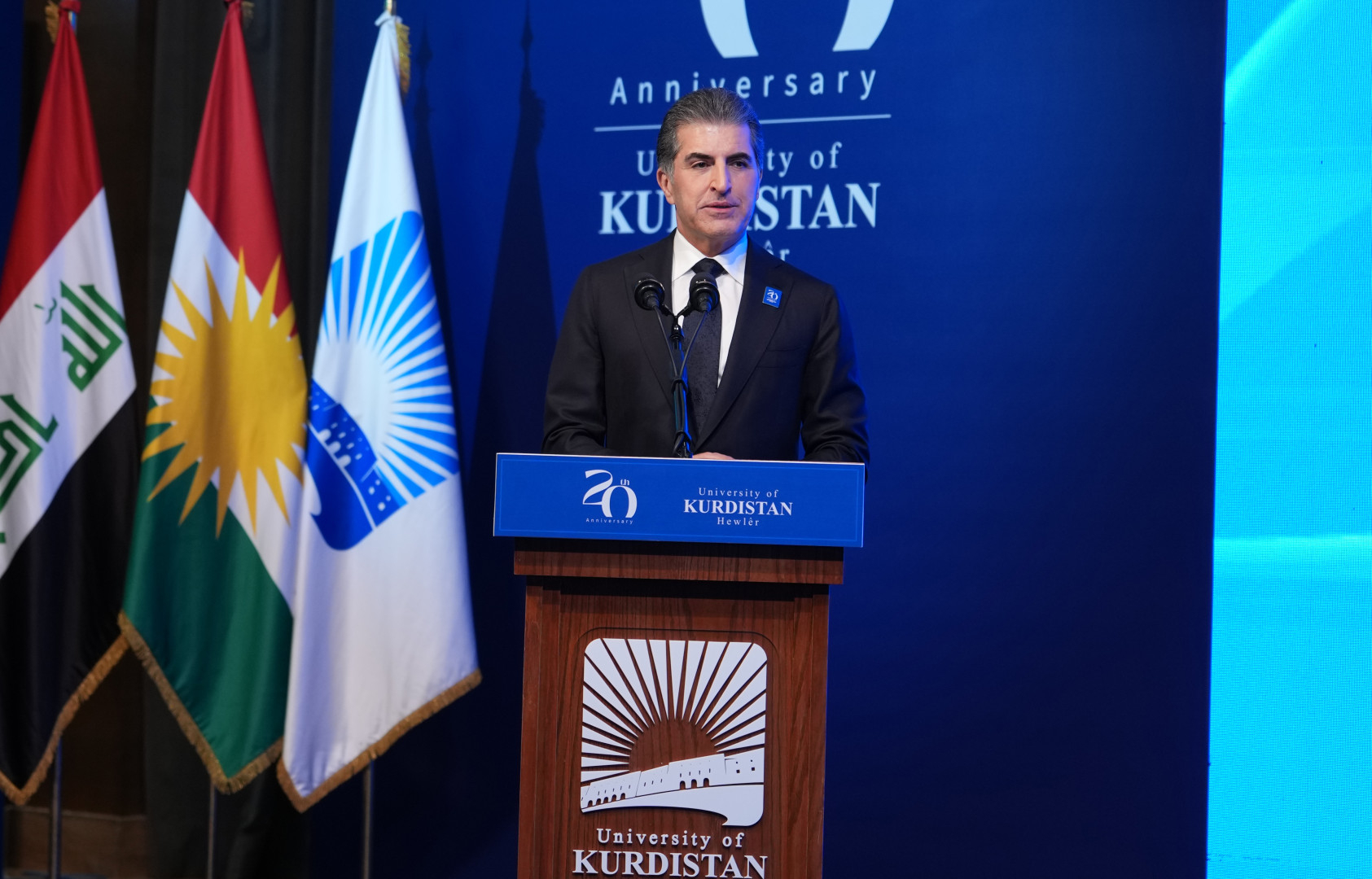
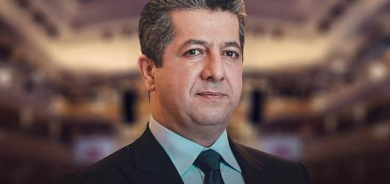
Kurdistan Region President Nechirvan Barzani has called on a new generation of students and graduates to preserve the achievements of previous generations while having the courage to challenge, improve and replace what no longer serves the Kurdistan Region’s future.
Barzani made the remarks during a ceremony marking the 20th anniversary of the University of Kurdistan Hewlêr (UKH), where he reflected on the university’s development and the broader transformation of the Kurdistan Region since 2006.
Barzani said the university was established at a time when the Kurdistan Region was entering a new phase following the 2003 liberation of Iraq, shifting its focus from survival toward development, institution-building and engagement with the international community.
“When we founded this university, we had a clear and unwavering objective,” Barzani said, explaining that UKH was intended to become one of the leading universities in Kurdistan, Iraq and the wider region.
He said the university was designed to provide education in English, connect students with the international academic community, maintain high academic standards and, above all, teach young people to “think correctly and objectively.”
Barzani highlighted the university’s achievements over its first two decades, noting that it has graduated more than 3,700 students who have gone on to contribute to the development and administration of the Kurdistan Region.
According to figures cited by Barzani, 75 percent of graduates have entered the labor market, while 90 percent of those have become part of the private sector. He also noted that more than 150 graduates have become entrepreneurs, creating employment opportunities for hundreds of others.
He said UKH alumni now hold significant positions across the Kurdistan Region’s governorates, including in government, business, education and institutional administration.
“Institutions must learn from their mistakes”
Barzani said the university’s 20-year experience had also demonstrated that establishing an institution was only the beginning.
“Establishing an institution is an achievement, but building an institution that has the ability to learn, adapt, and endure is another achievement,” he said.
He acknowledged that the university had experienced both successes and difficulties, adding that some decisions had been effective while others required reconsideration.
Rather than complaining about past mistakes, Barzani said institutions should learn from them.
“An institution does not become strong by presenting itself as though it has made no mistakes. It becomes strong by identifying and correcting its mistakes,” he said.
He connected the university’s experience to the wider history of the Kurdistan Region, saying that its development over the past two decades had also involved achievements, setbacks and difficult lessons.
Barzani said the Kurdistan Region had made significant progress since 2006, including the development of infrastructure and institutions, expanded international relations and the emergence of a new generation with greater access to education and opportunities.
At the same time, he acknowledged the challenges faced by the region, including terrorism and the war against ISIS, the arrival of large numbers of displaced people and refugees, economic crises, political disagreements, relations with Baghdad and wider regional instability.
Some difficulties, he said, were caused by circumstances beyond the region’s control, while others were the result of decisions made internally.
“We must have the confidence to distinguish between the two,” Barzani said.
He emphasized that the main lesson of the past 20 years was not that the region had always been right, but that it must remain capable of learning and adapting.
“What is beneficial must be preserved and strengthened. What is not beneficial must be changed,” he said, adding that outdated approaches should be renewed and new solutions developed when existing options are no longer sufficient.
Barzani also stressed the importance of criticism and independent thinking, arguing that a university that teaches students to question assumptions, examine evidence and think critically must itself remain open to criticism.
“We need a courageous generation,” he said, calling for young people to have the confidence to identify and correct mistakes.
“Criticism is not a threat to Kurdistan; rather, it is one of the greatest sources of strength for the country,” he added.
Artificial intelligence and the future of education
Turning to the changing global environment, Barzani said the world of 2026 is fundamentally different from that of 2006, particularly because of the rapid development of artificial intelligence.
He said information that once took days to obtain can now be accessed within seconds, making information itself insufficient.
The challenge, he said, is to develop people who can distinguish between information and knowledge, repetition and analysis, and who are willing to change their views when they recognize that they are wrong.
He also called for a generation capable of holding different opinions without hostility and solving problems that previous generations have been unable to resolve.
“What kind of Kurdistan can you help us build?”
Barzani said the question facing Kurdistan today should no longer simply be what kind of university the region needs.
“Twenty years ago, we asked: What kind of university does Kurdistan need?” he said. “Today, I would like to reverse that question: Those educated at this university—what kind of Kurdistan can they help us build?”
He said graduates should not merely enter existing institutions but should work to improve them and, where necessary, create institutions that do not yet exist.
“I hope today’s generation will never think our generation has discovered all the opportunities the Kurdistan Region needs,” Barzani said. “Because we have not discovered them all.”
He said the current generation had brought Kurdistan to its present stage and that the responsibility for its next phase would increasingly belong to younger generations.
“Become better than us”
Barzani told students and graduates that they would inherit not only the achievements of previous generations but also their experiences, shortcomings and mistakes.
He urged them neither to reject that legacy entirely nor to defend it uncritically, but instead to improve it.
“The university must not spend the next twenty years trying to remain as we envisioned it in 2006,” he said. “Rather, it must become a university that, even in 2026, we cannot yet fully imagine.”
He said UKH should generate knowledge and scientific advances that Kurdistan does not yet possess, help resolve outstanding problems and remain connected to global science while maintaining a strong commitment to the region’s development.
“The university was never intended to become a monument to its founders; rather, it was intended to become an institution capable of surpassing them,” Barzani said, adding that the same principle could apply to Kurdistan itself.
“Our true success is not that you become like us; true success is that you become better than us and improve what we have not,” he said.
At the conclusion of his speech, Barzani thanked those who had contributed to the establishment and development of UKH and expressed particular appreciation to the university’s leadership and contributors.
He also addressed the university’s future infrastructure, saying he understood that the design for a new university campus had been completed.
“From this platform, we call for construction to begin as soon as possible and for the new campus to be completed without delay,” Barzani said.
He added that the university’s students “truly deserve it” and reaffirmed his full support for the project.
Barzani concluded by congratulating the university on its 20th anniversary and expressing hope that the next two decades would take both UKH and the Kurdistan Region to a level of development that could not yet be fully imagined.