Iran Insists on Conditions for Reopening Strait of Hormuz Despite Trump Rejection
Iran said Sunday that it remains committed to its conditions for reopening the Strait of Hormuz, despite US President Donald Trump publicly rejecting Tehran’s latest proposal aimed at restoring access to the strategic waterway.
Iranian Foreign Minister Abbas Araghchi said Tehran had seen Trump’s public comments but had not yet received an official response through the Qatari mediators who transmitted the proposal to Washington.
“Our conditions are clear, and any move toward reopening the Strait of Hormuz is contingent upon these conditions being fulfilled. We will not back down from them,” Araghchi said, according to Iran’s state broadcaster IRIB.
He added that Iran had not closed the door to diplomacy or negotiations, but would continue to insist on what it considers its rights.
Iran recently presented a seven-day proposal at the United Nations General Assembly in New York that it said could pave the way for an end to the ongoing fighting and the reopening of the Strait of Hormuz. Tehran said the proposal had been conveyed to Washington through Qatari mediators.
According to Araghchi, the plan calls for an end to hostilities across the Middle East, including in Lebanon, as well as implementation of conditions contained in an earlier ceasefire agreement that collapsed several months ago. Those conditions included the release of frozen Iranian assets, the lifting of sanctions on Iranian oil and an end to the US naval blockade.
Trump rejected the proposal publicly on Saturday, telling reporters at the White House that Iran was seeking an immediate reopening of the Strait because, in his characterization, Tehran was suffering heavy losses.
Responding to Trump's remarks, Araghchi said Iran had received only the US president's public reaction and had not yet received a formal position through the mediators.
“We are waiting for the mediators to convey the definitive positions to us, and we will make a decision based on them,” he said.
Strait Remains at Center of Dispute
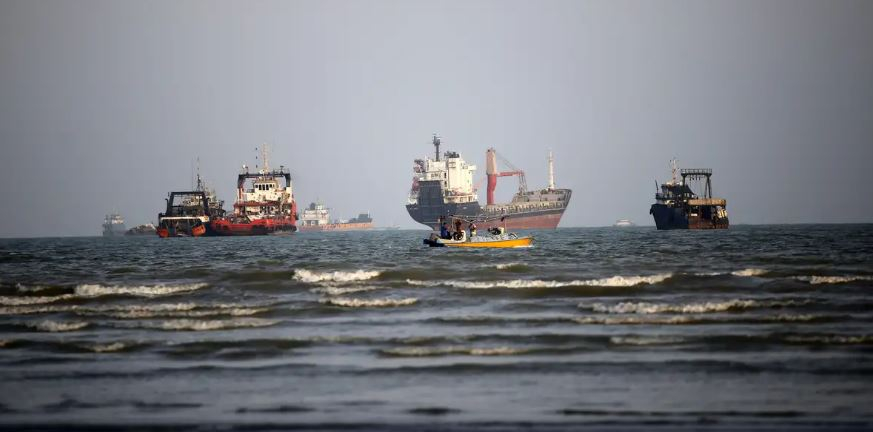
Iranian ports are currently subject to a US blockade as Washington seeks to pressure Tehran over the continued closure of the Strait of Hormuz, one of the world's most strategically important maritime passages.
Despite Trump's statements that the United States controls the waterway, international shipping through the strait remains severely restricted.
Early Sunday, the Persian Gulf Strait Authority (PGSA), established by Iran to oversee navigation through the Strait of Hormuz, warned vessels against using what it described as “illegal routes.”
The authority said ships violating its rules could face financial and safety risks, while vessels operated by companies that breach the restrictions could face limitations on their future passage through the strait.
Before the war, roughly one-fifth of global oil demand passed through the Strait of Hormuz. The waterway is also a major international route for liquefied natural gas and fertilizer shipments, making its continued disruption a significant concern for global energy and commodity markets.