Professor Dr. Thomas Hansen to Gulan: ‘The people’ is always the heart of democracy and all kinds of modern politics
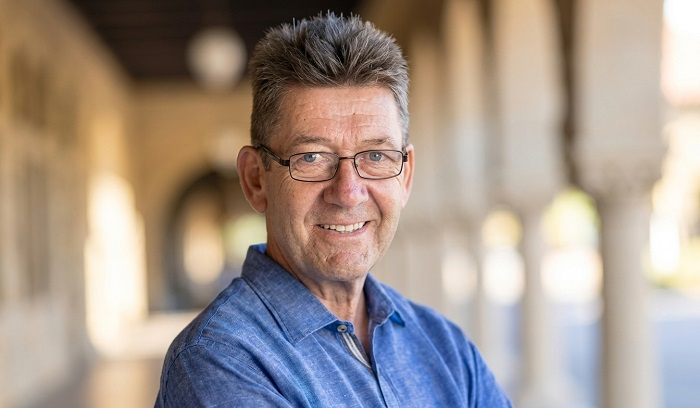
Thomas Hansen is the Reliance-Dhirubhai Ambani Professor in South Asian Studies and Professor in Anthropology at Stanford University. He is also the Director of Stanford’s Center for South Asia where he is charged with building a substantial new program. He has many and broad interests spanning South Asia and Southern Africa, several cities and multiple theoretical and disciplinary interests from political theory and continental philosophy to psychoanalysis, comparative religion and contemporary urbanism.
Much of Professor Hansen’s fieldwork was done during the tumultuous and tense years in the beginning of the 1990s when conflicts between Hindu militants and Muslims defined national agendas and produced frequent violent clashes in the streets. Out of this work came two books: The Saffron Wave. Democracy and Hindu Nationalism in Modern India (Princeton 1999) which explores the larger phenomenon of Hindu nationalism in the light of the dynamics of India’s democratic experience, and Wages of Violence: Naming and Identity in Postcolonial Bombay (Princeton 2001) which explores the historical processes and contemporary conflicts that led to the rise of violent socioreligious conflict and the renaming of the city in 1995. In an exclusive interview, he answered our questions as follows:
Gulan: Through the lens of Indian democracy, you have studied Hindu nationalism. Do you primarily see Hindu nationalism in India now as a force that has changed democracy from inside, or as a sign of more profound changes in the way that people now perceive democracy?
Professor Dr. Thomas Hansen: Hindu nationalism originates in ideas of race and civilizational uniqueness of Hindus, and the argument that only those who see themselves as Hindus, and do not adhere to ‘alien’ religions – Islam, Christianity – should be proper citizens of India. The Hindu nationalist ideologue V.D. Savarkar famously coined the phrase that India is only for those who recognize it as both fatherland (Pitrubhoomi) and holy land (Punyabhoomi). This is straightforward majoritarian and nativist thought – two elements that are as embedded in the ideas of democracy and trajectories of developed democracies across the world – and certainly in Europe - as the standard liberal principles such as individual rights, constitutionalism, the rule of law, etc. Savarkar was an admirer of the Italian nationalist Guiseppe Mazzini and the Hidnu nationalist movement also saw early affinities with Zionism and its idea of an ‘ethno-state’ – entirely modeled on European examples.
In my book ‘The Saffron Wave’ I tried to show two things. One, that the idea of India as a Hindu nation had been a powerful substratum of Indian nationalism for generations. Two, that the ‘deepening’ of democracy in India, giving some measure of voice to the lower caste majority and large social and religious minority communities unsettled many middle-class Indians (mainly upper caste Hindu) who turned against many of the institutions and values of postcolonial India: secularism, minority protections, affirmative action for marginalized groups, a feisty civil society. Instead, they wanted to construct a permanent Hindu majority via the ballot, via cleverly designed mass emotional campaigns (such as the ‘liberation’ of India from symbols of Muslim rule in the past) and a large network of grassroot activists. Their objective was a majoritarian democracy that affords a measure of freedom and inclusion to Hindus and second-class citizenship for minorities. They captured power and the state by democratic means and now they are trying to control and stifle free expression and opposition. Again, Israel remains an enduring inspiration and the links between the two countries are many and intensifying.
Gulan: You demonstrated how conflicts over power and belonging were closely linked to political identities and the renaming of Bombay as Mumbai. In a broader sense, how does calling a city, a neighborhood, or a country turn into a kind of political sovereignty—and even a prelude to violence or exclusion?
Professor Dr. Thomas Hansen: Yes, the power of naming of a country, cities and place names (and at time also regulate how populations are allowed to name themselves) are fundamentally sovereign acts – that is sovereignty in the sense of acting with power and impunity, or as Judith Butler put it ‘the ability to do what you say’. Naming does many things. One, it can ‘right a wrong’, as in replacing a colonial name (Bombay – Portuguese/English origin) with a native one Mumbai. That new name was not new but mainly made official the name that the Marathi speaking people of the state had used for a long time. They also claimed it was derived from a local deity, Mumba Devi. The act of re-naming happened three years after a massive anti-Muslim pogrom in 1992/93. These events demonstrated the fierce street power of the regional party Shiv Sena (Shivaji’s Army) and catapulted it into a dominant position in the city and the state it held for several decades after. So yes, because naming is a sovereign act it is always connected to the potential and threat of violence.
Two, (re-)naming also has retroactive effects as in revising the history and memory of a city or territory. In a generation or two, Mumbai with its local and Hindu connotations will gradually revise the history of the city and erase the fact that it was always one of the most complex and diverse cities in the country, a city decisively shaped by many Muslim communities, Parsees and Catholic Christians as well as people from the Persian Gulf region. That erasure and revision of the past is a part of the rationale for any act of renaming, even renaming of persons, people who convert, etc.
Gulan: According to your ethnographic research, violence can become ingrained in the creation of political identities rather than merely disrupting political activity. Is it possible for violence to truly become a part of democratic politics, especially when political players use the identification of an internal "other" to identify themselves?
Professor Dr. Thomas Hansen: There is no contradiction between democracy and the use of – or threat of - violence – whether by the state or by political actors. Many democratic states use violence against its opponents, and against members of its own population. This use of violence is considered normal and legitimate, it is called crime fighting or anti-terror campaigns or national security measures. This kind of violence, often enjoys a high degree of political support and is done by lawful means. Think of the pretty extensive violence involved in ordinary policing in many countries – Brazil, Indonesia, US, India, Russia, etc. Many democracies are also fighting internal wars against what they call ‘insurgent’ movements, or internal minorities, usually with consent from a majority of voters.
The use of violence in ordinary political campaigning and negotiation is often seen as a litmus test for how successful a democracy is – less violence means more democracy. There is of course some truth to this – political campaigning/activism/voting under the threat of violent attacks will limit political freedom and expression. At the same time, one must also accept that threats, acts of political violence, and mobilization of large crowds that threaten to turn irate and violent are integral to how democratic politics works in many parts of the world without completely destroying the democratic process. It is all a question of the management of public expression, enforcement of order and protections of individuals. Much of this was highly imperfect in India for many decades, yet it was in many ways a successful and dynamic democracy that gave ordinary people a form of voice and freedom that are hard to find in many other societies. Much of that is now being rolled back, by a democratically elected government.
Gulan: On the emergence of illiberal democracy and the global expansion of popular sovereignty. Why does an appeal to popular sovereignty frequently coexist with animosity toward minorities, liberal institutions, and constitutional restrictions? How has the vocabulary of "the people" altered in modern politics?
Professor Dr. Thomas Hansen: ‘The people’ has always been foundational to democratic politics, and to modern politics since the 18th century and even more so in the 20th century. Even autocratic and non-democratic regimes will say that they act on behalf of the nation, and the people; even non-democratic societies will go through elaborate rituals of voting even as the majority end of affirming the power of a ruling dispensation. The question is always who is included in the people and this is where the big battles have been. Some of the most avid defenders of popular sovereignty were the white people in the slave holding south in the US who defended the rights of states within the union. Later, in Europe and elsewhere the popular franchise was gradually extended and at this time the question of who can vote and who cannot is a major campaigning point for the Republican right in the US, for example. In India, re-districting and revision of electoral rolls are also adopted to dis-enfranchise minorities and the opponents of the government. At the same time those who oppose majoritarian and authoritarian policies also invoke ‘the people’ – not as a homogenous block but as a diverse coalition of identities and minorities. That is true in many parts of the world. ‘The people’ is always the heart of democracy and all kinds of modern politics, as the late thinker Ernesto Laclau pointed out to clearly.
Gulan: Through your work, anthropology is brought into conversation with political philosophy, psychoanalysis, and religious studies. To what degree are modern forms of religious nationalism supported by feelings like resentment, humiliation, dread, longing, and nostalgia rather than just ideology or practical interests?
Professor Dr. Thomas Hansen: Such emotions are powerful entities that often override material interest, class interests. This is a point I have tried to make in multiple ways but the attachment of many political analysts, and also people on the progressive left, that people vote and align politically according to material self-interest is very enduring, often against overwhelming evidence to the contrary. The right, by contrast, wholeheartedly embrace a politics of emotion and resentment and it often works for them, at least for some time. We need to drill into those ideological complexes on the right and understand what they do, how and when they ‘click’ with people. At the same time, such a politics of resentment and nostalgia and so on, cannot always deliver the kind of life and aspiration people also hope for and the durability of right-wing regimes hinge on their ability to a sense of security and at least some symbols of progress and modernity many are looking for. Aspirations towards a more equal society is not always what the majority may look for, at times some form of hope and direction, even chauvinistic bluster might satisfy people’s longings, for quite some time. Modi’s India is a good example of this.
Gulan: Your present study on "vernacular urbanism" looks at community-based commerce and segregation in South Asian cities that are expanding quickly. Do cities actively create new kinds of class, religious, ethnic, and political identity, or do they only reflect preexisting social divisions?
Professor Dr. Thomas Hansen: There is a great deal of belief in the idea of the city as an anvil of new, non-traditional identities based on class, neighborhood or other identifications. That was indeed one dynamic one could find in the large industrial cities in the 19th and 20th century, also in the non-Western world but never the only factor shaping cities. In this future oriented modernist vision – where liberal/conservative or Marxist - the city was seen as a harbinger of a modernity yet to come, where hierarchical and retrograde traditions could be left behind. However, most cities in the world were not industrial centers and people brought with them to the city many beliefs and attachments that did not go away. Instead, they were rearticulated in a range of new forms. As many scholars of modern Africa have shown, the ethnic identities that today powerfully shape public life and societies across the continent were products of associations and new organized forms of socio-political definitions of collective identities – ethnic, tribal - that emerged in large cities, as populations from different territories, with different languages and customs, found themselves living next to each other in large urban agglomerations. One can observe similar dynamics elsewhere in the world. In India, something similar happened to caste communities that in the urban encounter got internally homogenized and externally hardened as caste became a collective source of trust, defense, credit and political alliance. So, when people say that caste is a form of traditional identity that belong to the village, they are ignoring that caste today is a very modern, urban from of identity, both as formal organization, as closed marriage markets, and as myriads of informal ties of both trust and internal competition.
Gulan: What do you believe these situations show about the potential—and constraints—of creating truly multiple societies following colonization, based on your studies in South Africa and India? In the end, is political plurality upheld by institutions, by commonplace coexistence, or by a more profound shift in nations' conceptions of what constitutes "the people"?
Professor Dr. Thomas Hansen: India and South Africa have both seen very long periods of colonial and settler colonial rule and protracted struggles for self-determination. During all those decades, a powerful moral argument emerged: if left to themselves, the diverse communities within the nation can live together in peace. Conflicts between communities (such as Hindus vs. Muslims in India, or Zulus vs. Xhosa in South Africa) were regarded as effects of colonial division and instigation.
At the same time, it was clear that enmities ran deep and could never be reduced to colonial manipulation. The violence before and after de-colonization (say, the Partition and its massive human toll, and the undeclared civil war between the ANC and the conservative Zulu Inkatha that cost tens of thousands of live before the moment of liberation in 1994) there was also a realization that the only way to secure a future social peace and a social contract with diverse populations was to adopt robust and sophisticated legal regimes. Social peace and co-existence are neither no spontaneous and each community craves recognition and protection from the state. In both countries there was enormous effort at creating very powerful and sophisticated Constitutions that would enshrine the rights of both individuals and communities in the country’s laws; both countries adopted extensive programs of affirmative action to redress the effects of inequalities of the past.
However, the actual governance and regulation of social conflicts and clashes between groups is a more mundane matter of policing and creating institutions and policies that recognize and accommodate the demands and expectations of communities. In India, decades of struggle by lower caste communities resulted in an expansion of affirmative action policies and some public reckoning with the realities of caste discrimination. But the backlash has also been fierce. There were few accommodations of religious communities and the result has been a relentless marginalization of religious minorities, especially Muslims – counting 200 million - that today are the poorest and most marginalized community in the country. The Muslims are mostly facing the police and law enforcement agencies, institutions that were never fundamentally reformed since independence. The result is disturbing: over representation of Muslims in prisons, high levels of custodial deaths, many killed in pogroms and lynching that happens with the tacit approval of the police, etc.
In South Africa, there has been serious attempts at reforming the hated police force and to build trust with local communities. The results are mixed and the fact that crime rates continue to be high shows that the police simply do not get the information they require to prevent crime. Corruption in the police force is also endemic and continuing.
In terms of addressing the ethno-political tensions of the past, the results are more encouraging. Inkatha is no longer a force to reckon with although some of the tensions now play themselves out within the ANC as we saw around the presidency of Jacob Zuma. The creation of tribal authorities that address cultural and social concerns among those who cherish their tribal heritage has been relatively successful in recognizing tribal sentiments and attachments while retaining a robust system of civil and criminal law governing most matters in the country.
So, to answer the question directly: ‘the people’ is never one but remains a powerful political horizon for making claims and staging protests. The only way to manage diverse modern cultural and social identities is to acknowledge their legitimate existence, to protect them by law (and in practice) and to devise institutions that can distribute public services fairly, regulate everyday disputes, and enable individual and collective improvement and aspiration – be it education, or uplifting one’s neighborhood. There are examples of such institutional forms across the world. Some are in crisis and some are facing ferocious backlash as we know. We should not forget that the backlash happens because these policies and institutions produced results that were intolerable to entrenched elites and ethno-political chauvinist. All the more reason not to abandon these models but to re-build and extend them, and make them stronger, when the tide turns, as it usually does.