Thomas Lindemann on Recognition and the Causes of War
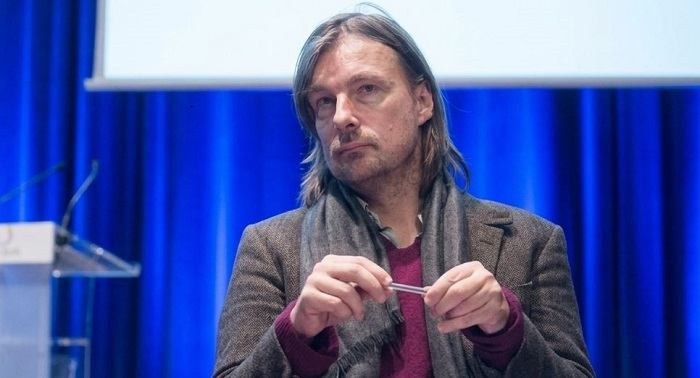
The political scientist discusses dignity, deterrence and the lessons of Iraq, and explains why mutual recognition matters for relations between Erbil and Baghdad.
Thomas Lindemann is Professor of Political Science at the University of Versailles Saint-Quentin-en-Yvelines and École polytechnique. His scholarship examines some of the most consequential questions in international politics: why states go to war, how humiliation and struggles over status shape their choices, and how recognition can help make peace possible. His work brings the symbolic and psychological dimensions of conflict into debates often dominated by military power and material interests.
He earned his doctorate in political science at Paris 1 Panthéon-Sorbonne in 1997 and passed France’s agrégation in political science in 2005. His academic career includes appointments at Toulouse I, Bordeaux IV and the University of Artois, as well as an École polytechnique–Columbia Alliance Visiting Professorship in 2016 to 2017. He is the author of Causes of War: The Struggle for Recognition and, with Shoshana Fine, La violence au nom de la loi, published by Presses de Sciences Po in June 2026. The latter examines how legal reasoning can be used to justify or obscure violence. Together, these works reflect a sustained inquiry into the relationship between power, legitimacy and the human consequences of political decisions.
In this interview with GULAN Weekly Magazine, Lindemann argues that security depends partly on understanding how others perceive threats to their dignity, status and existence. Applying this approach to Iraq and the Kurdistan Region, he discusses how constitutional guarantees, cultural rights and everyday cooperation can support a more stable relationship.
Translated from written answers in French with AI assistance. The questions and answers retain the original sequence, arguments and examples, with light editing for English grammar and readability.
Recognition and the causes of war
GULAN: Much of your work challenges purely material explanations of war and emphasises the struggle for recognition. In your recent contribution on “misrecognition”, you show, in particular, how rendering an actor invisible or denying its social worth can fuel conflict. To what extent do you think today’s international crises continue to be driven not only by territorial, military or economic interests, but also by a sense among states or communities that their identity, dignity or status is not sufficiently recognised?
Thomas Lindemann: Yes, I think this dimension remains extremely important. If we consider several contemporary crises and wars, the war between Russia and Ukraine since 2022, the confrontations involving the United States and Iran, the American intervention in Venezuela in 2026, or the conflicts in the Middle East, we find that it is often difficult to understand them solely through a material calculation of costs and benefits.
Take the case of Russia and Ukraine. The human, economic and diplomatic costs for Russia are considerable, while the territorial gains achieved in recent years remain relatively limited in relation to those costs. A strictly material reading is therefore insufficient to explain the continuation of the war. This is where the symbolic dimension becomes important. War can serve to create or restore an image of oneself as sovereign.[1] For the leaders of a great power, this may mean demonstrating that it remains influential, that it is capable of acting autonomously and that it deserves the status it claims. In the Russian case, the disappearance of the Soviet Union and NATO’s enlargement may, in particular, have been experienced by its leaders as a diminution of Russia’s international status. War can then become, among other things, a means of reasserting that status.
As I demonstrated in my book Causes of War (ECPR Press, 2011),[2] a power’s ruling elite may accept considerable material costs in order to display its capacity for action, its determination or even its “disdain for death”. This is a form of self-presentation on the international stage that emphasises masculine strength. We might compare it, in a deliberately simplified way, to someone who spends a disproportionate share of their resources to project a status beyond their actual means.
In Israel’s case, too, particularly after the traumatic attacks of 7 October 2023, war can be understood not only as a response to a security threat, but also as the assertion of a sovereign capacity to ensure its security unilaterally. The use of force thus has a symbolic dimension of power, courage and sometimes invulnerability.
Finally, the symbolic and the material are not necessarily opposed. A demonstration of international power can also produce domestic political benefits. We are familiar with the “rally around the flag” effect: in times of crisis or war, part of the population tends to rally around its leaders. A costly foreign policy can therefore remain politically useful to a government, even when it appears to make little sense from a strictly economic or strategic perspective.
This is why, in my view, we must take recognition, dignity and status seriously. States do not fight only for territories or resources; they may also fight for the image they have of themselves and the image they wish to impose on others.
Combining deterrence with recognition
GULAN: You have argued that the peaceful management of crises depends partly on adversaries’ ability to accord one another some form of recognition. But how can a state recognise an adversary’s dignity, status or certain security concerns without that recognition being interpreted as weakness or a concession? In your view, is there a way to combine deterrence and recognition effectively in a situation of intense confrontation?
Thomas Lindemann: This is a central question, one I am currently working on and had already addressed in Causes of War: The Struggle for Recognition. I would begin, however, by emphasising that there is no answer that applies to every situation.
We must first try to understand the nature of the adversary’s motivations. An actor primarily seeking to preserve its security or status is not in the same situation as an actor driven by a much more radical expansionist project. Germany under Wilhelm II in 1914, for example, despite its ambitions and expansionist aims, cannot be equated with Hitler’s Germany. The essential question, which we find particularly in Robert Jervis’s work, is therefore this: are we dealing with an actor motivated mainly by fear and insecurity, or with an actor convinced of its power and genuinely seeking conquest?
In many international crises, leaders are at least partly convinced that their own security is under threat. It is precisely in these situations that recognition can complement deterrence. The classic example is John F. Kennedy during the Cuban Missile Crisis in 1962. Kennedy showed firmness: the naval blockade clearly signalled that the United States would not accept the deployment of Soviet missiles in Cuba. But this firmness was accompanied by measures that allowed the Soviet Union to avoid public humiliation.
This is fundamental. Effective deterrence does not necessarily mean publicly confronting an adversary with an ultimatum. The more public the humiliation, the greater the political cost of retreat for its leader. States see themselves as sovereign; forcing a leader to yield visibly to a threat can therefore put not only their foreign policy but also their legitimacy at stake. The adversary must therefore be left an “honourable way out”. During the Cuban crisis, the United States notably agreed, discreetly, to the subsequent withdrawal of the Jupiter missiles stationed in Turkey, while Cuba’s sovereignty was also preserved through the American commitment not to invade the island. The solution, therefore, did not consist of imposing everything on the other side.
I would call this a form of empathetic deterrence: being able to demonstrate one’s determination clearly while understanding the adversary’s fears, status and political constraints.
This also requires us to reflect on how our own military capabilities are perceived. A mobilisation that we present as defensive may be interpreted as offensive. This is precisely the mechanism of the security dilemma: what I do to increase my security may diminish the other’s and, in turn, provoke behaviour that ultimately reduces my own security.
Recognition therefore also means acknowledging that the adversary exists as a legitimate actor, that it has a certain capacity to act and that, formally at least, states remain equal under international law. This in no way means conceding all its demands. Recognition is not capitulation. It is, rather, a matter of preventing deterrence from becoming a public humiliation that makes de-escalation politically impossible.
One might also ask whether this balance was always sufficiently pursued before the Russian invasion of Ukraine. This obviously does not mean that greater recognition would necessarily have prevented the war: we cannot know that. But public threats, blaming the adversary and exclusively legal or moral language can sometimes narrow the space available for negotiation. This is also a question that Shoshana Fine and I addressed in La violence au nom de la loi (Presses de Sciences Po, 2026): legal reasoning is indispensable, but when it becomes the sole framework through which a conflict is understood, it can sometimes prevent us from understanding the other’s perceptions, fears and political motivations, and lead to absolutist choices that unnecessarily prolong international conflicts.
The neglected dimensions of deterrence
GULAN: Deterrence policies often rest on the idea that an adversary will change its behaviour when faced with a sufficiently high cost. Your research suggests, however, that considerations of identity, prestige or the desire to “save face” can lead leaders to accept considerable costs. In your view, do contemporary powers give sufficient weight to these psychological and symbolic dimensions when seeking to prevent war or manage escalation?
Thomas Lindemann: My answer would tend to be no: I do not think contemporary powers give sufficient weight to the psychological and symbolic dimensions of deterrence. Very often, particularly in Europe but also in the United States, deterrence is equated with the accumulation and display of power: the idea is that we must convince the adversary that any aggression will impose an unbearable cost. But deterrence actually involves two messages. We must certainly convince the adversary that we are determined and capable of defending ourselves. But we must also make the opposite proposition credible: if you do not attack me, I will not attack you either. At the very heart of deterrence, therefore, there is a cooperative dimension that is too often neglected.
In this sense, the component of reassurance and recognition needs to be strengthened considerably. It is a matter of making the other understand that it, too, has the right to exist, that it is not condemned to disappear or to be systematically humiliated if it chooses cooperation. This is precisely what the classic works on the security dilemma, from John H. Herz to Robert Jervis, have taught us. A state may increase its armaments for a purely defensive purpose, but its adversary may interpret those armaments as a sign of offensive intent. The adversary then arms itself in turn, confirming the first state’s fears. We thus end up with an arms race that no one necessarily wanted at the outset.
A symbolic dimension is added to this material mechanism. A military demonstration does not threaten only the adversary’s physical security; it may also be experienced as a humiliation, a denial of its status or a demonstration of superiority.
A sophisticated deterrence policy must therefore send two signals simultaneously: I am capable of defending myself and will do so if necessary; but I am not seeking to deny your existence, your status or your security if you, too, behave peacefully.
Lessons from the Iraq war
GULAN: In your work on international crises, you have studied Iraq in particular and shown the limitations of a reading based exclusively on strategic and material calculations. More than two decades after the 2003 war, what lessons does that experience offer policymakers today as they seek to understand an adversary’s intentions and prevent misperception, humiliation or a lack of recognition from turning a political crisis into a military confrontation?
Thomas Lindemann: The first lesson I would draw from the Iraqi case is the need for what I would call strategic empathy. International politics sometimes resembles a game of chess: when I make a move, I must immediately ask myself how the other side will interpret it and how it will respond. I cannot think only about how to increase my own security. I must also understand how my actions change the other side’s perception of its security.
The Iraqi case in 2003 is particularly revealing. After the attacks of 11 September 2001, the Bush administration had genuine security fears. In that traumatic context, certain statements by Saddam Hussein and the ambiguity maintained by the Iraqi regime may have reinforced the American perception of a threat. But the United States considerably overestimated Iraq’s offensive capabilities and ultimately did not find the stockpiles of weapons of mass destruction that had played a major role in justifying the intervention.
For his part, Saddam Hussein also believed that he had an interest in maintaining a degree of ambiguity. Revealing his weakness too clearly may have seemed dangerous to him, both domestically and in relation to his external adversaries. What may have been intended as a deterrent bluff could therefore have been interpreted in Washington as confirmation of a threat. This is the paradox. Two actors can adopt behaviour they themselves consider defensive and nevertheless interpret each other’s behaviour as offensive.
The broader lesson is that we should be wary of an excessively predatory view of international relations. This obviously does not mean that aggressive actors do not exist. But before concluding that an adversary understands only force, we must seriously explore another hypothesis: what is it afraid of? And that fear is not necessarily only military. It may concern status, dignity, reputation or the fear of appearing weak. Understanding these dimensions does not mean excusing the adversary. It is a condition of strategic effectiveness: we negotiate with and deter an actor more effectively when we understand its real motivations.
Mutual recognition between Erbil and Baghdad
GULAN: Finally, I would like to apply your approach to a question of particular importance to our readers. Relations between the Kurdistan Region and the Iraqi federal government are generally analysed through the prism of the budget, oil, constitutional powers and power-sharing. But behind these disputes also lies a long Kurdish history marked by the pursuit of political, constitutional and identity recognition. In your view, does a more stable relationship between Erbil and Baghdad also require a policy of mutual recognition that goes beyond institutional and economic compromises alone? More broadly, what can your approach teach us about how a state can preserve its unity while fully recognising the identity, dignity and aspirations of a distinct community?
Thomas Lindemann: You certainly know more than I do about the actual relations between Kurdistan and the Iraqi government. But from the perspective of recognition theory, I do indeed think the question goes beyond material issues alone.
In relations between a central authority and a region with a strong political and historical identity, stability requires, first of all, that each be assured that the other is not seeking to deny its existence. Neither Iraq as a federal state nor the Kurdistan Region can simply be regarded as provisional realities whose disappearance the other might one day wish for. There must therefore be a form of mutual recognition sufficiently robust to reduce this existential uncertainty.
I would not, however, set recognition against institutional or economic compromises. On the contrary, institutions can themselves produce recognition. The simple fact that representatives of Erbil and Baghdad meet, negotiate and make decisions jointly already means that they recognise each other as interlocutors.
Repeated practices of cooperation can even gradually transform identities. Economic exchanges, cultural cooperation, the movement of people and institutional negotiations can create habits of cooperation and, over time, certain shared understandings. The European experience is interesting in this respect. Interdependence and repeated interactions between states have helped certain shared European identities emerge without erasing national or regional identities. Several levels of belonging can therefore coexist.
In the case of Iraqi Kurdistan, this also means that a degree of constitutional and institutional security is important. A community that constantly fears that its status, autonomy, language or institutions might one day be taken away will find it much more difficult to develop a relationship of trust with the central government. Recognition must therefore be sufficiently institutionalised to reduce this fear of disappearance or of being constantly called into question.
The linguistic and cultural question is particularly important. When a community regards its language as a fundamental dimension of its identity, a restriction of its linguistic rights may be perceived not as a simple administrative measure, but as a threat to its collective existence. Here we find, in another form, a genuine security dilemma centred on identity.
But I would add one final caution: recognising a collective identity must not lead to confining individuals within that identity. A good policy of recognition protects groups and their rights while leaving each individual free to define their own affiliations.
In my view, it is probably this combination that offers the best prospect of stability: making the political, institutional and cultural existence of each community secure enough that it no longer needs to defend its identity constantly against the other, while developing the interactions and shared interests that make everyday cooperation possible.