The KDP in the Thought of Mustafa Barzani: An Instrument for Unity and the End of Division
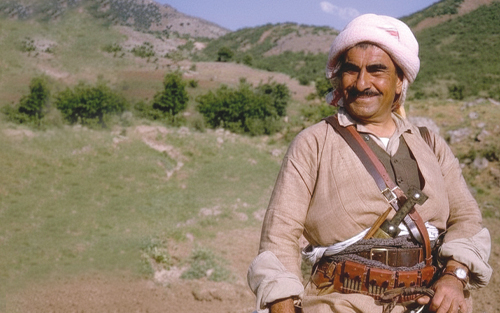
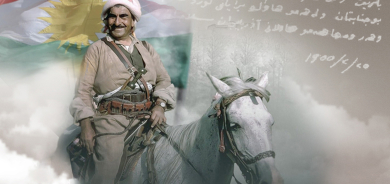
The founding of the Kurdistan Democratic Party (KDP) cannot be understood simply as the creation of another political party. In the thought and vision of Mustafa Barzani, the KDP was intended to carry a meaning greater than political partisanship itself.
The experience of the Republic of Kurdistan had revealed a fundamental weakness in the Kurdish national movement. A republic could be proclaimed, but unless the Kurdish people developed a national consciousness capable of transcending tribal, regional, and factional divisions, they would remain unable to determine their own destiny—or to protect the achievements they had made.
Mustafa Barzani understood that the transformation of Kurdish society required more than military courage or political declarations. Tribal loyalties had to develop into a broader national consciousness, and political differences had to be subordinated to a higher national purpose.
It was within this historical and intellectual context that the idea of the Kurdistan Democratic Party (KDP) acquired its deeper significance.
Barzani's objective was not merely to establish a political party that would compete with other parties. Rather, the KDP was conceived as a broad national framework, capable of bringing together different political forces, personalities, tribes, intellectuals, and social groups under a common national cause.
The essential idea was that the KDP should be a means, not an end.
The purpose was not for Kurds merely to practise narrow political partisanship, but to participate collectively in the national struggle for the existence, rights, freedom, and future of the Kurdish people.
Therefore, when discussing the founding of the KDP, it is insufficient to describe it merely as the establishment of a conventional political organisation. In Barzani's conception, the KDP was intended to become a national umbrella—an instrument through which division could be overcome and a fragmented society could gradually be transformed into a united national will.
In this sense, the KDP was not simply the name of a political party. It was conceived as an instrument of unity, liberation, freedom, and ultimately independence.
From Gandhi's Spinning Wheel to the KDP
The comparison with Gandhi helps illuminate this deeper meaning.
Tagore warned Gandhi that the Indian people might follow him out of admiration without fully understanding the significance of his message. Gandhi's response was clear: the spinning wheel was not merely a spinning wheel. Its meaning went beyond the physical act of producing thread. It symbolised self-reliance, liberation, and independence.
In the same way, Mustafa Barzani sought to give the KDP a meaning greater than that of an ordinary political organisation.
The KDP was not meant to become an end in itself. It was meant to be understood as an instrument through which Kurds could overcome fragmentation and develop the collective strength necessary to pursue freedom and self-determination.
Thus, just as Gandhi wanted every Indian to understand the deeper meaning of the spinning wheel, Barzani wanted every Kurd to understand the deeper purpose of the KDP:
Unity instead of division. National struggle instead of narrow factionalism. Freedom instead of submission.
The KDP as an Instrument, Not an End
The history of the KDP, from the thought of Mustafa Barzani to the struggles and political developments that followed, can therefore be understood through one central principle:
The KDP is not the ultimate objective. The nation is.
In this understanding, the KDP becomes meaningful only when it serves something greater than itself.
It must be an instrument for overcoming division rather than deepening it; for building national consciousness rather than narrow factional loyalty; for protecting national achievements rather than monopolising them; and for bringing different forces together around a common national purpose.
This is the deeper message behind Mustafa Barzani's conception of the KDP.
Just as Gandhi's spinning wheel was more than an instrument for producing thread—it represented self-reliance and independence—the KDP, in Mustafa Barzani's vision, was intended to represent something greater than political partisanship.
It represented the possibility of transforming:
Tribal loyalty into national consciousness.
Political fragmentation into unity.
Unity into collective strength.
And collective strength into the capacity to pursue freedom and independence.
The true meaning of the KDP, therefore, is not that the party itself should become the ultimate destination.
Its true meaning is that a divided people must discover a common purpose.
That purpose, in the thought of Mustafa Barzani, was clear:
Unity for the nation.
An end to division.
The protection of Kurdish existence and national achievements.
And the continuing pursuit of freedom, dignity, and the right of the Kurdish people to determine their own future.