Strategic Governance and Geopolitical Resilience: The Kurdistan Region’s Rise Under Masrour Barzani (2020–2025)
I. Introduction: Context and Global Platform
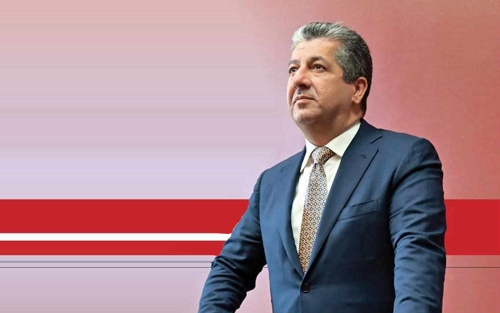
The World Government Summit – Dubai 2025, co-chaired by Mohammed Al Gergawi (UAE Minister of Cabinet Affairs) and Klaus Schwab (founder of the World Economic Forum), has become a central venue for debating global governance innovations. The 2025 edition, under the panel theme “Overcoming Challenges and Seizing Opportunities,” spotlighted a compelling regional case study: the Kurdistan Regional Government (KRG), led by Prime Minister Masrour Barzani.
The significance of this inclusion lies in Kurdistan's emergence as a governance innovator and a regional stabilizer, despite unprecedented political, economic, and security crises in Iraq and the wider Middle East. The global summit's selection of Barzani underscores a growing recognition of the KRG’s performance as an exemplar of post-conflict state-building and decentralized governance.
II. 2020–2025: A Turbulent Era of Regional and Global Challenges
Between 2020 and 2025, the world witnessed cascading crises:
COVID-19 pandemic paralyzed global systems.
Oil market volatility destabilized hydrocarbon-dependent economies.
Russia-Ukraine war reshaped global energy security.
AI disruption began reshaping employment and governance.
Climate change intensified resource conflicts and migrations.
In the Middle East, a war broke out between Israel and the Islamic Resistance Front (Sunni and Shia factions)—the largest conflict since WWII. At the heart of this chaos, the Kurdistan Region of Iraq faced a convergence of existential threats, including:
Suspension of its budget share by Baghdad.
Collapse of independent oil exports in 2023.
Regular missile, drone, and cyberattacks by Iranian-backed militias.
Judicial rulings attempting to delegitimize KRG's constitutional autonomy.
Severe environmental and electricity crises exacerbated by federal negligence.
III. Masrour Barzani’s Governance Doctrine: Resilience through Statecraft
Against this backdrop, Masrour Barzani’s leadership pivoted on a statecraft strategy rooted in institutionalism, development, and diplomacy. His logic was clear: governance must internalize threats as triggers for reform, and treat adversity as a springboard for opportunity.
A. Digital Statecraft: From Bureaucracy to e-Government
Complete digital transformation of the KRG bureaucracy.
Eradication of manual paperwork; introduction of unified digital service portals.
This reform significantly reduced corruption and increased citizen-state engagement.
B. Financial Modernization and Market Formalization
All public sector employees transitioned to electronic salary disbursement.
Push to eliminate cash-based transactions in favor of card and e-banking.
Built trust with international investors by ensuring financial transparency and regulation.
C. Agricultural Sovereignty and Food Security
Self-sufficiency drive in food production.
Dozens of state-supported agri-industrial factories established.
The KRG became less dependent on food imports, insulating itself from global shocks.
D. Youth Empowerment and Economic Diversification
The “Growth” project enabled thousands of Kurdish youth to launch businesses.
Major emphasis on vocational training, entrepreneurship, and start-up capital.
Created a generation of job creators, reducing public sector dependency.
IV. The “Runaki [Bright] Project”: Electrification as a Symbol of Sovereignty
The Runaki Project, a flagship initiative under Masrour Barzani, symbolizes the KRG’s leap toward energy independence and environmental reform.
Goals:
Provide 24-hour uninterrupted electricity to all of Kurdistan by 2026.
Eliminate reliance on diesel generators, a major pollutant and inefficiency.
Use gas recovered during oil extraction to produce clean electricity.
Execution:
Secured $110 billion in contracts with U.S. energy companies.
Supported by U.S. Secretary of Energy Chris Wright, who called the contracts a “model of peace-building through trade.”
Contracts include 15-year investment frameworks ensuring sustainability.
Results:
80% of citizens to pay less than current power costs once unified electricity begins.
Kurdistan to become energy surplus—potentially exporting to federal Iraq and neighbors.
This project fundamentally repositions the KRG as a provider of public goods, unlike Baghdad, which continues to struggle with basic service delivery despite vast oil wealth.
V. Diplomacy as Strategic Armor: Rebuilding Global Trust
Masrour Barzani’s international engagements have reshaped the global perception of the Kurdistan Region from a conflict-prone periphery to a partner of choice for investment and security.
United States Partnership:
Affirmed by Secretary Mike Rogers and Secretary of State Antony Blinken.
Statements to Congress equate KRG’s strategic value to that of Taiwan in East Asia.
The U.S. Consulate in Erbil, the world’s largest, symbolizes this strategic shift.
Legal and Constitutional Legitimacy:
Baghdad courts have upheld the legality of KRG contracts with international firms.
The Iraqi constitution (Article 112 and 115) grants the Region the right to manage its resources.
Opposition from Shiite political actors is largely politically motivated and ungrounded.
VI. The Shiite Coordination Framework’s Panic: Fear of Irrelevance
In reaction to KRG’s success, the Shiite Coordination Framework has intensified efforts to destabilize Erbil through:
Fabricated accusations (e.g., Ba'ath Party revival, Mossad bases).
Ballistic missile attacks (e.g., the January 15, 2024 bombing of Erbil).
Budget manipulation via the Ministry of Finance, cutting off KRG salary transfers.
But these actions reveal fear, not strength.
They aim to:
Deflect public anger amid failing services in Najaf, Basra, and Baghdad.
Prevent further erosion of legitimacy, especially with Kurdistan’s success drawing in more internal migration and tourism.
VII. Strategic Positioning in Regional Realignment
As Damascus, Beirut, Sanaa, and even Baghdad face potential collapse or reconfiguration, the KRG is viewed by Western powers as the only pro-Western, functional, and stable entity in the region.
Post-2024, the fall of Assad’s regime opens the door for Kurdish federalism in Syria, modeled on the KRG experience.
The Abraham Accords may soon include Syria; the KRG plays a quiet role in diplomacy behind the scenes.
KRG’s coordinated diplomacy with President Nechirvan Barzani in forums like the Munich Security Conference outshone Baghdad’s diplomatic presence.
VIII. Conclusion: A Governance Model in a Region of Fragility
The Masrour Barzani model is not merely about survival—it's a doctrine of transformative governance under siege. While the Middle East fractures, Kurdistan rises as a technocratic, constitutionally grounded, and diplomatically credible regional power.
The KRG:
Has delivered services Baghdad cannot.
Has built alliances Baghdad lost.
Has become a symbol of progress while others cling to outdated ideologies.
Barzani’s statecraft is a quiet revolution in the Arab and Kurdish world—where power is increasingly measured not by militias or slogans, but by infrastructure, institutions, and investment.
This article was originally published in Kurdish Gulan Media.