Dr. Sören Keil to Gulan: Federalism can help integrate countries
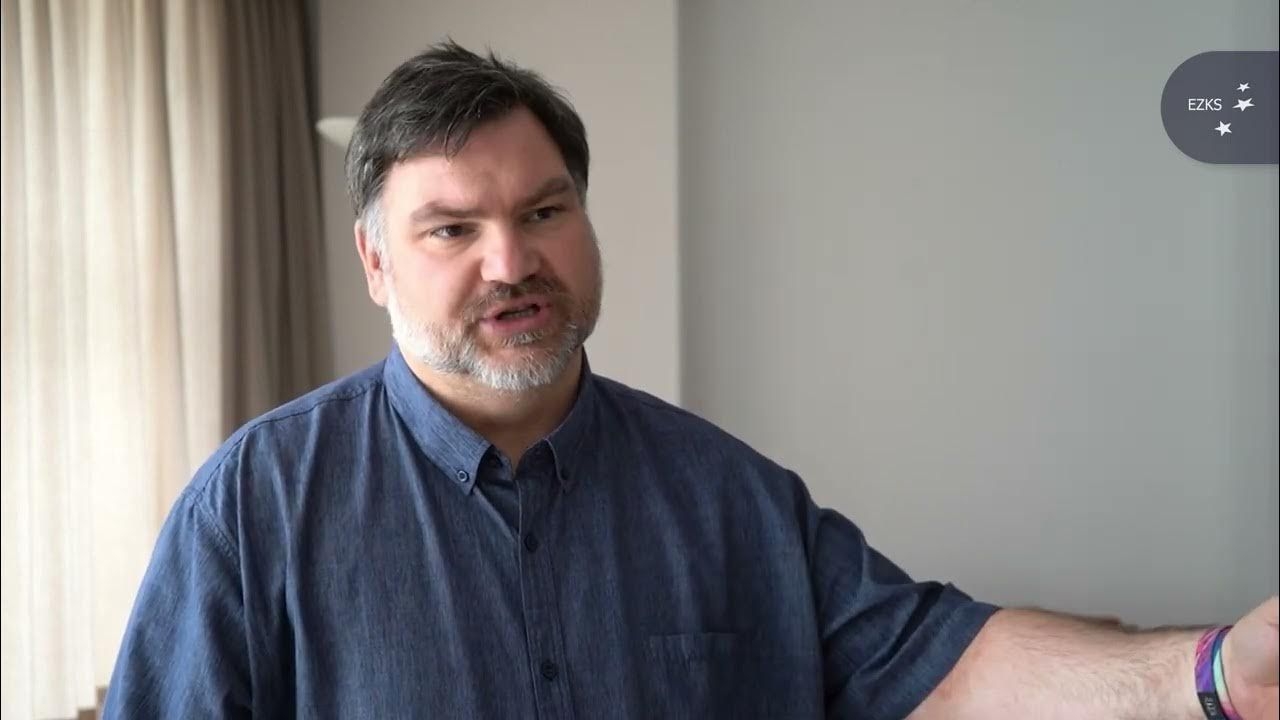
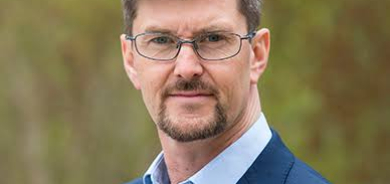
Dr. Sören Keil has been a senior lecturer at the Chair of International Politics at the University of Passau since October 2024. Previously, he served as Academic Director of the International Research and Consulting Centre at the Institute of Federalism at the University of Fribourg in Switzerland and as Associate Professor of Politics and International Relations at Canterbury Christ Church University in the United Kingdom, where he also headed the Politics program. He thus possesses more than 15 years of experience as a university lecturer and has taught courses at various universities on European politics, conflict resolution, foreign policy analysis, Western Balkan politics, and federalism and decentralization. Sören Keil is a Fellow of the Bavarian Research Alliance for Peace, Conflict and Security Studies and a Senior Fellow at the Centre for Federal Studies at the University of Kent. His research focuses on federalism/decentralization as a means of conflict resolution, the politics of the Western Balkan states, and EU enlargement. He has authored, edited, and co-edited thirteen books on these topics, as well as numerous articles in leading academic journals and book chapters, primarily concerning Eastern European countries, democratization processes, decentralization, and federalization. He is also co-editor of the book series "Federalism and Internal Conflict" published by Palgrave and the series "Balkan Politics and Society" published by Ibidem. His research funding achievements include a successful application for EU funding under Horizon Europe (€3.7 million) and substantial grants from the Swiss National Science Foundation, the Swiss Network for International Studies, the James Madison Trust, and the EU's Erasmus+ program. He has also secured research funding for a grant of €3.7 million from the Swiss National Science Foundation, the Swiss Network for International Studies, the James Madison Trust, and the EU's Erasmus+ program. Sören Keil has also worked as an international consultant for several decentralization and good governance programs and is currently involved in discussions and processes concerning debates on power-sharing in various contexts, including Myanmar, Syria, Nepal, Lebanon, as well as Bosnia and Herzegovina, North Macedonia, and Armenia. His work has included consulting for the United Nations, the OSCE, and the World Bank. In an exclusive interview He answered our questions like the following:
Gulan: In Learning from Iraq?, you explore lessons for post-war Syria. Based on your findings, what do you see as the key design principles for federal or decentralized systems in post-conflict societies to avoid repeating Iraq’s challenges?
Dr. Sören Keil: Key is to define clearly what kind of federal system one wants. This means on the one side being as specific as possible, while also taking the time to find the compromises needed. Both things were lacking in Iraq – the Constitution was rushed, mainly as a result of American pressure, and it consequently is vague – for example in questions of oil ownership and management, the establishment of a second chamber or the Constitutional Court.
Gulan: How can federalism be structured to balance self-rule and shared-rule in deeply divided societies without entrenching divisions or fostering secessionist tendencies?
Dr. Sören Keil: Federalism can help integrate countries. The right mixture of autonomies for different groups, while also ensuring that intergovernmental relations established strong links between the different territories themselves and between them and the centre is key in my opinion. We have seen successful federal systems in Europe, in North America, but also in diverse countries such as India and Malaysia, where federalism has helped maintain societal piece and mitigate the challenges of diversity. Federalism does not foster secession, it is usually the absence of federal or accommodationist structures that pushes groups to demand independence, as seen in the case of Spain (and Catalonia), and I would argue also in Iraq. In Iraq, there is a lot of autonomy for the Kurdistan Region but no clearly defined structures to manage the relationship between the Region and Baghdad. This has been a key challenge, and continues to be a key issue for Iraq.
Gulan: In your work on federalism as a conflict-resolution tool, you point to both successes and failures. What factors most strongly determine whether federalism alleviates or exacerbates conflict?
Dr. Sören Keil: There are two main factors that matter: First, the structures and processes of the federal system that is implemented. The clearer roles and competences, resources and processes are in the constitution, the less room there is for conflict and major challenges. Establishing a functioning rule of law and an independent judiciary has proven vitally important in this context. Second, elite behaviour matters. Are the elites willing to stick to the agreement they have reached? Are they respecting the institutions and follow the processes or do they see them as arbitrary and use them to their advantage or ignore them?
Gulan: Your article on the emergence and regression of federal structures introduces multiple theoretical lenses. How do these lenses help us understand the fragility or resilience of federal systems in contexts such as Iraq or Bosnia?
Dr. Sören Keil: Our work has aimed to shed light into the emergence of federal structures and their functionality and dysfunctionality. When systems are implemented, which either do not fully implement federal structures, or which mix ethnic federalism with strict power-sharing (as is the case in Bosnia), then we would expect a high degree of dysfunctionality. We also argue that structures matter substantially, but they should nevertheless be flexible enough to allow for adaption and change over time. A key challenge for Iraq and Bosnia and Herzegovina is the problem that the systems seem unchangeable – so everyone sees they are not performing well, but there is no clear path on how to change them, despite multiple attempts to do so.
Gulan: How do international actors—such as the UN, EU, or regional organizations—shape the prospects of federal or decentralized governance in post-conflict states, and what pitfalls should they avoid?
Dr. Sören Keil: Today, international actors such as the UN, the EU or the USA matter less in constitutional design. We do not see a strong role for them in cases such as Syria (currently) or previously in Tunisia or Egypt after the Arab Spring revolutions. This is not to say that countries such as Turkey, Saudi Arabia or the UAE and Qatar do not have interests in the political process in Syria. But we do not see these big international missions anymore, where constitutions are substantially influenced by outsiders, as was the case in Bosnia, in Kosovo or in Afghanistan in the last 30 years.
Gulan: In cases where federalism regresses or is undermined, what mechanisms (constitutional, institutional, or societal) could strengthen the system’s durability and legitimacy?
Dr. Sören Keil: AS mentioned earlier, for me the rule of law is vital. Strong, independent courts have helped to protect federalism and democracy in the USA under President Trump’s first reign, and they are hopefully helping to preserve democracy in the USA this time around. They also played an important role in Brazil and continue to protect some state rights in India. However, they alone do not save the system. It requires other actors, political parties, civil society organisations, strong parliaments and committed elites to make federalism work. If nobody is committed, we can easily see backsliding. In Nepal, we can see how only one group is really committed to maintaining federalism and make it work, while in Tunisia nobody was particularly interested in decentralization, and not enough people and key actors were willing to stand up for democracy when the President got rid of the government and suspended the parliament.
Gulan: Federalism often comes under critique for being overly complex or difficult to implement in transitional settings. How do you respond to critics who argue that simpler unitary structures may be preferable in fragile states?
Dr. Sören Keil: First, I always argue that unitary systems are complex, too. Trying to understand decision-making and the organization of public administration in France is no mean feat, and not more complicated than Germany. Second, even if federalism introduces an additional layer of complexity, I would say that this complexity argument and potential additional costs and a slower decision-making process is counterbalanced by the advantages of federalism. These range from economic development due to internal competition between the regions to policy experimentisation, and the respect of different cultures and groups and their right to internal self-determination.
Gulan: Looking beyond Iraq and Syria, what underexplored regions or cases do you think offer important lessons for the future of federalism and decentralization as tools of democratization?
Dr. Sören Keil: I think countries like Syria, Libya and others, in which federalism has entered the political discourse, need to take inspiration not so much from Western cases such as the USA, Germany or Switzerland, but need to look at cases such as Bosnia and Herzegovina, South Africa or Nepal. They have come out of dictatorship and conflict and have used federalism and decentralization as tools to manage diversity and protect democratic structures. There is a lot to learn here, both in terms of what has worked, and has not worked and should be avoided.