Kurdish Villages in Northern Kirkuk Form Local Councils to Counter Land Purchases by Outsiders
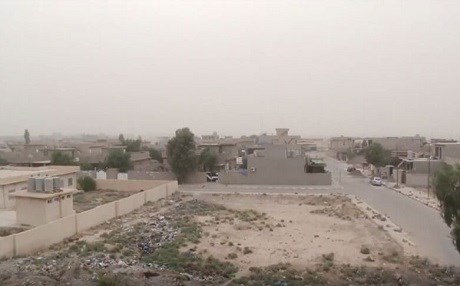
Residents of several Kurdish villages in northern Kirkuk have begun establishing local advisory councils in response to a growing wave of land and house purchases by Arabs from other Iraqi provinces, amid increasing concerns over demographic change in the region.
The initiative was first launched in the village of Hasari Gawra, where representatives from the village's families have formed an advisory council aimed at regulating property sales. Under the new arrangement, real estate offices are not permitted to complete land or housing transactions without the council's approval.
According to local officials, the measure was introduced after a noticeable increase in the number of Arab families settling in the area and purchasing agricultural land, orchards, and residential properties.
"We have appointed a representative from every family to help prevent this problem," said Muhammad Haji Ali, the mukhtar of Hasari Gawra and a member of the council. "People are selling their land, and one Arab buyer purchased seven orchards. I can provide evidence showing which parties and individuals support this. Why can't I, as a native of Hasari Gawra, buy an orchard in my own village?"
Despite local concerns, many newcomers cite economic opportunities as the reason for relocating. Adad Salem, originally from Nineveh province, has lived in Hasari Gawra with his brothers for the past five years. Currently renting a house, he says he hopes to purchase land in the village.
"Work opportunities here are good, and the situation is calm, so we want to stay here," Salem told Rudaw.
Real estate agents in the area confirm that buyers from outside Kirkuk now account for a significant share of property transactions. According to local real estate offices, more than three out of every ten land and housing purchases in these Kurdish villages are made by Arabs from other provinces.
"We coordinate fully with the village council," said Rewend Ali, a local real estate office owner. "With their approval, land and houses are sold, particularly in the villages of Hasari Gawra and Goldera."
Following its establishment in Hasari Gawra, similar advisory councils are expected to be created in neighboring villages as concerns over land ownership continue to grow.
Residents also report the construction of new settlements and farmhouse developments outside existing villages, many of which they believe are intended to accommodate people from outside the region. Local communities view these developments as part of a broader effort to alter the demographic composition of northern Kirkuk through land purchases rather than official government policies.
The issue carries deep historical significance for Kirkuk. During the Baathist era, successive Iraqi governments implemented policies widely described as Arabization, relocating Arab families from central and southern Iraq to Kirkuk while displacing Kurdish residents and confiscating agricultural land. These policies intensified under Saddam Hussein and resulted in the displacement of hundreds of Kurdish villages.
Following the fall of Saddam Hussein in 2003, Iraq's Constitution introduced Article 140, which called for reversing the demographic changes through a normalization process, including the restoration of land to its original owners and a referendum on the disputed territories.
However, implementation of Article 140 effectively stalled after October 2017, when Iraqi federal forces regained control of Kirkuk following the withdrawal of Kurdish forces from the province.