Rubio: Iran Deal Must Not Undermine Gulf Security as Strait of Hormuz Attack Raises Tensions
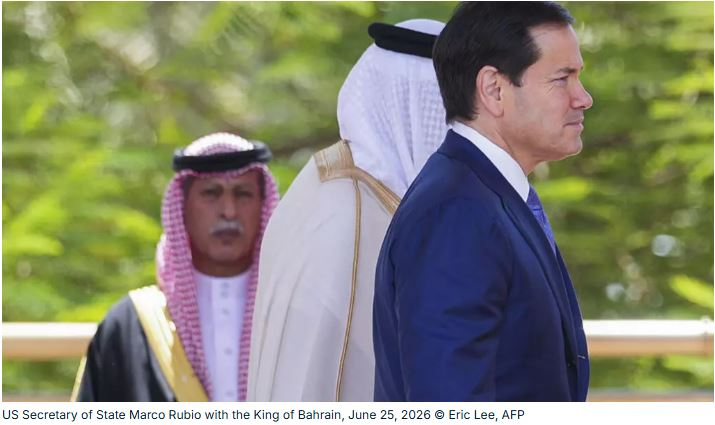
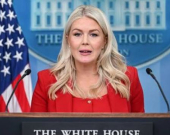
U.S. Secretary of State Marco Rubio said Thursday that Washington will not accept any agreement with Iran that compromises the security of Gulf allies, as a fresh attack on a commercial vessel in the Strait of Hormuz prompted the United Nations to suspend an operation to evacuate hundreds of stranded ships.
Speaking during a visit to Bahrain as part of a regional tour aimed at reassuring Gulf partners following the recent Middle East conflict, Rubio stressed that while the United States seeks a diplomatic agreement with Iran, it "doesn't want a deal at any price."
"We want to ensure that no part of this deal undermines the security, stability or prosperity of any of our partners in the Gulf region," Rubio said.
The United States and Iran recently signed a preliminary agreement to end the conflict that erupted following military operations launched by the United States and Israel in late February. Negotiations are expected to focus on Iran's nuclear programme, sanctions relief, and the security of global energy shipments through the Strait of Hormuz.
However, Gulf states and Israel continue to press for broader discussions that also address Iran's ballistic missile programme, drone capabilities, and support for regional proxy groups.
Following talks with Rubio, foreign ministers from the Gulf Cooperation Council (GCC) issued a joint statement emphasizing that "lasting regional peace and security requires addressing the full spectrum of Iran's threats, including its ballistic missiles, drones and support of proxies."
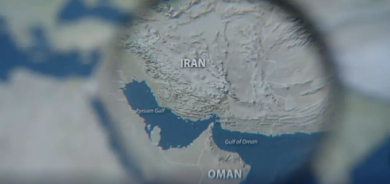
Rubio also rejected suggestions that Iran could impose fees on vessels transiting the Strait of Hormuz, warning that such a move would create "total chaos." The strategic waterway is a vital route for global oil and liquefied natural gas exports and has traditionally remained open to international shipping without transit charges.
During the recent conflict, Iran blockaded the strait, triggering significant disruption to global energy markets. Tehran has since announced plans to introduce what it describes as maritime service fees, while the Islamic Revolutionary Guard Corps warned on Thursday that unauthorized crossings would face enforcement measures.
Meanwhile, Oman announced a temporary shipping corridor near its coastline, saying the route had been coordinated with the International Maritime Organization (IMO) to facilitate safer navigation through the strait. Iran later criticized the new corridor in a statement, although it did not directly mention Oman.
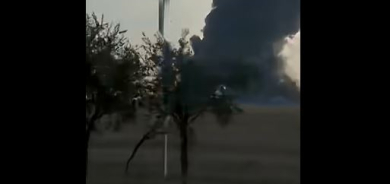
Tensions escalated further after the United Kingdom Maritime Trade Operations (UKMTO) reported that a cargo ship was struck on its starboard side by an unidentified projectile approximately 7.5 nautical miles (14 kilometres) off Oman's coast. The attack damaged the vessel's bridge but caused no casualties.
In response to the incident, IMO Secretary-General Arsenio Dominguez announced the temporary suspension of the organization's evacuation mission, which was designed to assist around 600 vessels and their crews stranded by the conflict.
"I have decided to temporarily pause the implementation of the evacuation plan in order to reconfirm that the necessary safety guarantees continue to be in place for the ships on our evacuation list and all those in the region," Dominguez said in a statement.
The IMO clarified that the vessel hit in Thursday's attack was not participating in its evacuation programme, which began earlier this week.