US Defense Chief Warns of China's Military Expansion, Urges Asian Allies to Boost Defense Spending
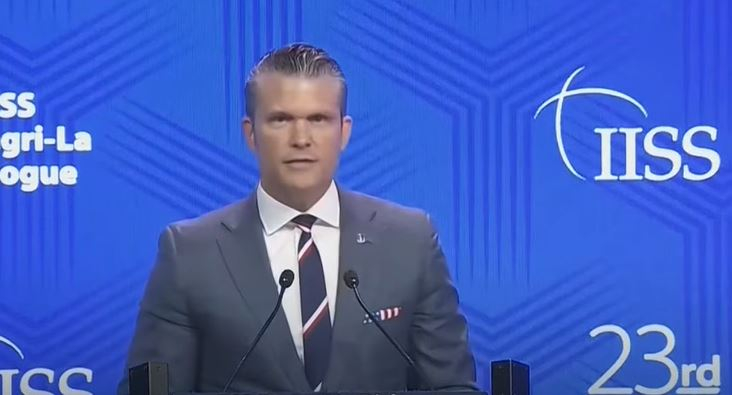
U.S. Defense Secretary Pete Hegseth on Saturday expressed concern over China's growing military presence in the Indo-Pacific region and called on America's allies and partners in Asia to significantly increase their defense spending.
Speaking at the Shangri-La Dialogue in Singapore, Hegseth outlined the United States' strategic objectives for Asia, emphasizing the need for a "stable equilibrium" in the region.
"What we seek is a genuinely stable equilibrium that works for Americans as well as our allies — a favorable but durable balance of power in which no state, including China, can impose its hegemony and hold the security or prosperity of our nation and our allies in question," Hegseth said.
The Pentagon chief said there was "rightful alarm" over China's rapid military modernization and expanding military activities throughout the Pacific region and beyond. However, he stressed that Washington does not seek unnecessary confrontation with Beijing.
"When we look across the region today, there is rightful alarm regarding China's historic military buildup and the expansion of its military activities in the region and beyond," he said.
Despite these concerns, Hegseth noted that relations between Washington and Beijing have improved in recent years, citing increased military-to-military communication as evidence of better engagement.
Notably, Hegseth made no mention of Taiwan during his speech. When questioned about a paused U.S. arms sale agreement with Taiwan, he said the matter would ultimately be decided by U.S. President Donald Trump.
Hegseth also urged Asian allies and partners to raise defense spending to 3.5% of their gross domestic product (GDP), arguing that greater burden-sharing is necessary for strong alliances.
"The era of the United States subsidizing the defense of wealthy nations is over. We need partners, not protectorates," he said. "We don't have a strong alliance unless everyone has skin in the game. No freeloading."
The remarks reflect a broader policy shift under the Trump administration, which has repeatedly pressed U.S. allies—including members of the North Atlantic Treaty Organization—to increase military spending and reduce dependence on Washington for security.
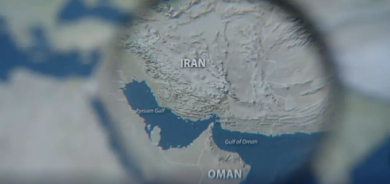
Addressing tensions in the Middle East, Hegseth said the United States possesses sufficient weapons stockpiles and remains fully capable of resuming military operations against Iran if necessary.
Analysts attending the summit noted a stronger emphasis on deterrence and military preparedness. According to observers, Hegseth's message suggested that maintaining regional security may increasingly rely on military strength rather than diplomatic dialogue alone, a prospect that could unsettle many countries in Southeast Asia.
The Shangri-La Dialogue, attended by senior defense officials and security experts from around 45 countries, has long served as a key forum for open debate, strategic discussions, and behind-the-scenes diplomacy on regional and global security issues.