US-Israeli Plan to Install Ahmadinejad in Post-War Iran Revealed
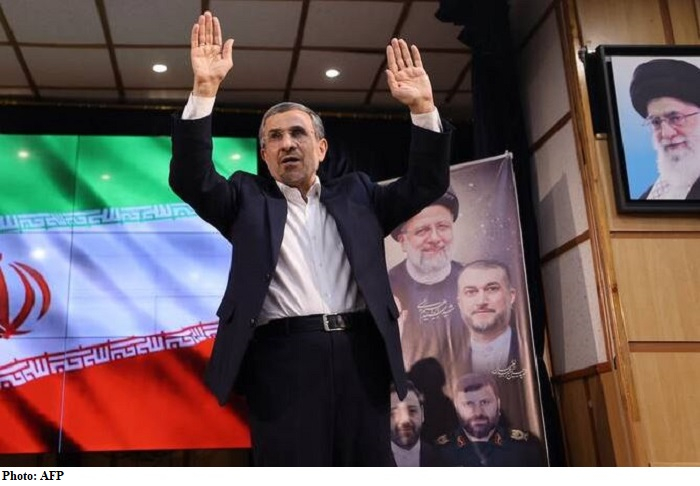
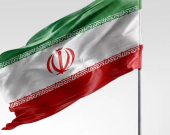
A previously undisclosed American-Israeli plan to reshape Iran’s leadership during the February 2026 war has been revealed by The New York Times, which reported that Washington and Tel Aviv had prepared to position former Iranian president Mahmoud Ahmadinejad as the leader of a new government in the event of the collapse of the Islamic Republic of Iran.
According to the report, US officials and an associate of Ahmadinejad confirmed that the strategy envisioned a multi-phase campaign aimed at dismantling Iran’s ruling structure and replacing it with what Israeli planners reportedly described internally as an “alternative government.”
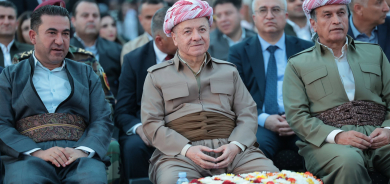
The plan allegedly included a large-scale air campaign targeting Iran’s top leadership, a Kurdish military mobilization designed to increase pressure on Tehran, influence operations aimed at weakening public confidence in the government, and eventually the installation of a transitional leadership.
The report stated that on the first day of the February conflict, Israeli strikes killed Ali Khamenei at his compound in Tehran. The same operation reportedly targeted senior Iranian officials believed by Washington to be open to political transition talks.
At the same time, Israeli forces reportedly struck Ahmadinejad’s residence in Tehran’s Narmak district. According to US officials cited by the newspaper, the objective was not to kill the former president, but to eliminate members of the Revolutionary Guard allegedly holding him under house arrest and free him for a future political role.
Ahmadinejad survived the strike but was reportedly injured. Satellite imagery reviewed by the newspaper allegedly showed destruction near the security checkpoint outside his street.
An associate close to Ahmadinejad told the paper that the former president interpreted the strike as an effort to “liberate” him and that American officials viewed him as someone capable of managing Iran’s political and military transition. However, following the attack, Ahmadinejad reportedly became increasingly sceptical of the broader regime-change effort and has not appeared publicly since. His whereabouts remain unknown.
The reported plan generated significant controversy within Washington. Some US officials questioned the wisdom of supporting Ahmadinejad due to his past rhetoric against Israel, his controversial presidency, and his role in Iran’s nuclear expansion and suppression of dissent.
Nevertheless, the report noted that Ahmadinejad had become increasingly isolated from Iran’s ruling establishment after leaving office in 2013. He was barred from several presidential elections by Iran’s Guardian Council, while some of his allies were arrested and his movements reportedly restricted.
The White House declined to comment directly on the alleged government-transition plan. However, spokesperson Anna Kelly told The New York Times that the objectives of what the administration called “Operation Epic Fury” were focused on weakening Iran’s missile capabilities, dismantling military infrastructure, and targeting proxy networks.
Israeli intelligence agency Mossad also declined to comment.
According to the report, much of the broader strategy failed to unfold as expected. The anticipated Kurdish mobilization did not generate widespread destabilization, and Iran’s political system survived despite intense military pressure.
The revelations come amid continuing regional tensions following a series of escalating confrontations between Israel and Iran. Direct missile exchanges between the two countries began openly in 2024 and intensified during the so-called “12-Day War” in June 2025, when Israel and later the United States launched strikes on Iranian nuclear and military facilities.
Diplomatic efforts to revive negotiations over Iran’s nuclear program failed throughout 2025 and early 2026, while domestic protests inside Iran reportedly increased pressure on the government ahead of the February conflict.
Neither Iranian nor Israeli officials have publicly confirmed the reported Ahmadinejad transition plan, and it remains unclear whether any such strategy is still being considered by Washington or Tel Aviv.