Global Migration Rate Remains Stable Despite Political Rhetoric, UN Report Finds
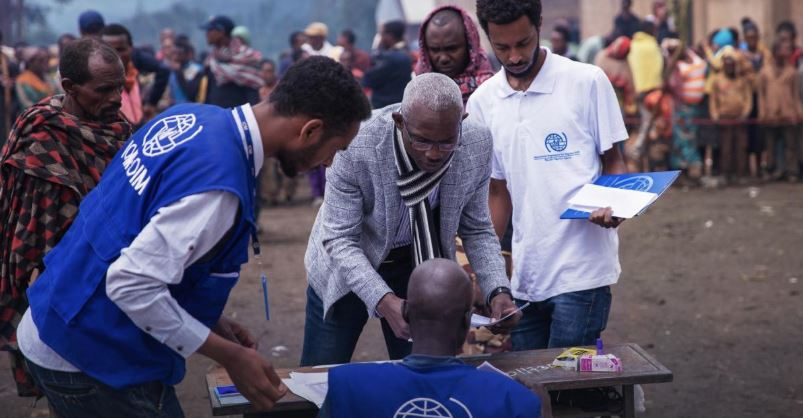
A new report by the United Nations has found that the proportion of people living outside their country of birth has remained largely unchanged over the past generation, challenging widespread political narratives that portray migration as a rapidly escalating global crisis.
According to the latest World Migration Report 2026 published by the International Organization for Migration (IOM), international migrants account for approximately 3.7 percent of the world’s population. This figure has remained broadly stable over time, increasing only slightly from 3.1 percent in 2010.
While the total number of migrants rose from just over 220 million in 2010 to around 304 million in 2024, global population growth has kept the overall proportion relatively steady. “Most people do not migrate, and migration remains the exception rather than the norm,” IOM spokesperson Zoe Brennan said at a press briefing in New York.
The findings come amid tightening migration policies across Europe and the United States, where governments have introduced stricter border controls, expanded deportation programs, and limited legal migration pathways. Despite these measures, the report concludes that restrictive policies have not significantly reduced migration but have instead pushed people toward more dangerous routes.
In the central Mediterranean — one of the world’s deadliest migration corridors — attempted crossings declined last year, yet the number of deaths and missing persons doubled, highlighting the growing risks migrants face.
The report also revealed that 83.4 million people were internally displaced within their own countries by the end of 2024 — the highest level on record. These displacements are largely driven by conflict, violence, and natural disasters, with most affected individuals remaining within national borders.
The report’s release coincided with the second International Migration Review Forum at the UN General Assembly, where more than 130 countries are assessing progress on the 2018 Global Compact for Safe, Orderly and Regular Migration.
“It is rarely a crisis,” said Jonathan Prentice, head of the UN Network on Migration. “The overwhelming majority of migration proceeds through pathways that are entirely legitimate and entirely safe.”
IOM officials emphasized that the data reflects conditions up to mid-2024 and does not capture the most recent policy changes. The agency also announced plans to release a fact-checking toolkit later this year to support more evidence-based public discussions on migration.
The forum is scheduled to conclude on Friday.