U.S. Defense Secretary Pete Hegseth, Iraq’s PM-Designate Ali al-Zaidi Emphasize Security Cooperation in Phone Call
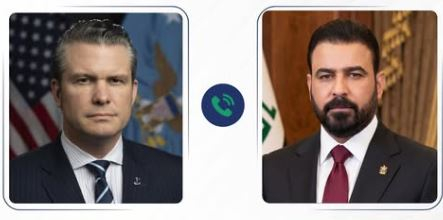
U.S. Defense Secretary Pete Hegseth held a phone call with Iraq’s Prime Minister-designate Ali Falih al-Zaidi, reaffirming the importance of bilateral relations with a particular focus on security cooperation, according to a statement published on X.
During the call, Hegseth congratulated al-Zaidi on his designation to form a new Iraqi government, underscoring Washington’s support for Iraq’s political transition and its commitment to continued partnership with Iraq.
Al-Zaidi described the conversation as constructive, noting that discussions centered on strengthening ties across multiple sectors, especially security coordination under the longstanding framework governing relations between Iraq and the United States.
Both sides highlighted what they called the “special nature” of bilateral relations and stressed the importance of reactivating joint training programs aimed at enhancing the capabilities and operational readiness of Iraqi security forces.
The call comes at a critical moment for Iraq, as it faces a complex political transition alongside rising regional tensions linked to the ongoing conflict involving Iran and U.S.-aligned forces.
Al-Zaidi, a political newcomer nominated in late April, has been tasked with forming a government following months of deadlock after the 2025 parliamentary elections. His nomination has been widely viewed as a compromise backed by the Coordination Framework alliance.
The administration of U.S. President Donald Trump has moved quickly to signal support for al-Zaidi, emphasizing the importance of maintaining close strategic ties with Baghdad.
Security cooperation has long been central to U.S.-Iraq relations, particularly under the Strategic Framework Agreement, which provides the basis for collaboration in defense, economic, and political fields. The agreement continues to underpin the U.S. military presence in Iraq, focused on training, advising, and supporting Iraqi forces in counterterrorism efforts.
However, the partnership has faced increasing strain in recent years, with tensions fueled by attacks from Iran-backed militias on U.S. interests and subsequent American retaliatory strikes. These developments have placed Baghdad in a delicate position, balancing relations between Washington and Tehran-aligned factions.
The renewed focus on training and institutional capacity-building suggests a potential shift toward strengthening Iraq’s military capabilities without expanding direct combat involvement.