Lily Hindy to Gulan: The Kurdistan Region of Iraq is somewhat unique in that it emerged and was consolidated with considerable international support
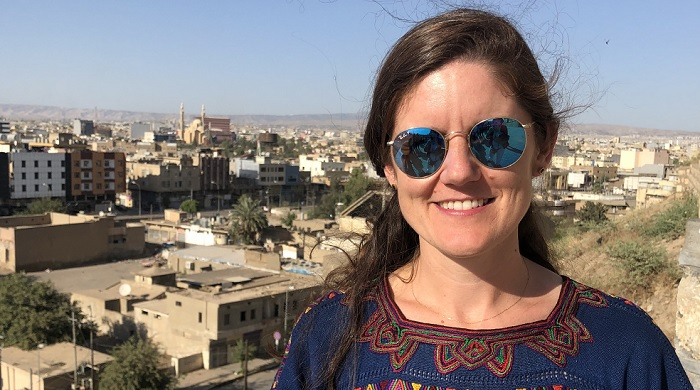
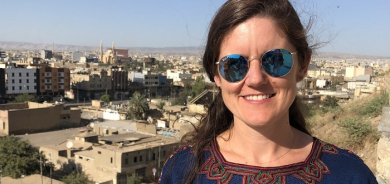
Lily Hindy is a PhD candidate in History at the University of California, Los Angeles (UCLA). Her doctoral research examines how the Kurdish nationalist movement in Iraq and the diaspora leveraged the expanding international human rights bureaucracy to raise global awareness of their situation and secure support for autonomy between the 1970s and 2003. Before beginning her doctoral studies at UCLA, she served as a Senior Foreign Policy Associate at The Century Foundation. She also worked as an editorial assistant on the international desk of the Associated Press in New York. In addition, Lily spent five years in the nonprofit sector, where she held the position of Deputy Director at RISC (Reporters Instructed in Saving Colleagues), an organization that provides emergency medical training to independent journalists operating in conflict zones and remote areas.
Without international backing, it is difficult for any non-state actor to make much progress with its goals
Gulan: In your recent article, you draw a parallel between Kurdish gains in Syria today and those in Iraq during the 1970s, particularly highlighting how both were shaped by external support.
To what extent do you believe Kurdish political progress in the region remains fundamentally dependent on international backing, and are there conditions under which such gains can be sustained more independently?
Lily Hindy: If we define Kurdish political progress as increased autonomy within Iraq, Iran, Syria and Turkey, then yes, external support continues to be essential. This is mainly because the international system prioritizes state sovereignty. Strong state players are reluctant to give up any of the power they wield in such a system. Therefore, smaller entities like Kurdish parties are at a strong disadvantage unless there is some weakening of the central state, as we saw occur in both Iraq and Syria over the past few decades. In each case, Kurdish parties proved their resourcefulness and versatility in alliances by teaming up with international players to fill the sovereignty gap and increase their level of autonomy. To date, Turkey and Iran have not experienced such state weakening (despite the recent attempt by the U.S. and Israel in Iran) and therefore Kurdish goals of autonomy and protection of rights there have remained elusive. Without international backing, it is difficult for any non-state actor to make much progress with its goals.
However, there are circumstances under which such gains can be sustained more independently, and those rely on the internal political landscape of these countries. One way to increase Kurdish political standing is to make alliances with other opposition groups inside their country. Kurdish parties in Turkey, which are largely without international backing and rely on popular support within the country, have managed to advance their goals by teaming up with other opposition groups in recent elections. The central government under Erdoğan has certainly felt the pressure and understands that some level of Kurdish support is necessary to hold onto power in a democratic way, giving them more of a bargaining chip to advance their goals.
Gulan: The collapse of Kurdish autonomy in Iraq following the withdrawal of international support in 1975 remains a defining moment.
Do you see current developments in Syria as a repetition of that historical pattern, or are there structural differences today that could lead to a different outcome?
Lily Hindy: The main difference between 1975 Iraq and 2026 Syria is the strength of the state, and this may be the factor that leads to a different outcome. The Ba’th Party in Iraq was in 1975 in a very comfortable position both internally and externally largely due to increasing oil revenues, and it continued that way until the war with Iran began a decades-long deterioration. In its negotiations with the Kurds, therefore, the state’s independence and strong domestic standing meant that it was not answering to any external backers and not feeling pressure from the inside. The government of Ahmed al-Shara’a, on the other hand, remains fragile. It is highly dependent on external backers at the moment and is not yet in comfortable control over the entirety of the state. Therefore, as long as external backers continue to pressure Shara’a on his promises to create a more inclusive administration with respect for cultural and political rights, the Kurds in Syria have a brighter outlook than they did in Iraq. However, as I noted in my article, I believe this depends largely on how willing Shara’a’s external backers are to monitor the human rights situation there.
Gulan: Your research emphasizes the role of human rights frameworks and international advocacy in shaping Kurdish political visibility.
In the present context, how effective are these mechanisms in influencing global policy, and can they realistically compensate for the absence of direct political or military support?
Lily Hindy: It is difficult to be a defender of human rights in the present international context. There has always been hypocrisy among states who claimed to be human rights defenders, but I do think it is worse when states scoff at the notion that human rights should even play a role in global policy. Human rights have never compensated for the absence of direct political or military support, but they can be a strategic supplement to it. By the same token, their absence can be detrimental. In other words, providing military support to Kurdish armed groups without also pushing for the rights of all people and peoples to practice their traditions, express their political opinions and speak their language, will only further militarize an already over-militarized region of the world and isolate the Kurds from their neighbors. For evidence of this, look at the current relationship between the U.S. and Israel and the destruction it has wrought over the past few years.
Gulan: The Kurdistan Region of Iraq today represents a form of established autonomy, achieved through a combination of internal dynamics and external engagement.
In your view, does the experience of the Kurdistan Region offer a sustainable model for Kurdish political aspirations elsewhere, or is it itself shaped by conditions that may be difficult to replicate?
Lily Hindy: The Kurdistan Region of Iraq is somewhat unique in that it emerged and was consolidated with considerable international support, including military interventions and a large foreign presence on the ground (humanitarian, diplomatic and military). All of that came after years of intentional international isolation of the Iraqi central government. The Kurds in Iraq had considerable power during the drafting process for Iraq’s 2005 constitution, which enshrined federalism for the new Iraq. The closest comparison we could make would be to Iran, which has also experienced decades of international isolation and has just been under siege by the U.S. and Israel, however, the regime there is showing signs that it may have more staying power than did the Ba’th regime in Iraq. The Syrian case is difficult given that it is such a small and disconnected piece of territory, which makes an autonomous state more difficult to establish. In Turkey, the central state is so powerful and entrenched in the international system that I doubt an autonomous Kurdish state would emerge in the same way it did in Iraq. It seems more likely that democratic politics will be the driving force for Kurdish autonomy there.
Gulan: Looking ahead, with shifting regional alliances and evolving international priorities, what do you see as the most critical factor that will determine the future of Kurdish political movements in Syria and Iraq?
And are there realistic pathways to avoid the kind of reversals seen in the past?
Lily Hindy: The most critical factor that will determine the future of Kurdish political movements in Syria and Iraq will be their ability to maintain support from the younger generations. In Iraq, there has been a good deal of criticism over the dynastic nature of the main parties. To profess support for democracy and then not fully foster a democratic environment is not enough. In Syria, the movement will need to figure out a way to sustain itself despite a loss of power. It has proven resilient thus far in building good relationships with the government, under Assad and now under al-Shara’a, and I believe it has a good chance of keeping that political strength.
Unfortunately, I am not very optimistic about avoiding the kind of reversals seen in the past. I would say that maintaining a good public information campaign to keep the international public aware of the situation in Kurdistan is important, but we see again and again that the increase in availability and spread of images, videos, and firsthand accounts through social media, is not enough to stop a genocide. However, as United Nations Special Rapporteur for human rights in the Occupied Palestinian Territories Francesca Albanese has said, the level of outrage for what happened in Gaza outdid public reaction to genocides in Rwanda and Bosnia in the 1990s, meaning that there is a greater level of awareness today in the world than ever before for this kind of atrocity and disrespect for human rights.
By Kobin Ferhad