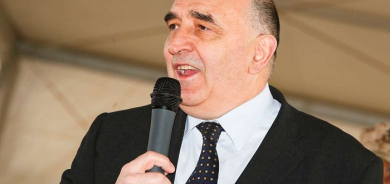
Professor Hdeel Abdelhady to Gulan: Enforced Self-Sufficiency, However Painful in Origin, Can Become a Structural Asset

Hdeel Abdelhady is a Washington, D.C.–based lawyer and the founder and principal of MassPoint PLLC. Her practice focuses on U.S. law and policy at the intersection of commerce, emerging technology, and national security, particularly economic sanctions, export controls, and foreign investment regulation. She advises U.S. and international clients on cross-border trade and investment matters and has served as an expert on sanctions and export controls in international litigation and arbitration. Abdelhady is also a Professorial Lecturer in Law at George Washington University Law School, where she has taught for two decades and developed a course on the regulation of foreign access to U.S. technology. Her work has appeared in Reuters, Law360, and other publications, and she is a Fellow of the American Bar Foundation.
Sanctions, technology competition, and the shifting architecture of global trade — Hdeel Abdelhady discusses Iraq’s development prospects, the limits of sanctions, and the evolving geopolitical struggle over AI and semiconductors.
Gulan: Economic Transformation and Foreign Investment: Given your extensive professional experience in both Dubai and Washington, D.C., how do you evaluate the current economic shift within the Gulf states toward technology-driven diversification? Furthermore, in light of Iraq’s complex legal and political legacy, do you believe it can realistically adopt similar developmental models to attract sustainable Foreign Direct Investment (FDI)?
Professor Hdeel Abdelhady: The Gulf states occupy a distinctive position in the global technology landscape, one that reflects deliberate policy choices as much as financial capacity. The UAE and Saudi Arabia have pursued technology-driven economic diversification as a matter of state strategy, backed by sovereign wealth funds capable of acquiring advanced semiconductors at scale, building data center infrastructure, and attracting international talent. The UAE has further leveraged its diplomatic and commercial relationships — including investment commitments to the United States and participation in U.S.-aligned initiatives such as Stargate — to secure regulatory approvals for advanced technology imports that are not readily available to other states.
What distinguishes the UAE model is not capital alone, but a convergence of financial capacity, strategic positioning as a global business and financial hub, and alignment on a range of interconnected policy matters — including normalization with Israel — that have proved integral to accessing U.S. technology partnerships. Countries that lack this particular configuration of assets and relationships cannot simply replicate the model.
Iraq's path to attracting sustainable FDI must therefore be tailored to its own distinct circumstances and strengths. Iraq has a substantial population, significant natural resources, deep civilizational significance, and a historical legacy of strong public education. A development model built around reconstituting these strengths — through investment in STEM education, institutional partnerships among domestic universities, research centers, and international counterparts, and strategic use of open-source and publicly available technologies — may prove more viable and more durable than one premised on emulating Gulf state models that depend on conditions Iraq does not share
Gulan: Efficacy of Sanctions and Financial Alternatives: As an expert in economic sanctions, to what extent have these measures successfully achieved U.S. strategic and political objectives? Moreover, have these sanctions inadvertently incentivized regional actors, including Iraq and the Gulf states, to explore alternative financial architectures to mitigate their systemic reliance on the U.S. dollar?
Professor Hdeel Abdelhady: The efficacy of sanctions as a foreign policy instrument is best evaluated empirically, and the record is mixed. Sanctions imposed on Iraq prior to 2003 succeeded in degrading military capability and inflicting severe economic damage, but did not produce the political or ideological transformation that might have precluded military intervention. A comprehensive decades-long embargo against Cuba has similarly failed to displace the governing regime. Sanctions imposed on Russia following its 2022 invasion of Ukraine have not, as of this writing, produced their stated objective of ending the conflict.
The case of Iran offers perhaps the most analytically significant illustration of sanctions' structural limits. Despite being among the most comprehensively sanctioned states in the world, Iran has sustained a functioning civilian economy, a domestic defense industrial base, and a significant scientific and technological knowledge infrastructure. Several factors account for this resilience: geographic scale, population size, and resource depth; the ideological character of a revolutionary government not reducible to the decisions of a single leader or small group; and a deep civilizational and historical identity that reinforces national cohesion under sustained external pressure.
The policy inference I draw — and one that has received insufficient attention — is that enforced self-sufficiency, however painful in origin, can become a structural asset. Iran's effective exclusion from Western financial and technological systems compelled the development of indigenous capacity that has proved more durable than external pressure anticipated. This observation has broader implications for development models: countries that build on domestic capacity and reduce systemic dependence on external financial architecture may achieve a form of resilience that integration-dependent models do not. That is not an argument against international economic engagement, but it is an argument for understanding the terms and vulnerabilities that such engagement entails.
The war has also, ironically, resulted in some sanctions relief for Iran and Russia. The U.S. Treasury Department's Office of Foreign Assets Control (OFAC) has issued two general licenses for the stated purpose of easing oil supply chain pressure. The first temporarily authorizes certain transactions in Russian crude oil and petrochemical products and the second general license does the same with respect to Iranian crude oil and petrochemical products.
Iran has also reportedly realized a new source of revenue insulated, at least initially, from U.S. sanctions by imposing tolls for passage through the Strait of Hormuz with payment in cryptocurrency or China's currency, the yuan. In doing so, Iran has found opportunity in crisis and illustrated the use of non-dollar payments to avert U.S. sanctions jurisdiction.
[On alternative financial architectures, please see response to no. 8 below].
Gulan: Trade Policy and Regional Stability: Under a potential resurgence of "America First" economic policies and the imposition of aggressive tariff regimes, how do you foresee the impact on the stability of global energy markets and trade dynamics specifically within the Middle East?
Professor Hdeel Abdelhady: Significant tariff measures introduced by the Trump Administration — like the "Liberation Day" tariffs recently found by the U.S. Supreme Court to have exceeded the President's authority under the International Emergency Economic Powers Act — were nearly global in scope and represented a significant departure from the multilateral trade framework the United States helped construct after World War II. Their impact on global trade dynamics has been real, though their effect on regional energy markets appears to have been insignificant. The more direct and unfolding disruption has been caused by the Iran war, whose adverse consequences for regional and global energy supply chains are expected to continue beyond any cessation of hostilities.
What is notable from a trade law perspective is the internal tension within the Administration's own approach. Certain companies and countries have obtained tariff relief in exchange for investment or other commitments to the United States — an ad hoc, bilateral mechanism rather than a uniform regulatory framework. Export control policy has moved in a similar direction in some areas. For example, the Biden Administration's tiered "AI Diffusion Rule," which established a global structured multilateral framework for governing advanced semiconductor exports, was rescinded and replaced with an informal approach favoring case-by-case bilateral arrangements.
The AI Diffusion Rule was not without criticism; among the criticisms was that it effectively divided the world into advanced semiconductor haves and have-nots.
But from a legal standpoint, shifts from rule-based paradigms to relationship- and deal-based frameworks introduce material uncertainty into trade relations. Predictability is a foundational value in the law, including in international trade. Systems that substitute individual dealmaking for published, uniformly applicable rules create a structural disadvantage for companies and countries that lack political and financial leverage.
For countries in the Middle East seeking to engage with U.S. trade and technology policy, the practical implication is that understanding the U.S. legal and regulatory landscape — including the role of Congress, not only the executive branch — has become more rather than less important.
Gulan: The Future of the WTO and Globalization: In the context of the intensifying economic rivalry between the United States and China and the increasing trend toward unilateralism, can the World Trade Organization (WTO) maintain its relevance as a neutral arbiter? Are we effectively witnessing the dawn of a "post-globalization" era?
Professor Hdeel Abdelhady: The current moment in international trade governance may represent more than a transition — it may constitute the start of a structural break. Canadian Prime Minister Mark Carney, addressing the World Economic Forum, offered a precise formulation: the post-World War II rules-based international order is not merely in a period of transition, but in "rupture." Whether one accepts that characterization in full, the underlying observation is well-supported by the evidence: multilateral institutions including the WTO and the United Nations have been systematically marginalized in favor of unilateral and bilateral arrangements by major trading powers.
The WTO's core functions — binding dispute resolution, most-favored-nation treatment, and the progressive liberalization of trade — are premised on member states' genuine commitment to those norms. That commitment is under strain in ways that are not primarily legal but political, which makes the challenge difficult for the institution to address through its own mechanisms. The WTO cannot compel major trading powers to engage with its dispute settlement system if those powers choose to act outside it.
What history strongly suggests will persist is cross-border commerce itself. International trade predates multilateral institutions by millennia, and it will outlast the current period of institutional stress. The more consequential question is not whether international trade will survive, but what legal and institutional architecture will govern it — whether reformed multilateral frameworks, new regional arrangements, or a more fragmented system of bilateral rules. For states in the Middle East, this uncertainty is itself an argument: developing the legal and institutional capacity to engage flexibly across multiple frameworks, rather than assuming the permanence of any single order, is a form of strategic preparation.
Gulan: Regulating Access to Technology: In your capacity as a scholar of the regulation of foreign access to U.S. technology, how can nations like Iraq and the Gulf states maintain a strategic equilibrium between integrating advanced Chinese technology and preserving their vital security partnerships with the United States without triggering export control violations?
Professor Hdeel Abdelhady: The regulation of foreign access to U.S. technology — particularly in artificial intelligence, advanced semiconductors, and dual-use applications — reflects one of the most durable bipartisan consensuses in current U.S. policy, and one that is frequently misread by foreign governments and companies. Analysis of U.S. export control policy through the lens of executive branch priorities alone, or as a function of which administration holds power, misses a structural reality: congressional initiative in this domain — through legislation and sustained oversight — has produced a legal framework that is in significant respects not discretionary. Controls on foreign access to certain categories of technology are built into statute, not merely into executive policy.
For Middle Eastern states, including Iraq and the Gulf states, this has a direct practical implication: meaningful engagement with U.S. technology policy requires sustained attention to the legal framework as it exists, not only to the political signals of any particular administration. At the same time, these states face genuine and growing pressure to integrate available Chinese technology across infrastructure, telecommunications, and other sectors. The legal and diplomatic consequences of those choices — for access to U.S. technology, security cooperation, and investment relationships — vary by country and by technology category, and do not lend themselves to a single general answer.
The tension is real but navigable. Countries that develop sophisticated internal legal and policy capacity to understand U.S. export control law — its statutory foundations, its regulatory implementation, and its congressional oversight dimensions — will be better positioned to manage this landscape than those that approach it reactively or through political channels alone. Individualized legal assessment, rather than generalized geopolitical strategy, is the appropriate starting point.
Gulan: Banking Reforms and AML/CFT Compliance: Iraq has recently faced stringent restrictions from the U.S. Federal Reserve regarding dollar auctions and transfers. As a specialist in financial crime regulation, what structural reforms must Iraq prioritize to align its banking sector with international AML/CFT standards and insulate itself from further regulatory or punitive measures?
Professor Hdeel Abdelhady: The standard approach countries take is to conform their AML/CFT frameworks to international standards, particularly FATF standards. Iraq is not, to my knowledge, currently on a FATF blacklist.
With respect to the United States, the U.S. Treasury Department has had a robust international engagement apparatus, including to work with countries to address country-specific AML/CFT concerns. This channel should be available to Iraq. The United States, through the U.S. Treasury Department's Financial Crimes Enforcement Network (FinCEN) — a lead AML enforcement agency in the United States — has taken action against Iraqi entities, such as Al-Huda Bank in 2024, but not against Iraq itself.
Still, financial regulation may be of greater importance to Iraq in relation to the United States. Iraq's oil revenues are maintained by the Federal Reserve Bank of New York, pursuant to a 2003 Executive Order issued by former President George W. Bush. This arrangement warrants particular attention in relation to Iraq's AML/CFT framework.
Gulan: CFIUS and Sovereign Investments: Given your specialized focus on the Committee on Foreign Investment in the United States (CFIUS), is it still viable for Arab sovereign wealth funds or Iraqi entities to pursue significant stakes in sensitive U.S. technology sectors, or are national security-based legal barriers becoming increasingly insurmountable?
Professor Hdeel Abdelhady: Arab investment in the United States continues, including in some cases with CFIUS approval. That said, some deals involving Arab sovereigns have faced difficulty. For example, in 2022 the Biden Administration blocked a Saudi Aramco-backed fund's investment in a startup that designed neuromorphic processing units designed to replicate the architecture of the human brain, to the extent that architecture is yet understood.
Some in Congress and elsewhere have called for CFIUS to review foreign investment in the recently created U.S. spinoff of TikTok — including UAE investment. It does not appear that those calls have been heeded.
Foreign investors from Iraq or elsewhere should approach any potential investment in national security-related areas with an understanding of the technology or investment target's national security significance under law and as a matter of policy. Investors should also consider the risks that the United States attaches to any particular investor and the investor's home country, including relations with "rivals" such as China.
Gulan: The Discourse of De-dollarization: There is a growing global discourse regarding "de-dollarization" as a response to the perceived "weaponization" of the U.S. dollar in foreign policy. From your perspective, does the emergence of alternative payment systems or currencies pose a substantive threat to the long-term global dominance of the dollar?
Professor Hdeel Abdelhady: The discourse on U.S. dollar hegemony and weaponization is not new, but its significance has expanded. The sanctions record has clearly incentivized exploration of dollar-alternative mechanisms among directly and indirectly affected states and trading partners. In the 2010s, European countries — namely France — championed strengthening the Euro as a U.S. dollar alternative, in response to the imposition of massive financial and legal penalties on European banks for U.S. sanctions violations. The BRICS — which recently expanded to include Egypt, Iran, the UAE, Ethiopia, and Indonesia — have long explored U.S. dollar alternatives. China has had moderate success in internationalizing the yuan, including concluding currency swap agreements with oil exporters like Nigeria and exploring yuan-denominated Gulf oil transactions. Recent SWIFT data indicates that China's efforts to internationalize the renminbi have been moderately successful, but no currency poses a near-term challenge to dollar dominance.
Whether any or a combination of these or other efforts produces durable structural change in global financial systems remains to be seen — and not anytime soon — but it is a trajectory that legal and policy practitioners in this field must take seriously. The notion is not new or held only by outsiders. Former Treasury Secretary Jack Lew warned while serving in the Obama Administration that overuse of sanctions might undermine their effectiveness. The Biden Administration conducted a review of U.S. sanctions, sharing this concern and to address risks to dollar supremacy from crypto and digital currencies, but the effort yielded limited results.
Gulan: AI, Semiconductors, and Global Trade: Your academic work explores the regulation of access to Artificial Intelligence and semiconductors. How is the intensifying global competition for AI supremacy and the control over semiconductor supply chains reshaping the global economic map and the future of international trade agreements?
Professor Hdeel Abdelhady: The global race for AI supremacy is really a two-country race between the United States and China. This does not mean that other countries lack AI competency or significance, but the race is most intense at the U.S.-China level and extends to supply chains, foreign investment, and academia.
The United States and China have approached the technology race differently, with China formulating and implementing state plans, such as the Made in China 2025 plan, and the United States responding with legal measures that have been framed as defensive. These measures include, for example, national security- and foreign policy-based export controls barring or restricting emerging technology exports to China, such as advanced semiconductor export controls first adopted in October 2022. In 2018, the United States strengthened inbound foreign investment screening, as a defense against foreign investment in sensitive U.S. technology. Chinese investment in the United States dropped significantly before the enactment of that law, and has remained well below pre-2018 levels. The Biden Administration promulgated an outbound foreign investment rule targeting U.S. investment in China, to restrict and bring under federal government scrutiny outflows of U.S. capital and know-how to China, particularly related to sensitive technologies like AI, semiconductors, and quantum information technologies.
At the secondary level, China has continued to be a principal technology supplier to countries in Africa and Latin America, as well as in Europe and other parts of Asia. The United States has sought to counter this through diplomatic and coercive measures designed to wean such countries off of Chinese technology. These efforts have been largely unsuccessful.
China has also been a proactive and key player in setting international technology standards; the United States less so. It is unclear if the United States will seek to compete in this zone, considering the Trump Administration's unilateralism in international trade and other matters.
Gulan: Strategic Advice for Iraq: As a legal professional and academic bridge between Eastern and Western legal cultures, what strategic advice would you offer the Iraqi government to navigate the current "global economic war" in a manner that minimizes systemic risks and maximizes national economic gains?
Professor Hdeel Abdelhady: A starting point is a clear, domestically owned conception of what Iraq seeks to achieve and on what terms. Without that foundation, legal and regulatory reforms risk being reactive and episodic rather than coherent and cumulative. Iraq has the raw material for such a vision: a substantial population, significant natural resources, deep civilizational significance, and a historical legacy of strong public education. The strategic question is how to reconstitute and build on those strengths rather than subordinate them to models developed for circumstances Iraq does not share.
Vision must be translated into legal and institutional infrastructure. This means developing and implementing regulatory frameworks that are transparent, stable, and capable of supporting sustained foreign investment — not frameworks designed to attract a single transaction, but ones that signal long-term institutional seriousness. Nor should such frameworks simply implement foreign templates. The doctrine of 'urf—customary practice recognized as a source of law across diverse jurisdictions in the classical Islamic legal tradition—is instructive here. It reflects a legal culture that understood how universal principles must be mediated through local conditions and practice to be legitimate and durable. That insight applies with equal force to the design of modern regulatory frameworks: transplanted rules that lack domestic roots rarely produce the stability or legitimacy that sustainable investment requires. Legal capacity building — investing in the training of lawyers, regulators, and judges — is not peripheral to this effort; it is foundational to it.
On geopolitical positioning, the current global economic and trade environment offers some clear lessons with direct legal and policy implication. Among them is that countries that reduce systemic dependence on any single external financial or technological architecture may achieve a form of resilience that more integration-dependent models do not. For Iraq, that suggests a posture of principled engagement across multiple frameworks rather than exclusive alignment with any one. Clarity about what Iraq offers — strategically, economically, and in terms of regional stability — combined with genuine legal and institutional credibility, is what makes such a posture sustainable.
By Kobin Ferhad