Dr. Vincent Durac to Gulan: The survival of the Islamic Republic in its present form can no longer be taken for granted
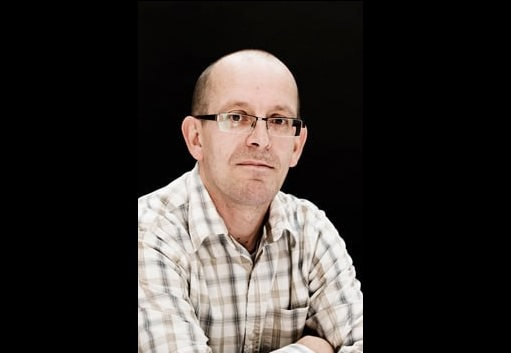
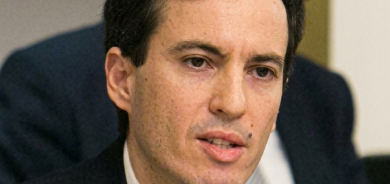
Dr. Vincent Durac is an Associate Professor in Middle East Politics at University College Dublin and has been Visiting Professor at Bethlehem University, Palestine since 2005. He has published and presented his work extensively in Ireland and internationally. He is co-author (with Francesco Cavatorta) of Politics and Governance in the Middle East (Bloomsbury, 2022) and Civil Society and Democratization in the Arab World (Routledge, 2011).
The crisis of security, governance and legitimacy has been characteristic of states in the region for decades
Gulan: In your recent analysis of the Iran conflict, you highlight the fragmentation of Tehran’s regional proxy network, with actors such as Hezbollah facing significant military and political pressure, Hamas being severely weakened after the Gaza war, and groups like the Houthis showing more cautious or limited engagement.
At the same time, Iran-aligned militias in Iraq continue to operate within a complex space between state authority and regional influence.
Taken together, do these developments point to a deeper structural weakening of Iran’s regional strategy, or are we instead witnessing a temporary recalibration within a system that has historically adapted to sustained pressure and shifting geopolitical conditions?
Dr. Vincent Durac: It is difficult to see this as anything other than a structural weakening of Iran’s regional strategy. The reasons for this are the extent of the damage that has been done to its regional partners, particularly Hamas and Hezbollah. Both of these now see survival and the maintenance of influence in Gaza and Lebanon, respectively, as a form of success (which arguably is the case). However, neither will constitute an actor possessed of the same level of significance or threat to Israel and its supporters for a long time to come. In addition, Hezbollah is coming under pressure from domestic sources in Lebanon in ways that have rarely been seen lately. Finally, there has been surprisingly little focus on the loss to Iran that the fall of the Asad regime in Damascus represents. Syria was the only significant state ally of the Islamic Republic (if a little reluctantly, at times) and was hugely important in broad geopolitical terms but also in logistical terms. Neither the Houthis in Yemen nor pro-Iran militias in Iraq can substitute for this. It is, of course, possible that Iran’s regional network can be reconstituted to some extent in the longer-term. However, that seems unlikely right now. Indeed, the survival of the Islamic Republic in its present form can no longer be taken for granted.
Iraq is certainly at risk of becoming even more embroiled in regional conflict
Gulan: In your work on adversarial power-sharing, you describe political systems that resemble “forced marriages” between competing elites, as seen in countries such as Lebanon and Yemen, where rival factions are compelled to govern together despite deep structural divisions.
In Iraq, a similar pattern can be observed in the post-2003 political order, where power is distributed among sectarian and political blocs, often resulting in prolonged government formation crises and policy paralysis.
In your view, are such arrangements inherently unstable by design, or can they, under certain conditions, evolve into more institutionalized and sustainable systems of governance?
Dr. Vincent Durac: It seems to me that the structural divisions that are inherent in consociational governing arrangements that typically arise out of a combination of exhaustion at the domestic level and imposition or influence from outside are such that these arrangements are unstable by design. Quite often they serve to freeze the status quo at a certain point, putting inflexible power-sharing governing structures in place (although politics does not cease to evolve). When this works to contain violent conflict, it is clearly a good thing. But it is not always conducive to reflecting or encouraging organic political dynamics which might lead to more sustainable governing institutions that are more responsive to public needs and demands.
Gulan: Iraq occupies a particularly complex position within this regional landscape, balancing relations between Iran, the United States, and a range of non-state armed actors, including Iran-aligned militias that operate alongside formal state institutions. In recent days, we have seen drone and rocket attacks on US diplomatic and military sites in Baghdad, as well as drone strikes targeting American bases in Erbil, alongside broader spillover from the escalating confrontation involving Iran and its regional networks. In this context, do you see Iraq as still capable of maintaining this delicate balance, or is it increasingly at risk of becoming a primary arena for proxy confrontation, similar to the roles played by Lebanon or Syria in earlier phases of regional conflict?
Dr. Vincent Durac: Iraq is certainly at risk of becoming even more embroiled in regional conflict in ways that could be highly destabilizing and politically and economically threatening. Much depends on how much longer the war on Iran continues and how Iraqi pro-Iran militias react. If there is a reduction in (or an end of) conflict, then clearly the risks diminish. The corollary of this also applies. Much also depends on how political deadlock in Baghdad is resolved and the extent to which the central government is capable of exercising any real control over events.
Gulan: External actors continue to play a decisive role in shaping political outcomes across the Middle East, whether through military intervention, financial backing, or political support for specific actors.
In Yemen, for example, regional involvement has entrenched divisions on the ground, while in Iraq, both US presence and Iranian influence have shaped state institutions as well as non-state armed groups operating alongside them.
In your view, do such interventions ultimately strengthen state structures and stability, or do they instead deepen fragmentation by empowering selective actors and undermining long-term sovereignty?
Dr. Vincent Durac: It is very challenging to think of any situation in the recent history of the region where the impact of external actors has had a positive impact on state structures and stability, except in the sense of providing support for authoritarian regimes. One can go back to the colonial era or the post-colonial Cold War period for evidence of this. More recently, the influence/impact of US engagement in Iraq speaks for itself, as does the diversity of actors who involved themselves in the aftermath of popular mobilisation across the region in 2011with largely negative consequences for stability and institution building. This includes regional actors, particularly the Gulf states.
Gulan: Across the region, there is growing discussion about a crisis not only of security but of governance and legitimacy, reflected in declining public trust, economic pressures, and recurring waves of protest.
Do you believe we are witnessing a gradual transformation of the state system in the Middle East, possibly toward more fragmented or hybrid forms of authority, or simply the prolonged weakening of already fragile institutions?
Dr. Vincent Durac: The reality is complex. On the one hand, the crisis of security, governance and legitimacy has been characteristic of states in the region for decades. Some of the first responses to the so-called ‘Islamic resurgence/revival’ of the late 1970s saw it precisely as a response to crisis described in these terms and again the 2010/2011 uprisings can be seen in the same way. This suggests that the states (or, perhaps, regimes) of the region have proved to be more resilient than might have been expected. On the other hand, we do see, in some settings at least, the persistence of real challenge to central authority leading to the weakening of state institutions and the emergence of hybrid forms of governance. This is the case in Lebanon for the longest time, Yemen, and also Iraq. It is not inconceivable that something similar might take place in Iran at some point in the future.
Gulan: You have written about civil society as an oppositional force in both democratic and non-democratic systems.
In much of the Middle East, however, civil society operates in a grey zone, neither fully independent nor entirely co-opted.
If we take the 2017 Kurdistan Region independence referendum as an example, we saw a moment of strong societal mobilization and public support, yet its outcome ultimately exposed the constraints imposed by regional and international actors.
From your perspective, does this suggest that civil society-driven mobilization in the Middle East ultimately remains subordinate to broader geopolitical power dynamics, or are there realistic conditions under which such movements can translate into lasting political outcomes?
Dr. Vincent Durac: The region has been characterized by civic mobilization throughout the modern period, from the earliest colonial era to the present. However, ruling structures have sought from the outset to contain and constrain civil society, particularly when civil society organisations engaged in potentially problematic political activities. This, as has been widely and clearly documented, spans the spectrum from cooptation to coercion. Regimes continue to do so, making the achievement of political objectives highly challenging. In addition, it is important to note the ideological diversity within civil society across the region and within particular settings. This often means that only ‘lowest-common denominator’ objectives are shared (broad demands for reform, political change, relief of economic distress) but limited agreement on how in practical political terms to realise those goals. Translating mass mobilization into practical political projects has been a challenge in many global settings, including the Middle East.
By Kobin Ferhad