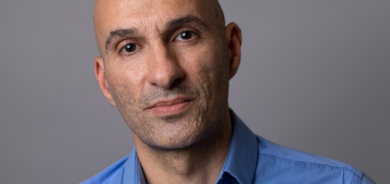
Professor Harsh V. Pant to Gulan: We are in a transition phase where middle powers are attempting to shape the regional balance of power
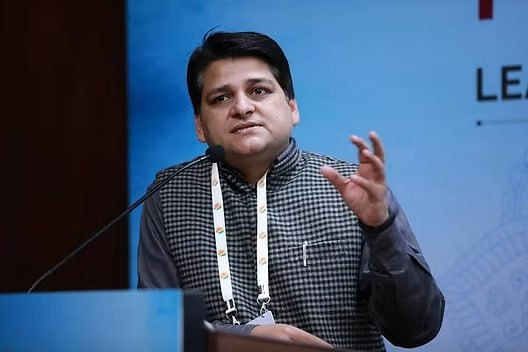
Prof. Harsh V. Pant is Vice President for Studies and Foreign Policy at the Observer Research Foundation (ORF) and Professor of International Relations at King’s India Institute, King’s College London. He is a leading scholar of Indian foreign policy and global strategic affairs, with extensive academic and policy experience across India, the United Kingdom, and the United States. He is the author and editor of several influential works, including Indian Foreign Policy: An Overview (2016), and has written widely on India’s role in the evolving international order, great-power politics, and Indo-Pacific strategy. His analysis often focuses on India’s strategic autonomy and its growing global influence amid shifting geopolitical dynamics.
“Very, very critical.” (on Iraq’s stability for India’s national security and energy architecture)
1. On Asian Security and the Balance of Power:
Gulan: "Professor Pant, you have long emphasized the importance of a 'balance of power' in Asia. As we stand in 2026 with the Trump administration potentially pursuing a more 'isolationist' or 'retrenched' foreign policy, can India realistically serve as a strategic alternative to the U.S. in preventing a Sino-centric hegemony in the Indo-Pacific? Or do you fear that a diminishing American security umbrella will force Asian middle powers into Beijing’s orbit?"
Prof. Harsh V. Pant: So, thank you for that question. I think, as we all know, the balance of power is changing, and it is changing rapidly, not only in the broader context of the global order, but in particular in what we call the Indo-Pacific today. Because the center of gravity of global politics is also shifting from the Euro-Atlantic to the Indo-Pacific.
And in the Indo-Pacific, we have multiple stakeholders that are emerging. The most important development in this regard has been the rise of China, which has upended the regional structure in ways that are quite unprecedented.
So what I think has always been the case is that America has been an important element of the security and strategic architecture of Asia, and of the Indo-Pacific more broadly. And I think with the Trump administration now giving somewhat confused signals about its priorities in the Pacific, there is a challenge for regional powers in the region, which have pushed back against Chinese hegemony—like, for example, Japan, Australia, South Korea, India, and others—in trying to continue to assert their own strategic autonomy.
But they have relied upon American presence in the region to give them that space. And I think as America relooks at its own strategy, and as America continues to focus more inwards, this is a challenging moment.
India is certainly a very important player now in that regard. The Asian landscape is viewed through the lens of the Indo-Pacific and the Indian Ocean, and India’s position in the Indian Ocean becomes a critical variable in shaping the balance of power in the Indo-Pacific.
But I think without America’s clear positioning, it would be very difficult for regional players to articulate their own stances. Although what we see now is that most countries want to move beyond the U.S.-China binary, and the middle powers themselves have been forced to start building their own relationships, as well as shaping the wider balance of power in the region.
So I think we are in a transition phase where middle powers in the region are attempting, in their own ways, to shape the regional balance of power. And India’s partnership—and partnerships with India—are seen as critical in maintaining a stable balance of power in the region.
2. On the Ideological Divide (Democracies vs. Autocracies):
Gulan: "India is often hailed as the 'world's largest democracy,' yet New Delhi has consistently prioritized national interest and 'strategic autonomy' over ideological alignment. In 2026, as the friction between Western democracies and the Eurasian autocratic bloc (China-Russia) intensifies, how does India navigate this divide? Will New Delhi commit to a democratic alliance to counter China, or are we seeing the rise of a 'neutralist diplomacy' where democracy is utilized merely as soft power rather than a political mandate?"
Prof. Harsh V. Pant: I don’t think India will shape its foreign policy around democracy promotion. Although certain values that pertain to democracy—transparency, rule of law, freedom of navigation—are very important principles of Indian foreign policy globally today.
India’s relationship, particularly with the West, has been that India sees itself as a non-Western country, but not an anti-Western country. India is building relationships with the West. India is building relationships with Russia. India has had a longstanding relationship with Russia. And India is also building relationships with other power centers, like countries in the Middle East or countries in the Indo-Pacific.
So I think for India, this is a moment where it can define its priorities globally. India does not see itself anymore as just a South Asian country. It sees itself as an Indo-Pacific country, which has extensive stakes in what is happening in other parts of the world.
And the way India is looking at its own strategic autonomy is that the more partnerships India has, the more strategic autonomy it gets in deciding its future course of action, because it gives India greater space to maneuver.
So I think we are going to see an India which is going to build strong partnerships with all like-minded countries, and by doing that, India hopes that it can expand the ambit of its own strategic autonomy.
I would not call it neutral. I would say India is going to pursue an approach that is more as a bridging power—that it bridges countries. It does not see the world in blocks. It sees the world as evolving continuously, and therefore partnerships with all like-minded countries are going to be very important.
So it is not going to be neutral in that sense. India is going to stand up for its own interests, but partnering with countries to allow those interests to fructify will be the policy response.
3. On India-U.S. Relations under Trump 2.0:
Gulan: "In your book, America and the Indo-Pacific: Trump and Beyond, you analyzed the shifting sands of U.S. policy. Now that Donald Trump is back in the White House in 2026, do you perceive the New Delhi-Washington trajectory moving toward a formal security alliance, or will it remain a 'transactional partnership' defined by shared anxieties over China but divided by 'America First' trade protectionism?"
Prof. Harsh V. Pant: I think it is more of a partnership that is embedded in the wider landscape of the changing balance of power in the Indo-Pacific.
India’s relationship with the U.S. has evolved considerably. India used to be very different about its relationship with the U.S., but that is no longer the case now. India is building a relationship with the U.S. which is based on taking India beyond the hesitations of the past, which were largely rooted in a non-aligned structure.
So in some ways, even with a very transactional Mr. Trump in his second term, we have seen over the last year and a half that he has been in Washington that the relationship has continued to grow despite challenges of tariffs, trade, and immigration.
The relationship on defense, for example, is very ambitious. Technology cooperation with the U.S. is growing. So I think the direction is very clear—that U.S.-India ties are entering a phase where convergence is defined less by shared narratives and more by shared calculations. And that may make the relationship less evocative, but it also makes it more resilient.
I think the relationship is being refined. There is a greater strategic weight on the relationship. There is an expectation for a more active role by India regionally.
The challenge for India would be managing this transition without compromising its strategic autonomy or overstretching its capabilities.
Today, the substance in the relationship is very serious. The U.S. still considers India indispensable to Indo-Pacific balance, and is recognizing India’s role as an emerging pole in a multipolar world order.
This is a significant shift from earlier conceptions of India as simply a balancing factor in a U.S.-led system. There is now an explicit acknowledgment that India is going to be an important pillar of stability.
At the same time, India will continue to build multiple relationships to ensure predictability and stability in global engagements.
4. On India’s Strategic Equilibrium in the Middle East:
Gulan: "India has become a pivotal player in the Middle East through frameworks like I2U2 and the IMEC corridor. Given the heightened volatility in the region, how does India maintain its 'fine-tuned' balance between its deep security ties with Israel and its vital energy and strategic interests with the Arab world and Iran?"
Prof. Harsh V. Pant: India has maintained independent relations with Israel, with the Arab states, and with Iran for a very long time, despite the challenges this creates among these actors.
India’s engagement with the region has changed substantively. Earlier, India was largely looking at the region from the perspective of energy and labor supply. Today, India is talking about bigger ideas, like I2U2 and IMEC, which are pan-regional ideas.
These are about regional stability, connectivity, high-end technology cooperation, trade, and investment.
I think the contours of India’s engagement with the region have changed, particularly with the Arab states in the Gulf and with Israel. Both these relationships are now very forward-looking.
With Iran, the relationship has been stable, but given Iran’s isolation from the global order, there are limits to what India can do.
So while India’s relations with Israel and the Arab states have grown, its relationship with Iran has remained relatively static.
India has shifted from looking at individual stakeholders to looking at the region more holistically.
7. On the India-Russia-U.S. Triangle:
Gulan: "The historical partnership between India and Russia has faced unprecedented pressure due to the war in Ukraine and the resulting U.S. sanctions. Looking at the geopolitical landscape of 2026, is the 'special and privileged' relationship with Moscow still sustainable for India, or is the defense and technological dependency shifting irrevocably toward the West?"
Prof. Harsh V. Pant: I think India will continue to sustain its relationship with Russia to the extent possible, so long as it can, because it is an important relationship, which has been historically important.
It is also a relationship where Russia has been with India through some of the most difficult times that India has faced in the past.
However, there are also certain realities about today’s Russia that are different. Russia’s economy is facing challenges. Russia is fighting a war in Ukraine which, at this point, looks as if it is never-ending.
And broadly, Russia’s divergence with the West is, in a sense, bringing Russia closer to China.
Now this is certainly, from India’s perspective, a very difficult situation. Because for India, keeping Russia as a friend is important, given its defense relationship, historical relationship, and political relationship.
But if Russia continues to gravitate towards China, then there are going to be challenges for India, because China is seen by many in India as its most important strategic challenge.
So a Russia–China relationship will put pressure on India, and therefore this is going to be a challenge.
Secondly, Russia’s foreign policy posture of being anti-West is also very different from India’s position, which is, as I’ve said, India defines itself as non-West, not anti-West.
India continues to engage with the West, whether on technology, development, defense, etc.
So I think these questions will continue to challenge the India–Russia relationship.
Russia’s own decisions, its economic and domestic profile, will have a greater impact on India–Russia relations than anything India would want to do.
India would want a relationship with Russia that remains multifaceted and economically dynamic, but there are issues that Russia is facing which are likely to limit cooperation in the coming years.
8. On the Evolution of India-Iraq Relations:
Gulan: "India remains one of the largest buyers of Iraqi crude oil. Within the framework of PM Modi’s 'Amrit Kaal' vision, are there concrete plans to diversify this relationship beyond energy—specifically moving into defense cooperation, digital infrastructure, and industrial investment in Baghdad?"
Prof. Harsh V. Pant: I think if you look at the relationship, it has been quite strong and pragmatic, as you mentioned—anchored in energy security for India and economic opportunities for Iraq.
We have also seen bilateral trade, which has more than doubled in recent years.
And there is an attempt to diversify beyond oil.
So we are talking, for example, about fertilizers, downstream projects, reconstruction, etc.
There are areas of cooperation like defense and security, where it is limited, but it is growing. We are beginning to talk about exchanges, and potential counterterrorism cooperation.
There are also cultural and people-to-people ties, where you have a significant Indian diaspora in Iraq, and Indian pilgrims who visit places like Karbala, Najaf, Samarra, and others.
So I think there is this underlying reality which is very clear—that India has supported Iraq’s stability and has offered expertise in capacity-building, education, reconstruction, etc.
There are areas where more needs to be done, such as agriculture and pharmaceuticals.
This is also something where Indian companies have already executed projects in power transmission and refineries.
So I think there is enough scope to take the relationship forward and situate it in the wider regional context.
As you mentioned, the energy relationship has been the key driver, but diversification is happening.
For India, Iraq is seen as a key partner in the Middle East for diversifying energy sources and enhancing connectivity and trade corridors.
Efforts in boosting investments, institutional cooperation, and people-to-people engagement will remain critical.
At the same time, internal challenges in Iraq and regional dynamics will continue to pose risks to this expansion, which both sides need to carefully watch.
9. On Regional Stability and the 'Development Road':
Gulan: "How critical is the political and security stability of Iraq to India’s broader national security and energy architecture, especially as new regional projects like the 'Development Road' come into play? Does New Delhi see itself as a stakeholder in Iraq’s long-term infrastructure connectivity?"
Prof. Harsh V. Pant: Very critical.
If India views Iraq as a long-term strategic partner in energy and development, then Iraq’s domestic challenges—and how it builds its institutional and economic capabilities—are going to be essential.
I think that is a very important factor in why India and many in India talk about investing in Iraq’s domestic capacity-building.
Because that has been an important vertical in shaping the trajectory of this relationship.
So it is a very, very critical factor.
10. On the UN Security Council and Global Governance:
Gulan: "As a leading expert on global governance, how close do you believe India has come in 2026 to securing a permanent seat on the UN Security Council? Do you expect the Trump administration to move beyond rhetoric and actively champion India’s bid for a seat at the high table of global decision-making?"
Prof. Harsh V. Pant: My own sense is that India does not see the possibility of the UN Security Council reforming itself anytime soon.
This has been a debate that has been going on for a very long time, and there are institutional and structural factors which are ensuring that there is no real movement.
Given the current state of global multilateralism, I don’t think many in India are holding their breath expecting that one day the Security Council will be reformed and India will become a part of it.
India’s engagement with the multilateral order is also changing.
India is essentially saying that if the UN does not reform itself, then it is as much a problem for the UN as it is for India, because the credibility of the UN declines if a country like India is not part of the Security Council.
At the same time, India recognizes that this is a structural problem that is not going to be resolved anytime soon.
Even if the Trump administration were to actively support India’s case, there is the challenge of China.
I don’t think China would want another Asian power to be part of the Security Council, and China has not even rhetorically supported India’s candidacy.
So I don’t think many in India believe that this is going to happen anytime soon.
Instead, India is moving away from a world where global governance is centered only on the UN Security Council, and is looking at how it can work with coalitions of like-minded partners.
So whether it is the International Solar Alliance, AI-related initiatives, or Indian Ocean regional frameworks, India is trying to build alternative mechanisms.
India is essentially saying that it can build coalitions to ensure some level of global governance in a time of geopolitical turbulence.
But there is no real expectation that India will join the UN Security Council anytime soon, even though it would like that to happen.
By Kobin Ferhad