Ofra Bengio to Gulan: Without Unity and Strategic Leadership, the Kurdish Cause Will Remain Fragile
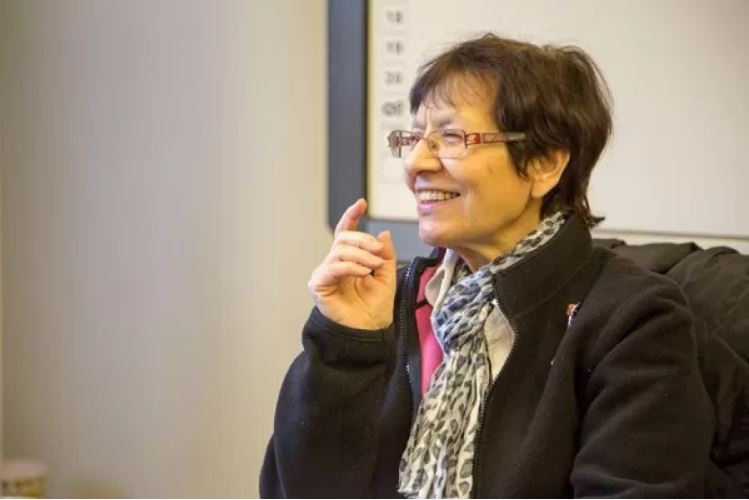
Ofra Bengio is an Israeli scholar and expert on Middle Eastern politics, particularly known for her research on Kurdish history, society, and nationalism. She is a senior research fellow at the Moshe Dayan Center for Middle Eastern and African Studies at Tel Aviv University. Bengio’s work focuses on the political dynamics of Iraq, Kurdish identity, and the broader geopolitics of the Middle East. She is the author of several influential books, including The Kurds of Iraq: Building a State Within a State, and her research has been widely cited by scholars and policymakers studying Kurdish politics and regional affairs.
Gulan: Professor Bengio, you have devoted several decades of your life to in-depth research on Kurdish history and politics. After all these years, what do you consider the most important conclusion you have reached regarding the “nature of the Kurdish question” as a stateless nation in the region?
Ofra Bengio: As a stateless nation the Kurds should know that the change of this situation depends on certain necessary conditions that should exist at one and the same time: Unity, a wise leadership, a clear political goal and diplomatic capabilities. Thus, the nature of the Kurdish question will change according to what they do and not just what the states keep doing against them.
Gulan: In your writings, you place strong emphasis on language and political discourse. Do you think Kurdish political discourse has evolved over the past few decades, or has it largely remained confined to the frameworks of “victimhood” and “armed struggle”?
Ofra Bengio: The Kurdish political discourse is moving slowly but surely towards a more assertive and nationalistic one thanks to the emerging class of intellectuals both in Kurdistan and the diaspora. This new class whose members can be found in different parts of the world bring a vivid and a completely new narrative to the international arena.
Gulan: In your book Building a State Within a State, you discuss the Kurdistan Region. After more than 30 years of self-rule, do you believe the Kurdistan Region has moved beyond the stage of “institution-building” toward “statehood,” or do internal problems still stand in the way?
Ofra Bengio: For all the endeavors to move forward toward statehood the situation is unfortunately in the opposite direction to some extent. The major reasons for this failure are the internal struggles among the Kurds themselves, the changing balance of power between Erbil and Baghdad and the American administrations which stick to the idea of a unified Iraq.
Gulan: There is currently widespread discussion about changes to the political map of the Middle East, especially following recent wars. Where do you see the position of the Kurds in this “new Middle East”?
Ofra Bengio: The Kurds all over Kurdistan pinned great hopes that "the New Middle East" will be a turning point for the geostrategic situation of Kurdistan. So far such a change did not take place and it is doubtful that it will happen in the near future. The UN and the major powers prefer a so to speak stable Middle East which was established after world War to fulfilling promises, doing justice and not betraying their real allies.
Gulan: Regarding the Kurds of Rojava (Syria), do you believe negotiations with the Assad regime are an unavoidable necessity, or could they be a strategic opportunity to preserve a form of “autonomy”?
Ofra Bengio: As things have already unfolded the Kurds of Rojava are the main losers in the new configuration of Syria. It is possible to say that this is Rojava's 7th of October. Everything was written on the wall but somehow the leadership failed to rise to the moment. After the massacres of the Alawis and the Druzes it was clear that the next will be Rojava. But no necessary steps were taken on the military, diplomatic and publicity levels.
Gulan: How has the rivalry between the United States and Russia in Syria affected the position of the Kurds in Rojava? Is there a real risk that Syrian Kurds could become victims of a major agreement between Damascus and Ankara?
Ofra Bengio: Rojava was the victim of collaboration between three Presidents: Erdogan' Trump and al-Shara`. In fact, its position was worse than the Alawis and the Druzes because it was surrounded by three forces: Turkey, Syria and the Arab tribes which betrayed once the opportunity presented itself. The change of heart of some tribes started shortly after the fall of Assad but the Kurdish leadership turned blind eye to this. So the situation of Rojava was not effected considerably between the US and Russia and more by other political dynamics.
Gulan: Recently, there have been renewed signals about restarting the peace process in Turkey (such as statements by Bahçeli and Öcalan). As an expert on Turkish history, do you see this as a “genuine effort” toward resolution, or merely a political maneuver to strengthen Erdoğan’s position?
Ofra Bengio: The "Peace Process" between Erdogan and the PKK is a fiction. The PKK committed its worst mistake ever by deciding to disband itself unilaterally without negotiating or putting any conditions. They believed or so they explained that this move will relieve Turkey's pressure on Rojava but it turned out to be just the opposite. This move gave further incentive to Ankara to pressurize Rojava with the aim of annihilating its autonomy.
Gulan: Which part of Kurdistan today do you believe is closest to becoming a “stable model” where national rights can be effectively secured?
Ofra Bengio: After 35 years of experimenting with autonomy the Kurdistan Regional Government in Iraq (KRG) can be a certain model for other parts of Kurdistan. However, this model should improve itself on various levels in order to be able to survive the storm approaching from West. Even here Baghdad is trying hard to erode the Kurdish national rights and it has had some success so far.
Gulan: Finally, as a professor who has dedicated your life to Kurdish studies, what final message or “advice” would you offer to Kurdish politicians so that they do not miss opportunities amid today’s rapid global changes?
Ofra Bengio: Advices are easier said than followed. If I must choose one, I would say that the most important at this juncture is unity of action, not necessarily ideology. In the past, for example between 2005 and 2014 the KDP and PUK managed to achieve certain modus operandi which enhanced the Kurdish cause. This is no longer the case hence the KRG's fragile situation. To evade further setbacks, the leaderships should find a way to act together to face the dangers that are looming in the horizon.