Charlie Hebdo, the weekly that lampoons sacred cows
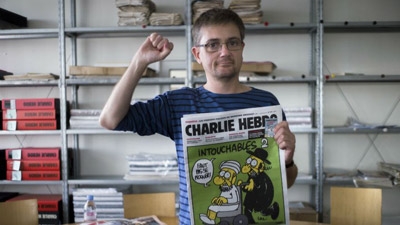
French officials say "at least two" armed attackers stormed the satirical weekly’s headquarters in central Paris on Wednesday, killing 12 people – including some of France's most prominent cartoonists.
Witnesses said the gunmen shouted "Allahu Akbar" (Arabic for God is great) during the deadly rampage, before fleeing the scene. It was by far the bloodiest attack on Charlie Hebdo, but not the first.
Charlie Hebdo is the scion of a revered tradition in French journalism that goes back to the eve of the 1789 Revolution, when satirical publications played a decisive role in undermining the prestige and dignity of the French monarchy.
Despite its relatively small readership, it is well known as a leading representative of that brand of journalism – and without a doubt the most outspoken.
The left-leaning magazine is known for its provocative and acerbic commentary on world affairs, routinely taking on the high and mighty, be they celebrities, presidents or popes.
But its jabs at Islamic extremists have stirred the most controversy.
The satirical weekly has been repeatedly threatened for publishing caricatures of the Prophet Mohammed in the name of free speech and France’s cherished secular laws.
It first angered Muslim groups around the world in 2006, when it decided to republish controversial cartoons of the prophet which first appeared in a Danish publication a year earlier.
The cartoon’s Danish author was himself attacked at his home in 2010 by an axe-wielding intruder, but escaped unhurt.
Charlie Hebdo’s offices were firebombed in November 2011 after it published a spoof issue that “invited” the prophet to be its guest editor and put a caricature of Islam’s holiest figure on its cover.
The next year, it courted controversy again by releasing new cartoons of Mohammed, who was depicted naked and in demeaning poses. This earned the magazine a rare rebuke from the French government, which accused it of fanning tensions.
‘I live under French law – not Koranic law’
The weekly's director Stéphane Charbonnier, who published under the pen name “Charb”, defended the Mohammed cartoons in an interview in 2012.
“Mohammed isn't sacred to me,'' he told the Associated Press. “I don't blame Muslims for not laughing at our drawings. I live under French law. I don't live under Koranic law.”
French officials said Charb and three other prominent cartoonists were among the dead on Wednesday.
Charb, 47, had been under police protection since 2011. The police officer escorting him on Wednesday was also killed.
Amateur footage of the attack showed the gunmen shouting “the prophet has been avenged” as they fled the scene.
France reacted with shock and horror to the deadly rampage, which President François Hollande described as “an act of exceptional barbarism”.
Education Minister Najat Vallaud-Belkacem said the attack had “struck at the heart of the Republic”, while the country’s leading Muslim organisation, the CFCM, condemned a “barbaric act against democracy and freedom of the press”.
Others warned against drawing the wrong conclusions in a context of mounting Islamophobia across Europe. “There is a fear that Islam will once more be designated as the origin of this monstruosity,” said Alain Jakubowicz of Licra, a leading watchdog against racism and anti-Semitism.
The attack has also raised questions about the future of the French press’s cherished freedom of speech, with many pointing out that the victims were already under police protection.
“Charlie Hebdo was a small oasis. Not many dared do what they did,” said Swedish artist Lars Vilks, who lives under police protection after drawing caricatures of the Prophet Mohammed.
“This will create fear among people on a whole different level than we're used to," Vilks added.
Until the very last, Charb and his colleagues refused to give in to fear.
Minutes before the deadly rampage, Charlie Hebdo had tweeted a satirical cartoon of the leader of the extremist Islamic State organisation giving wishes for the New Year.
The cartoon, entitled “Still No Attacks in France”, featured a caricature of an extremist fighter saying, “Just wait – we have until the end of January to present our New Year's wishes.”
France24