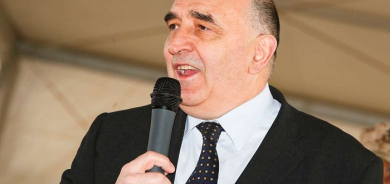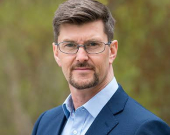
Professor Dr. Ajay Gudavarthy to Gulan: POPULISM IS A DEMOCRATIC HIATUS
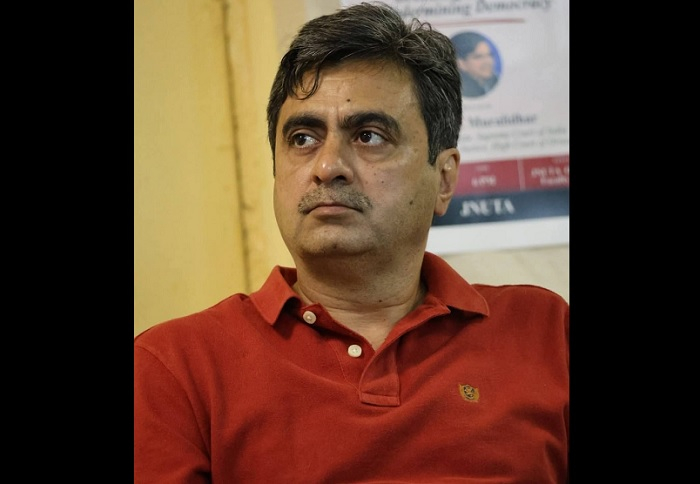
Ajay Gudavarthy is a political theorist, analyst and columnist in India. He is associate professor in political science at Centre for Political Studies, Jawaharlal Nehru University, New Delhi. Gudavarthy's first teaching assignment was at the National University of Juridical Sciences, Calcutta from 2001 to 2003. He then taught as assistant professor at the National Law School of India University, Bangalore from 2003 to 2006. He joined Centre for Political Studies, Jawaharlal Nehru University, New Delhi in 2006. In 2008, he was Charles Wallace Visiting Fellow, the School of Oriental and African Studies (SOAS), London. He was a visiting fellow, Goldsmith College, University of London in 2010 and Visiting Faculty at Centre for Human Rights, University of Hyderabad in 2011. He had been a visiting fellow at Centre for Citizenship, Civil society and Rule of Law, University of Aberdeen in 2012.
Gulan: You have written a great deal about how democracy, civil society, and political power are evolving. Do you believe that the basic definition of democracy is changing, moving away from a system centered on plurality and institutional mediation and toward one that is increasingly structured around direct identification between a leader and "the people"? What implications does this change have for democratic politics going forward?
Professor Dr. Ajay Gudavarthy: Identification has two sides to it. It represents the lack of trust in institutions and on the role of the experts. It is detested that social life is converted into data sets, and technicalities. This is the sentiment populists mobilize but they create a system that is far less accountable. They create a parallel narrative of accountability being equated with elite interference.They instead propose direct action like direct cash transfers which they argue are more effective. In the end we have a direct democracy model that is in fact less accountable. It's a democratic paradox. We perhaps have to see it as what I call A DEMOCRATIC HIATUS. People elect populists for the right reason but populists mobilize for a wrong reason.
Gulan: The challenging question of who gets to define "the people" is brought up by your work on populism. Does the establishment of an "enemy"—an elite, minority, immigrant, intellectual, or political opponent—necessitate the creation of a unified "people" in modern populist politics? If so, will populism ever be truly democratic and pluralistic?
Professor Dr. Ajay Gudavarthy: The imagination of the people is born from an aspiration for universal civil solidarity to overcome differences based on caste, race, ethnicity etc. However, as Hannah Arendt points out solidarity works better when it's always presumed against someone. Cultural imagination of authenticity is in perpetual conflict with social interdependence and economic transactions. For instance, when Dalits in Gujarat were assaulted for cow slaughter to realise a sense of Hindu superiority. They refused to clear cow caracas. People of so-called high castes had to enter into negotiation. Similarity with Muslims. Populist narrative of authenticity or authentic majority becomes socially unsustainable but remains a potent cultural imagination. This anomaly leads to elite backlash and notions of hierarchical solidarity. RSS idea of samrastha is plurality with hierarchy. Did liberal notions of plurality, diversity and tolerance envisage equality or are populists overtly carrying on what liberals covertly did- preserving asymmetrical power relations in the name of tolerance and diversity
Gulan: The conflicts between liberalism, democracy, and political mobilization are central to much of your research. Has liberal democracy grown overly reliant on institutional structures that are becoming less and less competent to resolve popular complaints? Or is the current problem more a result of political institutions' inability to make democratic participation meaningful than it is of democracy itself?
Professor Dr. Ajay Gudavarthy: Liberalism and it's institutional imagination is proving to be inadequate in accommodation of new popular demands and mobilization. Liberalism with its precepts like individualism, and separation of private and public domains come with certain class locationality. Current illiberality is about challenging elitism and the way of life that comes with it. Educational institutions promised utopia but delivered a meritocratic order. As Cas Mudde says it's a democratic illiberal response to undemocratic liberalism. I suggest this is most effectively captured in the movie Septembers of Shiraz. We see that the Iranian revolution was essentially against elite lifestyle and exclusions that come with it that in turn took a theocratic turn. Aspirations for dignity result in support for illiberalism. It finally only results in wholesome righteous lawlessness like the use of bulldozers in India to erase the houses of those accused of crime. In aspiring for something better than liberalism we end up with something worse but this worse is for everyone. The choice seems to be between good life to some versus suffering of all. we do not as yet know the road to a just life for all. it’s unlikely we will realise something of this kind in near future. Gramscian dictum of old is dying, new is not yet born gives us solace since we do not have any better and alternative explanation. I will hasten to add societies are always in period of interregnum.
Gulan: How should we interpret the emergence of modern political movements in cultures influenced by colonial history, based on your involvement with post-colonial theory? How much do contemporary nationalism and populism reflect attempts by formerly marginalized communities to regain political agency, and how much are they continuations of colonial political structures?
Professor Dr. Ajay Gudavarthy: Populism is a strange animal it can be seen as subaltern assertion from one end and also an elite backlash.at the other. Wilhelm Reich in his Mass Psychology of Fascism, says fascists mobilize rebellious emotions combined with reactionary values. Post-colonial scholarship envisaged a creative combination of subaltern using modernity to their imperatives to break hold of colonial structures but what we are witnessing is not such a bonhomie 'creative power of community' as Partha Chatterjee imagined but a new nexus between traditional hierarchies and modern governmental mechanisms. We need to critically engage with the limits of subaltern politics. They as much reproduce power relations as they also resist them. While there is always a possibility of change but with a caveat that Michael Foucault reminded us of- Fascism in us all.
Gulan: Civil society is often celebrated as a sphere capable of restraining state power and deepening democracy. But your work also points toward the political ambiguities within civil society. Can civil society itself become a vehicle for exclusion, majoritarianism, or authoritarian politics? Where, then, should we draw the boundary between democratic mobilization and anti-democratic mobilization?
Professor Dr. Ajay Gudavarthy: Civil society is constitutive of well-meaning Samaritans whose politics has a tinge of depoliticisation. They provide interim relief but not resolution..they may constraint violent programs but not routinised violence. For instance, a principle of tolerance can make relations civil but they may stregthen differences without undoing unequal relations. Much of civil society activism depends on the goodwill of the state. Once state abdicates it's responsibilities civil society finds it difficult to get it's demands heard. I argue we need to then finds ways to inaugurate POST-CIVIL SOCIETY politics that imagine a new ethico- political strategies.
Gulan: Looking beyond individual elections or political leaders, do you think the contemporary crisis of democracy represents a temporary political cycle or a deeper transformation in the relationship between citizens, states, and political authority? What kind of democratic imagination would be necessary to move beyond the current age of populism, polarization, and political distrust?
Professor Dr. Ajay Gudavarthy: The current phase of populist polarisation is marked by an anamoly between achieving a degree of social democratization coupled with shrinking economic and material opportunities. Political democracy transforms our imagination but neoliberal reforms have made everyday life uncivil. Political parties continued to vouch by secularism and its shared ethos on the social front while pursuing market fundamentalism on the economic front. This is the root of support for authoritarian modes of governance. We need to undo this ominous anomaly and move to a social democratic imagination with greater investment in education, health and full employment. As Cornell West says justice is love in the public as tenderness is love in the private. Positive emotions or what I call ethical emotions should guide our public life and politics. Gandhi had suggested a continuity between politics and personal conduct around the principle of co-responsibility.