Wladimir van Wilgenburg to GULAN: Kurdish Disunity Is the Most Critical Vulnerability Facing Kurdish Self-Governance
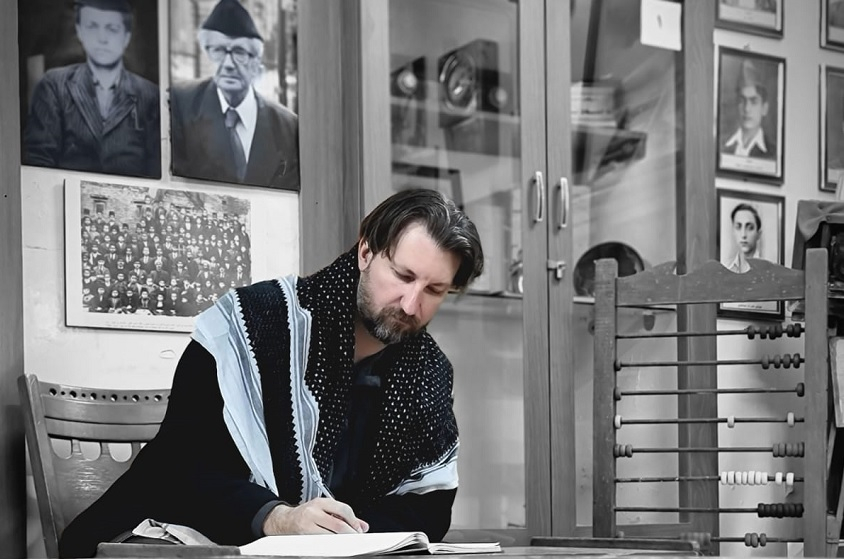
The reporter and analyst discusses the changing geopolitical position of the Kurds, the future of Kurdish self-governance in Iraq and Syria, regional pressure from Turkey and Iran, and the opportunities and vulnerabilities that could shape the next decade.
By Kobin Ferhad
Wladimir van Wilgenburg is a respected reporter and analyst specialising in Kurdish affairs, with extensive on-the-ground experience covering Iraq, the Kurdistan Region, Syria and the wider Middle East. He is Head of the News Section at Kurdistan Chronicle and has contributed reporting and analysis to leading international outlets and policy institutions. He is the co-author of The Kurds of Northern Syria: Governance, Diversity and Conflicts and Accidental Allies: The U.S.-Syrian Democratic Forces Partnership Against the Islamic State. He holds an MA in Conflict Studies from Utrecht University and an MA in Kurdish Studies from the University of Exeter.
As the political landscape of the Middle East continues to change, Kurdish communities across Iraq, Syria, Turkey and Iran face a combination of new opportunities and persistent challenges. Changing regional alliances, the evolving role of the United States, relations between Erbil and Baghdad, developments in Syria, and the prospect of a peace process between Turkey and the PKK are all reshaping the Kurdish question. In this interview with GULAN Weekly Magazine, Wladimir van Wilgenburg discusses these shifts and what they could mean for Kurdish politics and self-governance in the years ahead.
GULAN: Given your academic background in conflict and Kurdish studies, how do you perceive the geopolitical significance of the Kurdish question shifting in the Middle East over the last decade, particularly in light of changing U.S. and regional foreign policies?
WLADIMIR VAN WILGENBURG: The Kurds have always played a central role in the Middle East, being divided across Iran, Iraq, Syria and Turkey and being in the middle of many local and regional conflicts, such as the Iraq war and the overthrow of Saddam Hussein, the Syrian civil war, the 1979 revolution in Iran, and other events. Moreover, there are significant oil reserves in Iraqi Kurdistan.
The Kurdish question gained more international attention during the war against ISIS from 2014 to 2019. However, now that the war against ISIS is almost over and President Trump is pulling troops out of both Syria and Iraq, the Kurdish question is gaining less attention.
There was a brief period when the Iranian Kurds received a lot of attention because there were media reports that the United States and Israel would support them in Iran, but in the end the Iranian Kurds did not receive support due to Turkish opposition.
We see that international media attention for the Kurds is now decreasing, but the Kurds will continue to play a role in the future of Iraq, Syria, Turkey and Iran, with the ongoing PKK peace process in Turkey, relations between Erbil and Baghdad, the SDF integration process in Syria, and Iranian Kurdish opposition parties in Iran, to a lesser extent.
GULAN: How do the competing interests of regional powers, specifically Turkey and Iran, shape the current limitations and possibilities for Kurdish political entities in both Iraq and Syria?
WLADIMIR VAN WILGENBURG: Turkey has played one of the biggest roles and was opposed to Kurdish autonomy in the region due to its own large Kurdish population. Initially, when the United States planned to overthrow Saddam Hussein in 2002-2003, Turkey was opposed to Kurdish autonomy in Iraq and even threatened to invade. This started to change in 2008-2009, followed by the opening of a Turkish consulate in Erbil in 2010. Now there are many political and economic relations.
In Syria, it was the same, and Turkey launched several military operations between 2017 and 2019 to prevent the Syrian Democratic Forces from creating an entity on its borders. Now, in 2026, the SDF is integrated into the new system after the fall of the Assad regime and losing the war, after the United States pulled its support. So currently, Turkey does not see it as a threat anymore, and this is also strongly related to the PKK-Turkish peace process or disarmament process. In the future, former SDF leaders might visit Turkey.
We also saw in Iran that Turkey played an influential role in preventing the Iranian Kurds from gaining military support from the United States and Israel. When there were media reports that the United States would support Iranian Kurds, Turkish President Recep Tayyip Erdogan immediately called President Trump. Turkey opposed any regime change in Iran, fearing Kurdish autonomy and refugees crossing the border. It could also undermine its process with the PKK.
So, in my view, there is not so much competition between Turkey and Iran. Especially now that the relationship between Israel and Turkey is worsening, Turkey is seeing Iran-backed proxies, such as Hezbollah in Lebanon, as a buffer. The fact that the Assad regime fell in Syria also makes it easier for Turkey and Iran to cooperate.
Iran did not play a big role in Syria related to Syrian Kurds, although it supported the Assad regime in the past, which also opposed Kurdish autonomy, but could not do much about it due to the U.S.-SDF alliance. Iran-backed factions in Deir ez-Zour before the fall of the Assad regime were planning to move into Kurdish-controlled areas if the United States pulled out.
In 2018, Russian, Syrian regime and Iran-backed militias attacked U.S. positions in Deir ez-Zour, but failed and lost many men. This was a test to see the resolve of the United States. Iran preferred the Kurds in Syria to completely ally with the Assad regime. The Assad regime opposed Kurdish autonomy, but thought it could drive out the SDF once the United States withdrew and lost interest. Lebanese Hezbollah media outlets, for instance, would tell Syrian Kurds not to trust the Americans because they would pull out.
Iran, Russia and Turkey were also part of the Astana framework, and Iran and the Assad regime hoped Turkish interventions would push the United States out of Syria, with the Assad regime taking back Deir ez-Zour, Raqqa, Hasakah and Qamishli. Instead, the Assad regime fell in 2024, and Iranian influence is now very weak in Syria and it lost the 'Shia crescent.' However, Iran has now discovered its Strait of Hormuz, although this could also backfire on Iran.
Iran is not a big fan of Kurdish autonomy in Iraqi Kurdistan, also due to the strong Kurdish relationship with the United States, which it sees as a threat. We saw that also during the Iran war. Since 2018, Iran and Iran-backed groups have carried out several missile attacks on Iraqi Kurdistan, including on Iranian Kurdish opposition groups, energy infrastructure and Kurdish businessmen.
The main issues for Iran are the Iranian Kurdish opposition groups in Iraqi Kurdistan and the U.S. presence. Iran also opposes energy projects that would make Iraq less dependent. At the same time, Iran has had a strong relationship with Kurdish parties in Iraq, and in the past many Kurds fled to Iran after Kurdish uprisings failed. As a result, you can find many Kurds who speak fluent Persian because they were exiled to Iran for a long period.
The Iran-KRG relationship could improve if the United States withdraws military forces in 2026 and if the Iran-U.S. war ends. Moreover, if the Coalition withdraws, there will be more pressure on Iran-backed factions in Iraq that have attacked the Kurdistan Region to disarm, although it is unlikely that they will disarm by September 2026.
GULAN: In your book, The Kurds of Northern Syria, you explored the governance and diversity of the region. How resilient do you believe the Autonomous Administration of North and East Syria (AANES) is today, considering the ongoing economic blockades and security threats?
WLADIMIR VAN WILGENBURG: I think the AANES is not resilient anymore after the United States ended its support and the integration agreement between the SDF and Damascus in January. Damascus is slowly integrating institutions in the Kurdish regions and making the SDF/AANES weaker.
The Kurds still have some positions in the Syrian government, such as the Ministry of Defense, some armed brigades and police units, the governor of Hasakah and mayor of Kobani, but they are significantly weakened. Moreover, they have members in the Syrian parliament, but not enough to make any significant changes or play a kingmaker role.
The Syrian parliament was also not elected by a popular vote, and there are almost no political parties in this parliament that the Kurds can form alliances with. Unlike Iraq, where there are different competing Shia and Sunni parties, in Syria there are almost no political parties in the Syrian parliament.
Before 2026, the SDF tried to ally with Druze and Alawite groups, but this did not have a big effect since U.S. support ended. Now the only autonomous area left is Druze-held Suwayda.
GULAN: Following your work in Accidental Allies, how would you characterize the current state of the relationship between the U.S. coalition and the Syrian Democratic Forces (SDF)? Is this partnership sustainable in the long term without a formal political status for the AANES?
WLADIMIR VAN WILGENBURG: The U.S. Coalition has now completely withdrawn from Syria and also has no military presence in the rest of Syria. The United States is now more focused on working with Damascus and making business deals. So the relationship with the 'SDF' is now very limited.
The United States, France and other countries support a peaceful integration of the Syrian Kurds into the new system, but they do not support autonomy. Also, now that there is no more big war against ISIS, the West has lost interest in supporting anti-ISIS actors.
You can also see that in recent statements, U.S. military officials underline that ISIS is not a threat anymore, and that ISIS activity has decreased in both Iraq and Syria, and that ISIS also could not benefit from the war between Iran and the United States.
Nevertheless, ISIS will still be able to carry out attacks in Syria, and we have to see in the future how ISIS will develop. So far, it seems it will not pose a major threat, and most of the Syrian Sunnis are now with Damascus, while the Sunnis in Iraq are not happy with the situation and the presence of Shia paramilitary factions in Sunni areas, but are unlikely to support a new version of ISIS.
GULAN: With regional trends leaning toward the normalization of relations with the Damascus government, what realistic pathways do you see for negotiations between the SDF/AANES and the Syrian regime?
WLADIMIR VAN WILGENBURG: The only pathway is negotiation for more local political power and language rights. But as I said, the Syrian Kurds do not have much power in the Syrian parliament.
Maybe the only way to make changes is through civilian protests and civilian actions, pushing politically for changes, and trying to gain international support for Kurdish demands. Iraqi Kurdistan will also support Kurdish demands in Damascus and could play a diplomatic role, as it did in January 2026 to stop tensions between Damascus and the Kurds.
We see such a situation now with big protests asking for Kurdish-language education, while Damascus wants to give Kurds limited education in Kurdish.
Another factor that harms the position of Syrian Kurds is that they remain disunited between the PYD and KNC. We also see this in Iraqi Kurdistan between the PUK and KDP. It is unlikely that the KNC and PYD will work together, and this could be used by Damascus to play these two parties against each other.
GULAN: As a long-term resident of Erbil, how do you assess the ongoing constitutional, financial and territorial disputes between the Kurdistan Regional Government (KRG) and the Federal Government of Iraq, particularly regarding independent oil exports and budget allocations?
WLADIMIR VAN WILGENBURG: These disputes between Erbil and Baghdad will continue unless a solution is found for the implementation of constitutional articles such as Article 140. But it seems this article is forgotten and there is not much support in the international community for this article, while Baghdad is not interested in it.
After the war against ISIS was finished, and Iraqi Kurds lost much territory in 2017, the Kurdish position weakened, also due to disunity in Baghdad. In 2014, Baghdad needed the Kurds to fight ISIS and reach Mosul, but after 2017 this changed and now Baghdad is in a stronger position.
Baghdad is also trying to create alternatives for the Strait of Hormuz through new pipeline projects, which could pass through the Kurdistan Region. Furthermore, the U.S. army is withdrawing from the Kurdistan Region in September 2026.
At the same time, if the U.S. army withdraws from the Kurdistan Region, it could also result in fewer strikes on the Kurdistan Region. When the U.S.-led Coalition moved most of its forces to Erbil, it actually made Erbil more of a target. If the Coalition leaves at the end of September, it gives Iran fewer excuses to target Erbil, although strikes on Iranian Kurdish opposition groups will most likely continue.
However, the pipeline through the Kurdistan Region is now one of the few ways to export Iraqi oil, now that exporting Iraqi oil through the Strait of Hormuz is curtailed. So this makes the geopolitical position of the Kurds stronger again in Iraq.
Also, most of these pipeline projects will take a lot of time before they can be carried out, and some experts wonder how realistic they are since Iraq lacks money at the moment. So Baghdad will need Kurdish oil exports and pipelines running through Kurdish territory.
However, we have to see after five to ten years how such pipeline projects and the development project will affect Kurdistan. The Syrian pipeline project could make the Kurdistan Region's geopolitical status less relevant; however, many of the other projects, such as the Peshkhabur pipeline and Development Project, will still run through Kurdish territory.
GULAN: The political landscape in the KRI remains divided, primarily between the KDP and the PUK. In your view, how do these internal divisions affect the KRI's bargaining power with Baghdad and its credibility with international allies?
WLADIMIR VAN WILGENBURG: These divisions affect Kurdish bargaining power in Baghdad since the parties are divided and lobbying against each other. Many diplomatic missions are unhappy that the Kurds cannot form a government, and it also undermines the 'kingmaker' role the Kurds played in Baghdad. If the PUK and KDP could form a government and unite, they could gain more support.
GULAN: The KRI has frequently been a theater for external military interventions, including Turkish operations against the PKK and Iranian missile strikes targeting various groups. How do these dynamics impact the daily stability and sovereignty of the Kurdistan Region?
WLADIMIR VAN WILGENBURG: Both Turkey and Iran have carried out several drone strikes against Kurdish opposition groups based in Iraqi Kurdistan. Iran has also used ballistic missile attacks. Moreover, Iran has targeted U.S. bases in the Kurdistan Region during the recent war.
Now that there is a peace process between the PKK and Turkey, there is less of a military threat from Turkey and it is expected that the PKK will give up territory in Iraqi Kurdistan. There are no more Turkish drone strikes in Iraqi Kurdistan or artillery shelling.
If there is a peaceful solution between the PKK and Turkey, there will not be any more Turkish military interventions in Iraqi Kurdistan, and most likely the Turkish army would withdraw from Iraqi Kurdistan. This would also help Kurdish villages that were inaccessible to villagers due to the conflict, and help the growth of agriculture and tourism in these areas.
While we see Turkish military interventions decreasing in Iraqi Kurdistan, the conflict between the United States and Iran is still not finished. We saw that recently Iran carried out ten drone strikes on the Kurdistan Region and also targeted the KRG Prime Minister's office.
As long as the conflict and tensions continue between Iran and the United States, it is unlikely that Iran will stop drone strikes, which harms the security and economy of the Kurdistan Region. They will also continue to target Iranian Kurdish opposition parties. Therefore, it is in the interest of Iraqi Kurdistan that the Islamabad Memorandum is implemented.
But as I mentioned, if Coalition forces leave Erbil, there will most likely be fewer strikes on Erbil, although Iran or Iran-backed factions could still target Kurdish energy infrastructure or Iranian Kurdish opposition parties. Between 2018 and 2025 there were also strikes by Iran and Iran-backed factions, but they were not daily as during the recent U.S.-Iran war.
GULAN: Looking ahead, what do you consider to be the most critical internal vulnerability - and conversely, the most significant external opportunity - for Kurdish self-governance models in the Middle East over the next ten years?
WLADIMIR VAN WILGENBURG: The most critical vulnerability is Kurdish disunity in both Iraqi Kurdistan and Rojava. If Kurds do not work together, their position is weaker in Damascus and Baghdad.
Another challenge for Iraqi Kurdistan is how to deal with demographic changes, with the huge influx of Iraqi Arabs into the Kurdistan Region, buying property and houses. Another risk is the Iran war if it continues, but it most likely will end before the end of the Trump administration in 2029.
The biggest opportunity for Kurdish self-governance is the building of institutions, improving the business climate, strengthening the local economy and diversifying away from oil, with a focus on strengthening tourism and agriculture, unifying Kurdish Peshmerga forces, and working on Kurdish unity.
The peace process in Turkey is also a big opportunity for Iraqi Kurdistan, since it would stop Turkish military interventions and create new opportunities to improve tourism and agriculture in areas previously controlled by the PKK in Duhok. It would also end tensions between the KDP and PKK. It would also stop Turkish drones and artillery strikes that have affected and even killed tourists, farmers and sheep.