Deborah Amos to Gulan: “Giving Kurdish Voices Greater Agency Starts With a Basic Shift in Who Gets to Frame the Story”
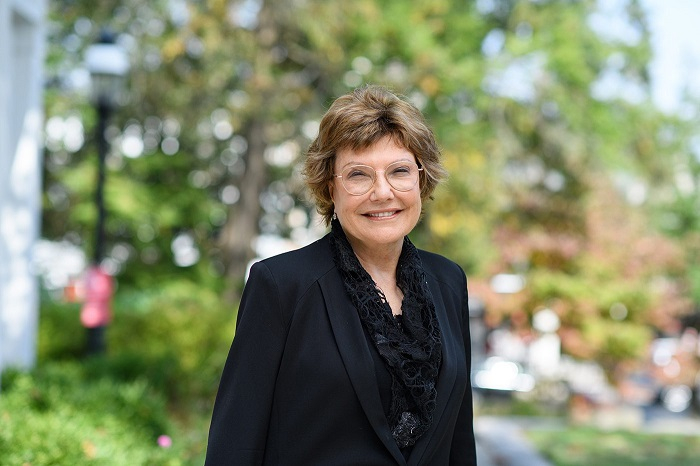
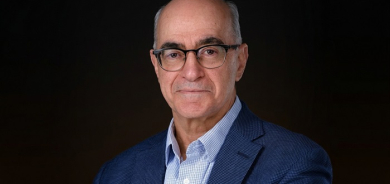
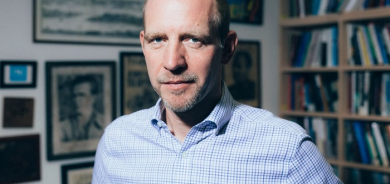
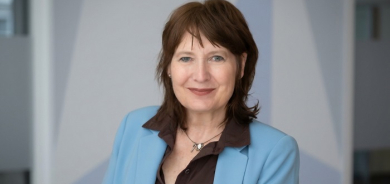
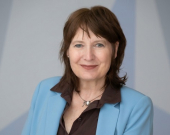
Deborah Amos is an award-winning international correspondent, author and Ferris Professor of Journalism in Residence at Princeton University. Over more than four decades, she has reported from war zones and refugee communities, bringing sustained attention to the human consequences of conflict. She spent much of her career at National Public Radio, where her reporting on the Middle East and refugees in the United States featured on Morning Edition, Weekend Edition and All Things Considered. She also reported for ABC’s Nightline and PBS’s Frontline. Her honours include a George Foster Peabody Award, an Emmy, an Edward R. Murrow Lifetime Achievement Award and the International Women’s Media Foundation’s 2017 Courage in Journalism Award. She was also part of the team that won a 2004 Alfred I. duPont-Columbia University Award for coverage of Iraq. A former Nieman and Shorenstein Fellow at Harvard, she was an Axel Springer Fellow at the American Academy in Berlin in 2022. In May 2026, she received an honorary doctorate at SUNY New Paltz. Amos is the author of Eclipse of the Sunnis: Power, Exile, and Upheaval in the Middle East and Lines in the Sand: Desert Storm and the Remaking of the Arab World. Her recent work includes reporting on Syria’s pursuit of accountability. In this interview with GULAN Weekly Magazine, she discusses justice for survivors, the protection of sources, Iraq’s militia economy, the legacy of Anfal and the need for Kurdish voices to shape their own narratives.
GULAN: After decades of covering the Middle East, what is the most consequential change you see in the region, and what do international audiences still misunderstand?
Deborah Amos: The most consequential shift I see after decades covering this region isn't a single conflict or regime change — it's the collapse of the old assumption that authoritarian stability is the price of order. For fifty years, the operating theory in Washington and European capitals was that strongmen were unpleasant but necessary: better a predictable dictator than an unpredictable transition. Syria's fall broke that consensus in the most dramatic way possible, but the pattern is broader — you see it in how fragile, contested, and internally divided the successor arrangements are turning out to be almost everywhere the old order has weakened, from Damascus to Baghdad to parts of Libya and Sudan.
What international audiences still misunderstand is that this collapse doesn't produce a clean before-and-after. Western coverage — and Western policy — wants a resolution: villain removed, election held, justice served, story over. What I actually see on the ground is a long, uneven middle period that can last a generation, where accountability mechanisms, reconstruction efforts, criminal economies, and new forms of authoritarianism all compete simultaneously, often within the same city block, sometimes within the same family. The temptation is to cover the dramatic inflection point and then move on. The real story — and the harder one to sustain interest in — is the decade that follows.
GULAN: In your reporting on Syria’s accountability process, what do survivors say justice means to them? How can the demand for timely accountability be balanced with credible trials and due process?
Deborah Amos: What strikes me most in reporting on Syria's accountability process — from the Damascus court proceedings against Ahmad Badreddine Hassoun to the Tadamon massacre cases and working through Daraa — is how consistently survivors define justice as acknowledgment before punishment. Families want the fact of what happened to their relatives officially recognized, documented in a legal record, and rendered undeniable. That's a different demand than "lock him up," though people want that too. It comes from having spent years, sometimes over a decade, being told by the state itself that their loss didn't happen, or didn't matter, or was their own fault. The psychological weight of institutionalized denial is, in my experience, often heavier than the original violence.
The tension between speed and due process is real and, I think, largely irreducible. Syria needs credible, internationally recognized legal process to keep donors, courts, and reconstruction partners engaged — a process that looks like victor's justice will collapse international support quickly. But survivors, who have already waited years, experience any procedural delay as a continuation of the original betrayal. There's also a practical complication that gets little attention: evidentiary chains built during wartime — testimony gathered by activists, phone footage, documents smuggled out of regime archives — often don't meet the standards a formal court requires, which means some of the most damning material may never make it into a verdict even when everyone believes it's true.
My honest view is that Syria cannot fully resolve this tension; it can only manage it transparently. That means publishing clear evidence standards, explaining case-selection criteria publicly, and being honest that a caseload this large will take years — while making sure survivors see the machinery actually working, even when their specific case hasn't yet been reached. Silence and opacity, more than slowness itself, are what destroy trust.
GULAN: How do you verify the accounts and evidence you gather, and how have changing risks to sources affected the way you report?
Deborah Amos: My approach to verification is essentially triangulation: I don't run a claim, however credible the source, until it's corroborated by something of a different evidentiary type. A single survivor account, however moving, isn't enough on its own — I want a second witness, a document, a satellite image, or geolocated footage that independently points the same direction. Open-source investigators have become indispensable partners in this because they can establish time and place with a rigor that testimony alone can't, and because their methods are increasingly reproducible and peer-reviewable, which matters enormously when your reporting may end up cited in a legal proceeding.
What's changed most over the years isn't the verification process itself — it's the calculus around exposure. A decade ago, protecting a source mostly meant protecting their name. Now it means thinking about metadata, background details in a photograph, a location tag, a distinctive building visible in a video frame, even writing style that could be traced back to a single account. Displaced witnesses and their families inside dangerous jurisdictions can be identified through details that seem incidental to me but are legible to people actively hunting for them. I now spend nearly as much editorial energy deciding what to leave out, blur, or generalize as I do deciding what to include — and I've had to have harder, more explicit conversations with sources up front about exactly what protection I can and can't guarantee, rather than assuming they understand the risk the way I do.
GULAN: Which aspects of Iraq’s experience since 2003 remain overlooked? Are its militias becoming stronger, and is money displacing ideology as the force holding these groups together?
Deborah Amos: The most under-covered story in Iraq isn't a battle or a bombing — it's institutional erosion and what more than two decades of it have done to ordinary life. Displaced families who have now spent the majority of their lives outside their home provinces, a health and education system hollowed out by successive conflicts, a generation of Iraqis who have never experienced a functioning, trusted state. That kind of damage doesn't fit a news cycle. It isn't an event, it's a condition — and conditions don't generate the same coverage that a car bomb does, even though they shape far more Iraqi lives on any given day.
The militia question sits right inside that story, and it's where I'd push back on a common Western framing that treats Iran-aligned groups as a purely ideological or sectarian phenomenon. What I've watched happen over the last decade — and especially in the past year — is these factions becoming as much economic actors as armed ones. Groups like Kataib Hezbollah and Asa'ib Ahl al-Haq sit inside the Popular Mobilization Forces structure, which receives several billion dollars a year in Iraqi state funding, while also operating largely outside the prime minister's actual chain of command. They've built business networks, construction and contracting arms, smuggling and customs operations, and parliamentary representation — they are, in a very real sense, some of the largest economic actors in the country, not just armed factions.
That raises exactly the question you're asking: are they stronger now, and is money displacing ideology as the actual glue holding these groups together? I'd argue both things are true, and that they're related rather than contradictory. The 2026 US-Iran confrontation and the resulting strikes on Iraqi and Kurdish territory gave these militias a domestic legitimacy boost — they could plausibly frame themselves as resisting American aggression rather than simply as Iranian proxies, and that framing plays well with Iraqis genuinely angry at the war's costs, which the IMF estimated could shrink Iraq's GDP by close to seven percent this year.
At the same time, that same economic damage — falling oil exports, a public payroll crisis, tightened US financial pressure on Iraq's dollar access — has made the material stakes of controlling contracting networks, customs points, and PMF budget lines even higher for the factions themselves.
So I don't think it's an either-or. Ideological commitment to the Iranian-aligned "resistance" narrative provides the political cover and the base of popular tolerance; the money is what actually retains fighters, buys loyalty from local commanders, and finances the parallel economy these groups depend on. As Iraq's formal economy strains, the informal economy these militias control becomes relatively more valuable, not less — which is one reason disarmament efforts, including the current push tied to the September 30 deadline for the militias and for US troop withdrawal, keep stalling. You're not asking armed factions to give up a cause; you're asking some of Iraq's largest business networks to dissolve themselves, and that's a much harder problem than it's usually described as being.
GULAN: What does Anfal teach us about journalism’s role in documenting atrocities and preserving survivors’ testimony?
Deborah Amos: Anfal is one of the starkest lessons in what happens when journalism and international attention arrive years too late. The world only reckoned with its true scale long after the fact, through survivor testimony, mass grave exhumations, and painstaking documentation — much of it compiled after the political moment for intervention or even sustained international attention had already passed. That timeline should shape how journalists think about atrocity reporting going forward: it can't be treated as a news-cycle event that gets covered intensely for a week and then dropped. Documentation and preservation of testimony have to happen continuously, even in years when no court, government, or international body is ready to act on the material.
I'd add that Anfal also demonstrates something about the durability of denial. Genocide denial and minimization follow almost every mass atrocity, often for decades, and the survivors' own testimony — recorded, dated, cross-referenced against documents and later forensic evidence — becomes the primary defense against that denial once political interest fades. Journalism's most durable contribution isn't necessarily the initial exposure, which is often incomplete by definition; it's building and preserving an evidentiary record robust enough that it can't be argued away years or decades later, when the survivors themselves may no longer be alive to testify.
GULAN: Which dimensions of Kurdish life are overlooked in international coverage, and how can journalists give Kurdish voices greater agency in shaping their own stories?
Deborah Amos: International coverage of Kurdish communities across Iraq, Syria, and Turkey has settled into three familiar frames — conflict, displacement, and the aspiration for statehood — largely because those frames are immediately legible to outside audiences and fit existing geopolitical narratives about the region. What gets lost is nearly everything that makes Kurdish political and cultural life genuinely complex: sharp internal political rivalries, generational shifts in how younger Kurds relate to nationalist politics, distinct trajectories for Kurdish communities depending on which state governs them, and a rich contemporary cultural and artistic scene that rarely makes it into coverage built around the next crisis.
There's also a structural problem in how "the Kurds" get covered as a single subject rather than as several distinct societies with real, sometimes bitter internal disagreement — between the KRG and the PKK's political tradition, between different Kurdish parties inside Iraq, between Syrian Kurdish factions with different relationships to Damascus and to Turkey. Flattening that complexity into a unified narrative is analytically lazy, and it also does a disservice to the actual political debates happening within Kurdish society, which are often more revealing than the external conflict narrative.
Giving Kurdish voices greater agency starts with a basic shift in who gets to frame the story: Kurdish journalists, academics, and analysts writing and speaking as the authors of the narrative, not only appearing as sources quoted inside a structure an outside correspondent has already built. It also means being willing to report on internal Kurdish political disagreement with the same seriousness applied to any other political system, rather than treating unity as a prerequisite for taking Kurdish political life seriously. Complexity and disagreement are signs of a functioning political society, not a liability to be smoothed over for outside audiences.