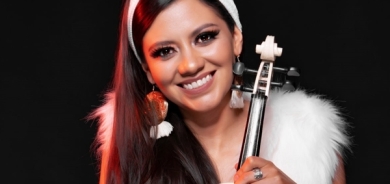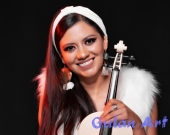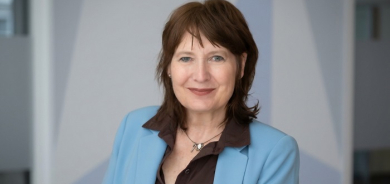
Northern Kurdish Artist Hîvda Koç to Gulan: "Art and music can simultaneously be the voice of joy and life, resistance and struggle, hope and survival."
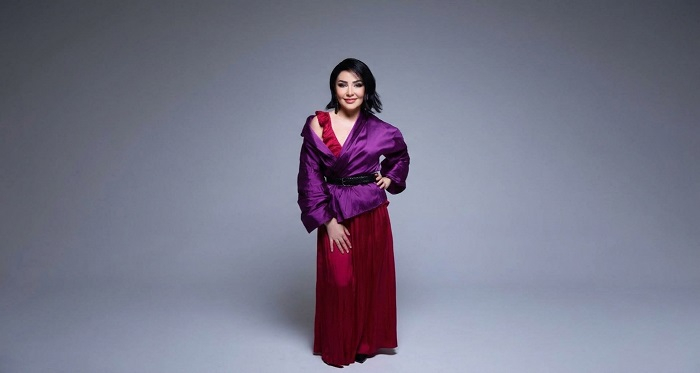
In Northern Kurdistan, Kurdish music has developed within a distinct cultural and social environment—an environment where art, while serving as a realm for creativity and self-expression, has often become a tool for preserving language and identity.
In an interview with Gulan, Northern Kurdish artist Hîvda Koç discusses her artistic journey from its beginnings to her modern perspective. She shares her thoughts on music and identity, the role of women in art, the state of Kurdish music, the impact of social media, and her message for the new generation. She also talks about the connection between art and struggle, the importance of preserving the Kurdish language, her efforts to renew her work, and her future artistic projects.
Gulan: How did your journey begin in the art world of Northern Kurdistan? Was there a specific moment when you felt that art was your identity and profession, rather than just a natural talent?
Hîvda Koç: Since my childhood, dengbêjî (traditional Kurdish storytelling song) had a profound impact on me and my family. The social relationships in the community we lived in were deeply intertwined with music. After we migrated to Istanbul in my childhood, my cultural identity became even more prominent. Amid the conflicts and challenges we faced, preserving our language and culture became increasingly important and essential to us. Music was a very powerful vehicle for preserving and sustaining our social values. Grounded in these feelings, I strived to forge an artistic identity for myself.
Gulan: Among Kurdish artists, who has influenced you the most, and how have their works shaped your artistic vision?
Hîvda Koç: The people who influenced me most are those artists who tied art and Kurdish identity together—those who used art as a tool to protect language and culture and to express collective social emotions.
Gulan: As an artist from this region, how do you view the current state of the artistic movement in Northern Kurdistan, and what have been the most notable changes in art in recent years?
Hîvda Koç: In Northern Kurdistan, opportunities for artistic development are extremely limited. Everyone tries to advance their music according to their own personal means. Unfortunately, opportunities for Kurdish music are very weak, and we cannot say there is a strong market upon which an artist can build a livelihood. In my view, every effort and hardship endured for Kurdish music is immensely valuable. The artistic movement is not yet at a level where we can call it highly advanced or productive, but artists are continuously striving to develop this field.
Gulan: How do you evaluate the presence of Kurdish women in today’s art scene? Have women succeeded in establishing their place in art and stepping out of traditional roles?
Hîvda Koç: The number of female artists in the field of art is higher today than at any time before. I can even say that the presence of women in art has increased remarkably. It isn't just about numbers—women’s capacity for creativity and artistic production has also grown much richer.
Gulan: Despite these achievements, obstacles remain. What are the greatest social, cultural, or political barriers facing Kurdish women in art?
Hîvda Koç: I believe the greatest obstacle is for a woman to surrender herself to a patriarchal system. Women need to think independently and feel independent; only then can their creativity and work have a deeply positive impact on society. At the same time, women are a powerful source for preserving language and culture—which is why we say "mother tongue." The role of women in creating and safeguarding the values of peace is vital.
Gulan: Language is the bedrock of identity. In your view, what role does art—whether music, theater, or visual arts—play in preserving the Kurdish language and promoting it among younger generations?
Hîvda Koç: In my opinion, Kurdish music carries a massive portion of the responsibility for preserving the Kurdish language on its shoulders. Through songs and ballads, the language has been both preserved and beautified. In oppressed societies where written history was constrained, songs and stories became the means to preserve that society’s very existence. Therefore, Kurdish lyrics and songs represent existence and survival for us.
Feqiyê Teyran, as quoted by Mehmed Uzun in his book, stated an important truth regarding language:
"Language is the mother, it is the lover;
The homeland is the father, governance is nothing;
Without a homeland, a person is an orphan without mother or father."
Gulan: In the digital age, how do you approach social media? Has social media served as a tool helping Kurdish artists cross borders, or has it devalued and trivialized art?
Hîvda Koç: I believe that if social media is not used correctly, it can trivialize art and hinder the progress of truly talented artists. However, if the content published holds genuine value, social media can serve as a platform to spread beautiful and valuable artistic expressions.
Social media is a major opportunity for self-introduction. On one hand, it condenses many things, but on the other hand, it opens new doors for exposure and discovering fresh opportunities.
Gulan: Art in Northern Kurdistan often carries a spirit of struggle and humanism. In your works, how do you balance artistic beauty with messages related to culture and your people’s aspirations?
Hîvda Koç: In the world I was born into, Kurds were living in the midst of struggle and resistance. Our generation intertwined the spirit of struggle with daily life. Therefore, both the spirit of everyday living and the spirit of artistic exploration merged into one with the spirit of struggle.
In one song, you may find joy, dance, and happiness; in another, resistance and struggle reveal themselves. In this way, art and struggle have merged into a single identity.
Gulan: Your fans and followers are eagerly waiting for news. Could you share a bit about your upcoming artistic projects? Is there a new style or a different experiment on the way?
Hîvda Koç: I try to build a stable and continuous path for myself, constantly striving to renew myself and evolve with time.
These days, we are heading into the studio. My goal is always to enrich my art with vibrant colors and styles and to present new works to the audience.
Gulan: What is your message to talented Kurdish girls in Northern Kurdistan who, due to surrounding circumstances, feel afraid or hesitant to enter the world of art?
Hîvda Koç: My message to them is this: Fear must never stand as a barrier in front of your talents and dreams. When a woman finds her voice, art can carry that voice to the furthest places. Support your social values and the values of womanhood. Do not be afraid, and never lose hope in life.
Love your Kurdish spirit and listen to the voice and soul of women. Art is not merely a profession; it is a journey of self-discovery, a way to preserve language and culture, and a means of passing emotions and memories down to future generations. From this perspective, art and music can simultaneously be the voice of joy and life, resistance and struggle, hope and survival.