Prof. Philip G. Kreyenbroek to GULAN: Oral Traditions Help Us Understand 'History From Below'
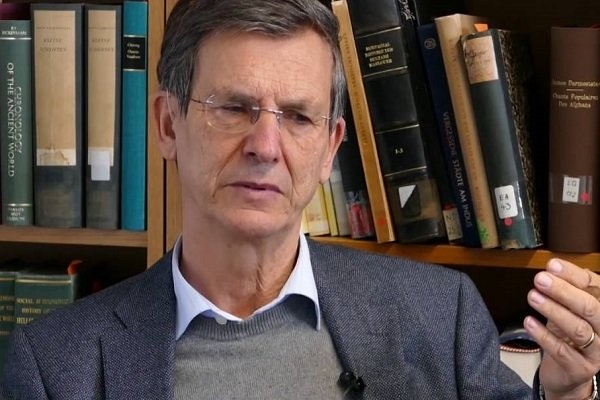
The scholar of Iranian studies discusses Kurdish oral memory, Yezidi and Yarsan religious traditions, the legacy of Anfal and the Yezidi genocide, early Zoroastrianism, and the responsibilities of researchers and public institutions when preserving sacred knowledge.
In this interview with GULAN Weekly Magazine, Prof. Dr. Philip G. Kreyenbroek reflects on the importance of oral tradition in understanding Kurdish history and religious life. Drawing on decades of research on Yezidism, Yarsanism, Zoroastrianism, oral literature, and minority religions among the Kurds, he discusses how sacred poems and communal memory preserve perspectives often absent from conventional written histories. He also addresses misconceptions about Yezidi belief, the transmission of religious authority, the memory of genocide, possible connections with ancient Iranian traditions, and the ethical responsibilities of scholars documenting living religious communities.
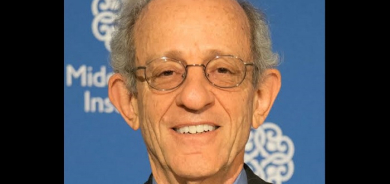
Prof. Dr. Philip G. Kreyenbroek is a scholar of Iranian studies who served as Professor and Director of Iranian Studies at Georg-August University of Göttingen from 1996 to 2017. His research has focused on Zoroastrianism, Yezidism, minority religions among the Kurds, oral literature and culture, ancient Iranian literature, and memory in Iranian cultures. Before Göttingen, he taught at Utrecht University and the School of Oriental and African Studies (SOAS) in London. His publications include major studies of Yezidi religious tradition, Kurdish culture and identity, and the oral character of Iranian religious traditions.
GULAN: In Kurdish Culture and Identity and your chapter Orality and Religion in Kurdistan: the Yezidi and Ahl-e Haqq Traditions, you examine communities whose historical knowledge was preserved largely outside state archives and conventional written histories. What can sacred poems, ritual narratives, genealogies, and remembered performances reveal about the deeper cultural history of the Kurdish people that written sources cannot? At the same time, what are the limits of treating oral tradition as historical evidence, and how can scholars and cultural institutions in the Kurdistan Region make appropriate use of oral sources?
PHILIP G. KREYENBROEK: In principle, the historical validity of all texts needs to be examined before they can be used as evidence. When looking at sources on the history of the Kurds, it is safe to say that most written sources reflect the point of view of a ruling class, often non-Kurdish. What some oral sources can do is help us understand 'history from below': the way the past is remembered and transmitted among ordinary people. Historical ballads or laments often report a historical event from a different perspective. Songs and poetry, moreover, have the advantage that music or metre tend to prevent rapid changes in transmission.
My own concern is chiefly with the history of religions, and I have used a research method that seeks to discover how religions are lived and understood by their followers. To do that, I collaborated with members of the religion in question. They were trained to conduct semi-structured interviews and then carried out oral interviews with large numbers of believers. I then analysed the results and published parts of the interviews in English. It is a very labour-intensive approach, but it yields valuable results. Westerners tend to think that the concept of 'religion' means the same thing throughout the world, which is completely untrue.
GULAN: In Yezidism: Its Background, Observances and Textual Tradition and God and Sheikh Adi are Perfect, prepared with Khalil J. Rashow, you helped make Yezidi qewls and religious narratives available to a wider scholarly audience. When these works are read on their own terms, what do they reveal about Yezidi understandings of God, Tawûsê Melek, Sheikh Adi, sacred history, and the moral order of the world? Which ideas are most often distorted when Yezidism is described through the categories of outsiders? How could schools, museums, and media in the Kurdistan Region present the intellectual richness of Yezidi tradition without reducing it to persecution, folklore, or a list of rituals?
PHILIP G. KREYENBROEK: Yezidi sacred texts are allusive: they refer to narratives that are supposed to be generally known in the community, at least among those with an interest in the tradition. In Yezidism, God is believed to be so holy that He does not interfere in the affairs of this world. He has left this to the Peacock Angel and the Seven Mysteries. The Peacock Angel is believed to determine all that occurs in the world, be it good or bad. Only very wise humans and gifted seers may understand why He orders the world the way He does.
As my research shows, this is an ancient worldview that goes far back to the pre-Islamic age. The fact that the Peacock Angel orders what humans perceive as bad as well as what is good caused some non-Yezidi neighbours to conclude that he was identical with their idea of Satan. As a result, they regarded the Yezidis as Satan-worshippers, and thus impure. The pressure from the non-Yezidi majority culture was such that the Yezidis themselves came to believe that the Peacock Angel was somehow a 'good devil' - an idea that is shared by some, though not all, Yarsan.
The label of 'devil-worshippers' has done enormous harm to the communities in question and is based on a misinterpretation. This could perhaps be rectified if public institutions in Kurdistan paid attention to the historical background and true beliefs of the Yezidis and some Yarsan.
GULAN: Yezidism in Europe: Different Generations Speak about their Religion compared migrants raised in the homeland with generations socialised in Europe, demonstrating that religious authority is not simply transferred from a single institution or book. In a tradition where sheikhs, pirs, qewwals, elders, and family relationships carry different kinds of knowledge and responsibility, how is legitimate interpretation recognised, and how are disagreements resolved? What should public authorities and religious councils in the Kurdistan Region understand before trying to represent, regulate, or reform a system of authority that does not resemble a centralised scriptural religion?
PHILIP G. KREYENBROEK: The sacred poems are consulted in much the same way as written Scriptures elsewhere. Religious authority is generally transmitted individually by a hereditary leader to each of his followers. This connection was a formal one: every Yezidi and Yarsani must have a spiritual leader whose authority they accept.
Over time, the teachings of different spiritual lineages might differ slightly, but this did not cause a problem. Oral culture does not usually claim to possess the details of the only possible Truth and accepts the validity of different views. Now that literacy is the norm in the Yezidi and Yarsani communities and many of the sacred texts are available in print, new questions arise, which the communities will have to find answers to.
GULAN: In the 2021 Cambridge History of the Kurds chapter, 'Kurdish' Religious Minorities in the Modern World, you and Khanna Omarkhali discuss traditions rooted in Kurdish-speaking regions, notably Yezidism and Yarsanism, while also considering Alevis, Shabaks, and the emergence of a Kurdish Zoroastrian community in the Kurdistan Region. What does this religious plurality reveal about the formation of Kurdish cultural identity? How can the Kurdistan Region represent these communities as integral to its history while respecting each community's distinct understanding of itself and avoiding the imposition of a single national or religious narrative?
PHILIP G. KREYENBROEK: In my view, it would be helpful if the authorities could debunk false narratives about these communities and offer them sufficient security to follow their own religion without fear. Yezidism has made considerable progress in this respect, but fear still informs Kaka'i attitudes.
GULAN: In God First and Last: Religious Traditions and Music of the Yaresan of Guran, produced with Yiannis Kanakis, music is treated as a mode of religious knowledge, not as an ornament added to a text. Why are sacred kalams, melody, the Gurani language, ritual performance, and the authority of specialists inseparable in Yarsan religious life? What does this tradition reveal about the historical cultural geography linking communities across present-day Iran and Iraq, and where do comparisons with Yezidism become misleading? How might this perspective deepen public understanding of Kaka'i communities in the Kurdistan Region?
PHILIP G. KREYENBROEK: One might also ask when and how we came to differentiate phenomena which, to others, seem to be aspects of the same thing. The study of oral cultures shows that our tendency to seek precise definitions and mistrust intuitive knowledge is typically part of written traditions. In many oral cultures, all these things simply form part of an undifferentiated 'right way to live'. Incidentally, this makes it difficult for Yarsanis and Yezidis to explain their religion to outsiders.
GULAN: Your work on storytelling, communal memory, and oral religious transmission offers a valuable way of thinking about societies that have endured mass violence. The 1988 Anfal genocide sought to destroy Kurdish communities across northern Iraq, while ISIL's 2014 assault on the Yezidis of Shingal was a separate genocidal attack directed at a particular religious minority. How does genocide change the way history is carried through testimony, lament, sacred narrative, family memory, and commemorative ritual? Can Anfal and the Yezidi genocide be studied together as part of the modern history of the Kurdistan Region of Iraq without obscuring the distinct victims, causes, and religious dimensions of each atrocity? What responsibilities do the Kurdistan Regional Government, universities, archives, schools, and museums have to ensure that survivors and affected communities retain authority over how these histories are recorded and transmitted?
PHILIP G. KREYENBROEK: Communal memory tends to associate horrible experiences with each other and to regard them as different expressions of the same evil. The Yezidis speak of the 72 fermans - orders to persecute Yezidis. So yes, the Anfal and the 2014 genocide could be studied together, as long as the peculiarities of each are taken into account. Such catastrophes are generally the theme of ballads, laments, and other elements of oral culture.
GULAN: In your 2021 chapter on Kurdish religious minorities and your 2023 book Early Zoroastrianism and Orality, you address traditions that are often compared in public discussions. Yezidism and Yarsanism are sometimes described as direct survivals of Zoroastrianism, or treated as evidence of a single ancient Kurdish religion. Which comparisons are historically and methodologically defensible, and which go beyond the evidence? How can scholars and educators in the Kurdistan Region explain shared Iranian religious concepts, long-term cultural contact, and possible common inheritances without collapsing distinct traditions into a simplified origin story?
PHILIP G. KREYENBROEK: My recent research about the oral character of early Zoroastrianism suggests that Zoroastrianism originated when the Gathas ('Songs') of the Prophet Zarathustra reflected a wholly new worldview. Before that, Iranian tribes followed the original religion which the ancestors of Indians and Iranians shared. It can now be shown that this older, pre-Gathic tradition continued to be transmitted by certain groups of priests. It seems likely, in fact, that many Iranian tribes were not influenced by the Gathas because they never heard of them.
My view is that the ancestors of the Kurds followed this non-Gathic tradition in its purest form. The god Mithra played a key role in this worldview, and the tradition can be called proto-Mithraism. Both the Yezidi and Yarsan traditions reflect elements of this ancient, pre-Gathic religion. The similarity is in the general structure of their implicit theology and their observances - feasts, fasts, and so on - but the two have developed separately for a long time and they are now quite distinct.
GULAN: Several of your major projects were collaborative, bringing together different forms of linguistic, ethnographic, and community expertise, as in your work with Khalil J. Rashow, Khanna Omarkhali, and Yiannis Kanakis. How did such collaboration change the questions asked, the translations produced, or the interpretation of sacred material? When some knowledge is restricted, community-specific, or vulnerable to misuse, how should researchers balance academic inquiry with consent, confidentiality, and community ownership? What ethical standards should universities and cultural institutions in the Kurdistan Region adopt so that Yezidi, Yarsan/Kaka'i, and other minority communities are partners with interpretive authority rather than merely subjects of documentation?
PHILIP G. KREYENBROEK: When seeking to document the lived religion of modern communities, few things are more dangerous than doing so without collaborating with someone who was born into the religion. The very questions an outsider intends to ask in the research may be incomprehensible or seem irrelevant to the people concerned, and only members of the tradition can tell that.
As to communal consent, this is a key problem because the community may not speak with one voice. When I discovered in 1990 that the Yezidis actually possess a corpus of religious texts which were transmitted orally, I decided to collaborate with the Yezidi scholars who had first written down some of these texts. At that time, there were strong voices both in favour of and against such a step.
Still, as it turns out, our work inspired other Yezidi scholars to start publishing their knowledge, and the end result was that Yezidism is now better understood and more widely accepted by the Kurdish authorities. My main criterion is that I will only translate and research texts that are in the public domain and therefore generally accessible to those who know the language in question.