Professor Fabrizio Eva to GULAN: “The Kurds Seem to Be the Most Politically and Ideally Dynamic Group”
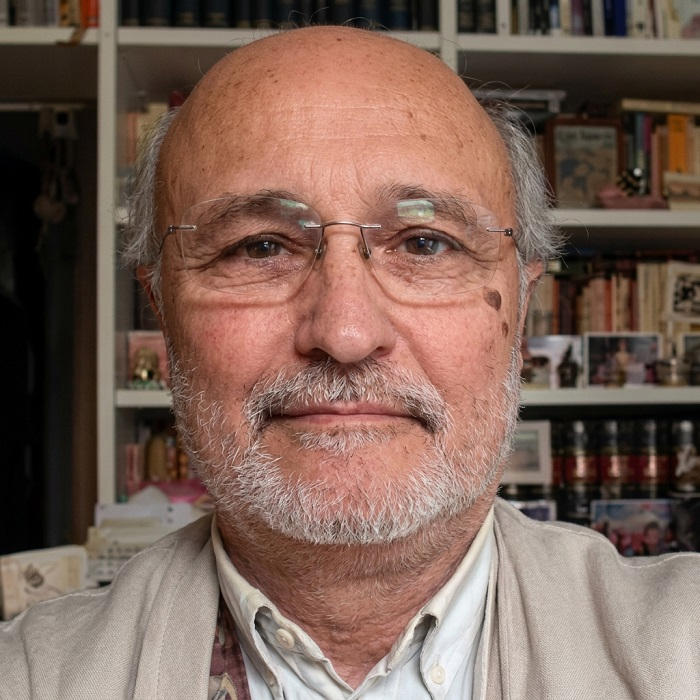
In an exclusive interview with GULAN Weekly Magazine, Italian political geographer Professor Fabrizio Eva examines some of the fundamental assumptions underlying the modern nation state and applies them to one of the Middle East’s most enduring political questions: the future of the Kurdish people.
Drawing on decades of work on political geography, borders, territorial identity and ethnonationalism, Eva discusses how Kurdish identity has survived division among several states, whether borders can become spaces of cooperation rather than separation, and what Rojava’s experiment with democratic confederalism can contribute to debates over decentralisation and pluralism.
He also examines the constitutional future of northeast Syria and the Kurdistan Region of Iraq, arguing that Kurdish political development continues to take place within an exceptionally difficult geopolitical environment while describing the Kurds as “the most politically and ideally dynamic group” in the wider region.
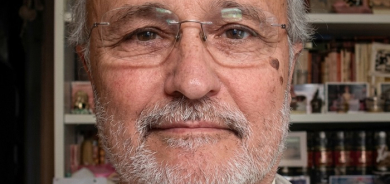
About Professor Fabrizio Eva
Fabrizio Eva is an Italian political geographer whose academic work has spent decades questioning conventional understandings of borders, territoriality, nationalism and the nation state. He served as a contract professor at Ca’ Foscari University of Venice from 2001 until 2021, teaching Political and Economic Geography, and previously taught methodologies for the study of contemporary geopolitical change at the University of Milan.
His scholarship has ranged across political geography, international boundaries, ethnonationalism, geopolitical theory, the Mediterranean, the Middle East and East Asia. Throughout his work, Eva has been particularly interested in how political power gives meaning to territory and borders, and how identities and institutions interact with the territorial structures of the modern state.
His academic contributions include Le dinamiche geopolitiche contemporanee: Metodologie di studio e interpretazione and Cina e Giappone: Due modelli per il futuro dell’Asia, as well as numerous articles and book chapters. His work on borders and political geography has appeared in international academic publications including Geopolitics, GeoJournal and Human Geography.
Eva has also served as a peer reviewer for leading international journals including Geopolitics and Political Geography. He has been a member of the editorial board of Geography Research Forum, and previously served on the editorial boards of Geopolitics and The Arab World Geographer.
His longstanding interest in Kurdish politics and political geography has included work examining Rojava, nationalism, territorial identity and political alternatives to the conventional nation state.
GULAN: Much of modern politics is built on the assumption that a nation, a state, and a clearly bounded territory should coincide. In your work on political geography, you have challenged this way of thinking and described the nation state as a mental cage that narrows political imagination. Why has this territorial model remained so powerful, and what problems does it create in culturally diverse regions, such as the Middle East?
Professor Fabrizio Eva: In my arguments about the nation state, I argue, as a geographer, that it is not a territorial model, that is, one that depends on or originates from the territory, but a human theoretical construction that is maintained over time because it is very useful for maintaining a hierarchical power structure, whatever form the nation state takes, from authoritarian to representative democratic.
The territory is indifferent to human actions and does not generate “models”, even if the conformation of the territory and the climate orient some human habits. It is human beings who transfer meaning to the territory and/or to specific parts or places of a territory.
Since a specific characteristic of humans is the psychological necessity of relationships with other humans, particularly with those who appear to be similar, the physical fact of “birth” in a group has led to the theorisation of a privileged and substantially “obligatory” bond with a specific group of humans and, by “transference”, also to the territory identified by the human group as “its own”.
The idea of the nation gives meaning to the group and the territory, and the state, as a hierarchical organisation of power, draws justification from it because it claims to represent a specific nation.
The concept and functioning of the nation state simultaneously fulfil a human psychological and emotional need and the exercise of power in a pyramidal form. In my opinion, these are the main reasons for the success and duration of the nation state as a model of social organisation of a human group on a specific territory, which must be clearly confined: the established power wants to know how far it can exercise its dominion.
Furthermore, the boundaries of the territory are claimed to be historical and fixed, like “identities”, but in reality they move through time and space, expanding or shrinking depending on historical phases and power relations with neighbouring nation states, because it is only a falsely territorial model.
This typically European theoretical construction was adopted by anti colonial independence movements as the goal of their struggle. It worked for the reasons mentioned: this iconography responds to the desire for a sense of belonging to a group, the nation, and to the goal of institutions that govern the new society, the state.
However, the cultures, histories and senses of belonging of non European human groups also refer to other forms of relationships and institutions. Therefore, the superimposition of the nation state model upon them has, depending on the context, created varying problems.
In some cases, it has not created major problems if, in some way, the nation state model was at least partially coherent with cultural aspects or accepted habits of political and social management.
In South West Asia, that is, the Middle East, the nation state model was adopted by independence leaders and movements, particularly those who wanted “modernity” and were often young officials.
However, the strong contrast between this model and two universalistic cultural elements, which deliberately are not territorially confined, namely Islam and Arabic as the language of the sacred text, was underestimated.
The result has been regimes that are very often authoritarian and eventually opposed by movements, including armed ones, acting in the name of cultural references without borders.
GULAN: In your paper, you argue that being a minority is initially a statistical condition rather than a political fact, but that it becomes political through territorial context, collective self perception, and the degree of recognition or exclusion imposed by a dominant majority. What, in your view, transforms a cultural or linguistic minority into a political nation? In the Kurdish case, how much of this process has been driven by internal identity and how much by the policies of the states in which Kurds live?
Professor Fabrizio Eva: “Birth” in a group, the fact of growing within it, and the human need for relationships with fellow human beings lead to the imitation and sharing of habits of life, even very simple and banal ones, such as certain types of clothing, hairstyles, jewellery, ways of speaking and behaving, and so on.
The language of communication within the group becomes the strongest and most frequently practised tool for strengthening and maintaining the cohesion of the group over time and for spreading and preserving the habits of its members.
The degree of diversity in habits, especially language, between different groups can lead to tensions or even clashes. The outcome depends mainly on the type of political organisational structure that manages the territory in which two or more different human groups are located.
In the presence of rigidly hierarchical political structures that favour a specific group, the “nation” to which the state refers, other groups can begin, and subsequently expand, claims of “diversity” and rights whose fulfilment is conceived in territorial form: that is, a space in which only one's own “nation” justifies the “state” power structure.
The existence of leaders with particular abilities to act as catalysts for these claims is also a very important factor, regardless of the leader's personal political and/or intellectual quality.
The Kurds have demonstrated, over a long historical period, strong resistance and a strong sense of cultural belonging, favoured by their sharing of a language different from the two historically dominant languages in the area, Persian and Arabic, despite the linguistic divisions within Kurdish itself.
The historical turning point represented by the end of the Ottoman Empire triggered the spread of a new political imaginary in the area, modelled on the colonial powers and therefore on claims to independence in the form of nation states for the various existing power groups.
In the Kurdish case, the hopes created by the Treaty of Sèvres in 1920, and subsequently disappointed by the Treaty of Lausanne in 1923, strengthened an already existing sense of identity.
The division of Kurds among the territories of other “nations”, and their position as unrecognised and persecuted minorities, certainly helped to keep alive claims for their own nation state. All four states among which the Kurds were divided followed authoritarian political, linguistic and religious paths that, through repression, strengthened the sense of Kurdish belonging and the political claim for a Kurdish nation state.
This changed with Öcalan's proposal for democratic confederalism in the early 2000s, the Syrian crisis beginning in 2011, and the emergence of Rojava as a political entity offering a proposal different from the nation state.
The internal dynamics of Kurdish political movements consequently acquired a new element: nationalist independence is no longer the only political and institutional reference for the Kurdish question.
GULAN: You identify language, memory, religion, and shared symbols as central to collective self representation, while warning that identity can become exclusive when it is tied to claims of territorial dominance. How can the Kurdish language and culture be institutionally protected without reproducing the same forms of exclusion that Kurdish communities have historically experienced? What balance should be struck between collective recognition and equal citizenship for all communities living in the same territory?
Professor Fabrizio Eva: As I have already pointed out, the issue of minority rights is closely linked to the type of institutional structure of the state in which minorities find themselves and to the self perception and/or relevance that the dominant “nation” has in that state.
Rigid nationalist conceptions greatly reduce or deny space for the rights of minority groups.
There are, in fact, concrete examples of recognising rights, particularly linguistic rights for minorities, that work and could serve as examples: the Swiss Confederation, with its multilingual system; the Autonomous Province of Südtirol Alto Adige in Italy; and Rojava itself.
Promoting bilingualism generally, and particularly in the most mixed areas, serves not only to protect the language of the minority group but also to consolidate within the dominant group the psychological perception that it is not alone and that others also possess rights.
This dynamic is especially important for new generations, upon whom the future of peaceful and negotiated relations among different groups and individuals is built.
Belgium and the Autonomous Communities of Spain may also provide institutional models. However, in those two cases, opportunistic local nationalist political use has created problems that, in reality, either did not exist or could have been solved through negotiation had the nation state not been invoked politically and through the media.
Spain is also a significant example of the role of leadership, both positively and negatively.
In the Basque Country, armed struggle for independence was active for decades beginning during the Franco dictatorship, while in Catalonia, autonomist or even independence claims operated within the political framework of representative democracy, that is, through unarmed movements and parties.
Following the end of the Franco dictatorship and the establishment of Spain's 17 Autonomous Communities between 1979 and 1982, which guaranteed administrative autonomy and strong recognition of the local language in the Basque Country, the armed independence claim gradually ceased to enjoy popular support and eventually ended.
In Catalonia, some local leaders, moreover conservatives, exerted institutional pressure in favour of “nationalist” independence, provoking a repressive reaction from the central government.
That is the idea of an already existing nation state with untouchable borders: autonomy, yes; independence, no.
GULAN: Your paper suggests that borders can function as filters for exchange and negotiation rather than as rigid lines of separation. Because Kurdish society extends across Iraq, Syria, Turkey, and Iran, could the existing state borders be made more flexible through decentralized administration, cross border cooperation, cultural exchange, and shared economic arrangements without requiring the redrawing of the region's map? What political conditions are necessary for such a model to work?
Professor Fabrizio Eva: Yes, this is possible.
A practical example that has been working for decades is that of the European Union and, in particular, the funds made available to promote cross border agreements, economic and cultural, along borders between states within the Union. There are also funds for cross border cooperation with states that have not yet joined the Union.
Within the European Union, the borders of individual states are generally no longer questioned, and the issue of internal minorities can be addressed through the recognition of linguistic rights and institutions of democratic representation.
Some of the states that joined the Union more recently are still struggling to translate the model developed over a longer period by other member states into rights and institutions.
In some states, we are witnessing the paradox of a lack of recognition of full citizenship for internal groups for linguistic reasons connected to the exclusivity of a single official language, even when this conflicts with the broader principles of the Union and fails to draw lessons from numerous positive examples among older member states.
In my opinion, these dynamics strongly depend on the personal characteristics of dominant local political leaderships and, often, upon a popular desire for retaliation based on past events in which the currently dominant “national” group itself suffered a denial of rights.
The granting of decentralised and more autonomous administrations, together with recognition of linguistic rights, in schools and public documents, for example, following European examples could be a viable solution immediately.
However, I do not see a willingness in this direction among the current political leaderships of Türkiye, Iran, Iraq and Syria.
There is no chance under the current religious fundamentalist government in Iran, and few possibilities in Türkiye, even though the disarmament of the PKK and Öcalan's leadership have introduced a new political factor of major importance.
In Syria and Iraq, there could be more positive possibilities, but Rojava and the leaders now in power in Damascus remain in a difficult phase of confrontation and negotiation that is not only political.
The case of Iraqi Kurdistan and its autonomy is the result of the collapse of Saddam Hussein's regime and the intervention of the United States, rather than a desire for dialogue that developed locally and was shared by the various groups competing for power in Baghdad.
The idea of the substantially centralised nation state remains strong in Iraq, as demonstrated by the continuing dispute over the distribution of revenues from oil located in the Kurdistan Region.
GULAN: You compare the Swiss Confederation with Democratic Confederalism in DAANES, commonly known as Rojava, while stressing that one should not simply imitate Swiss institutions. What, in your view, is the most important difference between the two models? Has the Rojava experience demonstrated that grassroots councils, gender co leadership, linguistic pluralism, and shared control of resources can provide a viable alternative to the centralized nation state, or does its dependence on conditions of conflict and external support place serious limits on its wider applicability?
Professor Fabrizio Eva: The Swiss Confederation, although it is a functioning example of institutional decentralisation arising precisely from recognition, from below, of the diversity of internal human groups, nevertheless remains within the logic of the nation state.
The smallest Swiss canton feels like a nation state in the sense that it claims to represent a single nation within a clearly defined territory: the “different” are beyond the border.
Switzerland has been able to develop according to its own model with the acquiescence of the more powerful European states surrounding it, and because of the particular configuration of its territory and its relative lack of attractive resources. In any case, it has been a democratic model that has had no direct imitators.
The political and institutional proposal of DAANES Rojava openly excluded the idea of the nation state. Although it emerged from the Kurdish human group, it was not aimed at creating a Kurdish nation state or a state in which Kurds claimed to be the dominant group and privileged by the institutions.
I would recall that, in practice, every territory has a dominant group and, in particular, a dominant language. What matters is that it is dominant because it facilitates communication and everyday life, rather than because it is imposed as an all encompassing cultural model.
Thanks to this approach, the iconographies, that is, the key principles serving as ideal points of reference, proposed and institutionalised in Rojava are democracy from below, feminism and ecology.
These are ideal references that have no nationality or territoriality, except within the limits of their application, but instead refer to human beings in general as individuals.
The 134 article Social Contract, approved in December 2023 after extensive grassroots consultations, demonstrated through its articles and institutions how those guiding principles could be translated into practice.
Some of these practices already existed, but during 2024 and 2025 they had a precise legal framework of reference.
The offensive against Rojava in January 2026 by the government in Damascus changed the situation.
The general and local geopolitical contexts are important. The rigidity of the nation state idea, which continues to dominate political practice and the thinking of political leaders, means that the Rojava model is even less easily imitated than Switzerland's.
Its existence is the consequence of a series of dynamics whose outcomes were not all predictable: the principal dynamics included the so called Arab Spring of 2011, the crisis of the Assad regime, the armed struggle against Daesh and the eventual end of the Assad regime.
The current situation is critical for Rojava because the new leadership in Damascus, although originating from an iconography of totalising Islam as a theory and practice of life, has, after taking power, adhered to the model of the centralised nation state, in which hierarchical power and Arab identity serve as institutional reference points.
The ability of the predominantly Kurdish leadership to negotiate with al Sharaa and the various currents within HTS, and the continued existence of Kurdish armed forces as organised formations rather than their dilution as individuals within the army, will be among the principal elements determining future developments.
So too will the continued presence of “public” employees in administrative offices and the question of whether bilingualism in Kurdish and Syriac areas will be incorporated into the Constitution.
There is also the question of which laws, courts and judges should be used to judge crimes.
This question is important because restorative justice has been favoured in Rojava and the death penalty abolished, an approach that is not shared by HTS and, above all, by jihadist groups and militias that are present and support the government in Damascus, even if they are not always kept under control.
GULAN: In your paper, you describe the political dispute in Syria as a confrontation between a centralized and presidential conception of the nation state and DAANES's decentralized democratic confederalism. What minimum political and constitutional guarantees are required for Rojava to reach a durable settlement with Damascus? At the same time, why have Western governments often treated the central state authority as more legitimate or practical than a political experiment in northeastern Syria built around democracy, gender equality, and pluralism?
Professor Fabrizio Eva: The word “constitutional” is significant.
The Swiss, Spanish and Italian examples already mentioned demonstrate that it is possible to have an institutional structure, enshrined in a Constitution, with forms of decentralised power without questioning the existence of a state within internationally recognised borders.
Of course, each situation has specific characteristics and a different historical past, with political tensions between centre and periphery, but these tensions also occur in centralised states.
First, there is a need for formal recognition in the Constitution, not all states have this, of the administrative and partially decision making autonomy of regions, provinces or areas within the state.
The rights to be recognised in these areas include: first, language rights and local bilingualism; second, self management of economic resources, even if only partially; third, depending upon the particular case and situation, partially autonomous management of the police; and fourth, autonomy in public administration and the judicial system.
There are several examples of such arrangements around the world.
The 134 articles of Rojava's Social Contract should and could become an element of discussion and negotiation regarding the new Syrian Constitution, with those provisions capable of guaranteeing this type of autonomy incorporated into it.
The most difficult issues to negotiate in Syria today are the questions of armed forces and feminism.
In the first case, it appears possible that Kurdish forces could be integrated into the state army as organised blocs rather than as individuals, while remaining stationed in areas with Kurdish majority populations.
Women's issues, however, move into a more delicate ideological and cultural field.
Even in a number of Arab Islamic states there are female military units, but the Kurdish militias, both male and female, have forms of internal organisation with non hierarchical aspects that no current army in the world would easily accept, particularly in Syria, where political forces and militias include actors that were Islamists until recently or remain openly Islamist.
Decisions taken by local assemblies and women's social protagonism, including through cooperatives, are among the most significant features of Rojava, but also among the most difficult for the current government in Damascus to accept.
The leaders of the Western governments of the most militarily and/or economically powerful states that could exercise influence over Syrian dynamics are politically caged within the logic of the predominantly centralised nation state, by the logic of military power, and are conditioned by the selfishness of “national” economic interests.
The iconographies of democracy from below, feminism and ecology found in Rojava, despite being products of European and “Western” lines of thought, are still considered too extreme precisely in the West.
Democracy “from below” has generally been legitimised only in the form of periodic, multiparty elections of representatives every four or five years at different institutional levels, but with political and legislative decisions overwhelmingly concentrated in central parliaments.
Ecology is still struggling to be accepted as a political and institutional practice necessary at least to mitigate climate change, which continues to be denied by some well known and powerful leaders.
Finally, feminism still has considerable ground to cover both as a political and institutional proposal and in terms of mass popular acceptance of its assumptions.
For example, I recall that in early January 2026, when the central government in Damascus launched a military offensive across the Euphrates against the forces of Rojava, the President of the European Commission and the President of the European Council were visiting Damascus to discuss economic agreements and said nothing specifically about what was happening to Rojava.
It was only toward the end of January that the French president intervened publicly, inviting the parties to negotiate with clear reference to the democratic guarantees that should be recognised for Rojava.
DAANES Rojava was geopolitically isolated. Its survival today, now territorially and institutionally reduced, depends upon its ability to negotiate with the central government, but also upon maintaining armed units of effective fighters and the presence of a certain number of US soldiers in Syria who, however, depend upon the unpredictable decisions of President Trump.
GULAN: The Kurdistan Region of Iraq has achieved constitutional recognition and federal status, but it continues to face disputes with Baghdad over authority, territory, and resources, pressure from neighbouring states, and internal challenges regarding governance and institutional legitimacy. From the perspective of political geography, what should the Kurdistan Region prioritize to protect the Kurdish national identity and its constitutional standing while building inclusive institutions and constructive relations with Baghdad and the wider region? What lessons, if any, should be drawn from Rojava and other decentralized systems?
Professor Fabrizio Eva: The existence of Iraqi Kurdistan is the consequence of actions, tensions and military interventions by others that were promoted to achieve goals other than its autonomy.
Iraqi Kurdistan has been a useful pawn in the war strategy of several US presidents: Bush Sr., Clinton and Bush Jr. Democratic Presidents Obama and Biden maintained the US military presence in Iraq and Syria and, therefore, the line of “protection” of Kurdistan.
President Trump is not very interested in Kurdistan, if he understands what and where it is. It is no coincidence that during his first term he attempted to withdraw US forces present in Syria and, prospectively, Iraq.
The Kurdistan of the Barzanis has the Kurdish nation state as its model, centred solely upon the Iraqi area. There are confrontations, sometimes internal clashes, with other Kurdish political actors, but everything remains within Iraq's current administrative borders.
The borders are disputed, including the issues of Mosul and Kirkuk, but nevertheless operate within a logic not fundamentally different from the internal dynamics of other states, whether federal or centralised.
To maintain this condition of paradoxical stability and autonomy vis à vis Baghdad, agreements have been reached with Türkiye allowing air strikes and the use of troops against the PKK while enabling oil exports through Türkiye.
The real problem is the fundamentalist Shiite regime in Iran, which bombs and infiltrates for targeted assassinations as well as repressing Kurds within Iran. Therefore, negotiation with that government does not appear possible, much less now following the US Israeli attack on Iran on February 28, 2026.
To my knowledge, the Kurdistan Region has activated a form of territorial isolation with regard to Rojava.
The Rojava model is very distant from the nationalist nation state practice of the current Kurdistan Region, and it seems to me that the Barzani leadership prefers to minimise relations and, above all, aims to avoid becoming geopolitically involved in Syrian affairs.
After all, the 2017 independence referendum took place in a geopolitical vacuum characterised by a total lack of support or recognition not only from the central government in Baghdad and neighbouring states, but also from the United States and other great powers such as Russia or China.
I believe that in the current context, Iraqi Kurdistan has little choice but to pursue a policy of maintaining the current situation, seeking to use the deep internal political and religious divisions elsewhere in Iraq and within the Baghdad parliament to guarantee its autonomy and maintain a substantial role in the exploitation of resources located in Kurdistan.
It could look to European examples of autonomy for practices that could be negotiated with the parties in Baghdad.
To achieve these goals, it would be useful and important to establish a better balance and greater sharing of internal power among the main political forces of Kurdistan.
Some institutions or modes of operation identified in Rojava's Social Contract could be helpful in this regard.
Developments will also depend upon the skills and intentions of the current Kurdish leaders in the different areas into which the Kurdish people remain divided.
Across the region as a whole, the Kurds seem to be the most politically and ideally dynamic group, but the political and geopolitical context remains extremely difficult for them.