Ambassador Maurizio Melani to GULAN: “Italy Is Effectively a Major Economic, Cultural and Security Partner of the KRG”
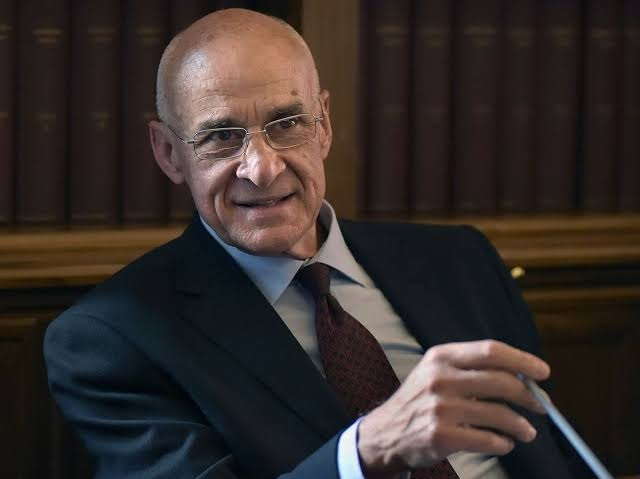
By Kobin Ferhad
In an exclusive interview with GULAN Weekly Magazine, Ambassador Maurizio Melani reflects on Iraq’s post 2003 state building, the unfinished federal relationship between Baghdad and Erbil, and the strategic depth of Italy’s partnership with the Kurdistan Region. He discusses President Nechirvan Barzani’s diplomatic role, the security threats facing the Kurdistan Region, the importance of northern energy and transport corridors, and the responsibilities of Italy and Europe in supporting Iraqi stability. He also addresses the Anfal genocide and argues that full implementation of Iraq’s Federal Constitution remains an essential guarantee for the Kurdish people.
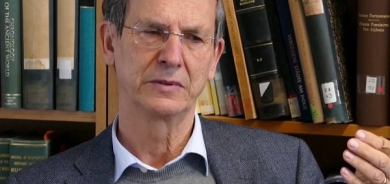
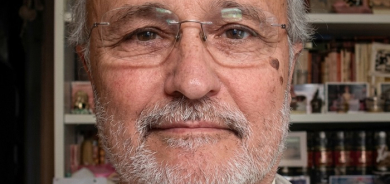
About Ambassador Maurizio Melani
Ambassador Maurizio Melani is one of Italy’s most experienced diplomats and international relations practitioners, with a career spanning senior assignments across the Middle East, Africa, European institutions, economic diplomacy and international security.
He served as Italy’s Ambassador to Iraq from 2006 to 2010, a decisive period in the country’s post war political and institutional development, and previously served as Ambassador to Ethiopia from 1993 to 1998. From 2001 to 2006, he represented Italy in the Political and Security Committee of the European Union, placing him at the centre of European foreign and security policy during a period of major international change.
At the Italian Ministry of Foreign Affairs, Melani served as Director General for Africa and later as Director General for the Promotion of the Italian Economic System. He subsequently served on the Board of Directors of the Italian Trade Agency, bringing together extensive diplomatic experience with expertise in trade, investment and international economic strategy.
He is currently Extraordinary Professor of International Relations at Link Campus University in Rome, where his teaching and scholarship include international relations, political and economic governance, energy policy and climate change. His long career gives him a rare perspective connecting diplomacy, security, economic development and the political evolution of Iraq and the Kurdistan Region.
From Military Withdrawal to Civilian State Building
GULAN: When you arrived in Baghdad as Italy's Ambassador in 2006, Italy was concluding Operation Ancient Babylon and shifting towards civilian, humanitarian, and institutional support. You served through the height of sectarian violence, the consolidation of Nouri al Maliki's first government, and the preparations for the 2010 parliamentary election. Looking back from 2026, which decisions made during those years genuinely strengthened the Iraqi state, and which may have unintentionally entrenched problems that remain visible today? Did international partners place too much emphasis on stabilising national institutions from above and too little on accountability, local legitimacy, and the creation of an inclusive political settlement?
Ambassador Maurizio Melani: At the end of 2006, the task of the Ancient Babylon operation, which had been deployed to support the establishment of trained Iraqi security forces (Army and Police) in Thi Qar Province, had been completed. The Italian brigade there was therefore withdrawn. Italian support to Iraqi security, however, continued through the NATO training mission and, in particular, to the Federal Police by the Carabinieri, together with the civilian institution building activities mentioned in your question. In Thi Qar, the Provincial Reconstruction Team led by Italy remained.
Two factors strengthened the Iraqi state at that time. First, through the policy promoted by General Petraeus with our support, the engagement with Arab Sunni tribes, which turned against Al Qaeda and the Baathist insurgents, even if their integration into the regular Iraqi forces was difficult, also because of the Government's suspicions towards them. Second, the action taken by Prime Minister Al Maliki to take control of Basra Province at the expense of dissident Iraqi Shia armed groups, often smugglers of oil, partially supported by Iran, which, however, did not intervene to protect them. In such an operation, an important role was played by the security forces trained by the Carabinieri.
Unfortunately, during Al Maliki's second mandate, sectarian policies produced new rifts with the Arab Sunni component, which contributed to laying the ground for the establishment of Daesh.
Federalism, Kurdish Rights, and the Unfinished Relationship Between Baghdad and Erbil
GULAN: In 2007, while serving as Ambassador, you participated in a conference concerning the revision of Iraq's Constitution alongside representatives of the federal government and the Kurdistan Region. At the time, federalism was presented as an essential safeguard against a return to dictatorship, excessive centralisation, and the historical denial of Kurdish rights. Nearly two decades later, recurring disputes between the Kurdistan Region of Iraq, or KRI, and the federal government in Baghdad over oil, public revenues, salaries, judicial authority, and the implementation of constitutional provisions demonstrate that the federal settlement remains incomplete. The repeated suspension or withholding of salary transfers by Baghdad has imposed severe hardship on public employees and families in the Kurdistan Region, who have frequently been made to bear the consequences of political disputes they did not create. Many Kurds also believe that the constitutional rights and financial entitlements promised to them have not been adequately protected in practice. In your assessment, is the central problem constitutional ambiguity, selective implementation by successive federal governments, or a deeper unwillingness to accept genuine federalism? What durable mechanism could protect the constitutional status of the Kurdistan Region, safeguard the rights and livelihoods of its people, and prevent salaries and public services from being used as instruments of political pressure?
Ambassador Maurizio Melani: In my opinion, the KRG leadership, operating in Kurdistan and in key positions in Baghdad, has been able to pragmatically manage the difficulties in relations with the Federal Government on issues such as the use of oil revenues, the transfer of resources and the role of the Peshmerga in the security of Iraq, thus preserving federal unity in accordance with the Constitution and overcoming the Daesh crisis, thanks also to the external support to which Italy made an important contribution, in favour of both the federal forces and those of the Kurdistan Region.
Italy and the Kurdistan Region: From Recognition to Strategic Partnership
GULAN: On 8 July 2026, Italy conferred upon President Nechirvan Barzani the rank of Knight Grand Cross of the Order of the Star of Italy, recognising his contribution to dialogue and peace, the development of bilateral relations, and the activities of Italian companies, military personnel, and archaeological missions in the Kurdistan Region. Having led Italian diplomacy in Iraq during a formative period, what wider political significance do you attach to this honour? Has Italy developed a distinctive approach towards the Kurdistan Region that other European countries could learn from? How can this partnership be deepened while remaining fully compatible with Iraq's federal framework?
Ambassador Maurizio Melani: I had the privilege of meeting President Nechirvan Barzani on several occasions when he was Prime Minister of the KRG, and I remember the very interesting and fruitful exchanges of views with him on bilateral relations in many fields and on political developments in Iraq and the Middle East.
The decision of President Sergio Mattarella to confer upon him the rank of Knight Grand Cross of the Order of the Star of Italy is an acknowledgment of his very important personal role in the development of close relations between Italy and the Kurdistan Region, as well as of his contribution to the fight against terrorism, to smoother relations within Iraq and to his vision of relations with neighbouring countries.
I can also say that, for Italy, the federal solution enshrined in the Iraqi Constitution is a very successful example of how similar problems may be solved, recalling also our successful experience with the autonomous province of Alto Adige-Südtirol, where the majority of the population is German-speaking, even as far as our relations with Austria were concerned, while of course being aware that we are talking about only approximately 0.5% of the total Italian population.
President Nechirvan Barzani's Role as a Trusted Diplomatic Mediator
GULAN: Axios recently reported that when the United States sought a reliable channel to the leadership of Iran's Islamic Revolutionary Guard Corps, the Trump administration turned to President Nechirvan Barzani because of the exceptional trust he enjoys among senior figures in both Washington and Tehran. According to the report, President Nechirvan Barzani established direct communication with senior IRGC leadership, conveyed messages between the two sides, and was later considered as a possible host for confidential American and Iranian negotiations in Erbil. President Nechirvan Barzani has also reportedly offered to assist in restarting negotiations. At a moment when direct confrontation between the United States and Iran has placed the entire region in danger, how significant is it that President Nechirvan Barzani was entrusted with such a sensitive diplomatic responsibility? Does his ability to communicate with two powerful adversaries demonstrate that the Kurdistan Region, despite the military attacks and economic pressures it has endured, has emerged as a credible centre of regional diplomacy? What could President Nechirvan Barzani's mediation mean for the international standing of the Kurdistan Region and for Erbil's future role as a bridge between regional and international powers?
Ambassador Maurizio Melani: The fact, as reported by Axios, that President Barzani has been confidentially requested to establish a channel with the IRGC is a recognition of his standing as a trusted leading figure and of the quality of his relations both in the United States and in Iran, as well as of the credibility of the KRG as a reliable actor in the region. At the same time, one should be aware that this may expose the Kurdistan Region to hostile actions amid the complex war with Iran and developments within that country.
Iraq and the Kurdistan Region amid the War Between the United States, Israel, and Iran
GULAN: In your 2026 Diplomatic Letter, The Israeli and American Attack on Iran and the Iranian Retaliation: Context and Possible Outcomes, you examined the confrontation and its possible regional consequences. Iraq has sought to avoid becoming a battlefield, yet it contains American positions, armed factions aligned with Iran, vulnerable border areas, and a Kurdistan Region repeatedly exposed to retaliation and cross border pressure. What scenarios do you now foresee for Iraq and the Kurdistan Region if diplomacy fails to produce a durable settlement? How can Baghdad and Erbil protect Iraqi sovereignty, prevent the country's territory and airspace from being used by competing belligerents, and still contribute constructively to regional diplomacy?
Ambassador Maurizio Melani: Since the beginning of the war, sectarian armed groups have fought in Iraq, also as proxies of neighbouring countries. A major aim of the Iraqi Government, under different Prime Ministers, as well as of the KRG, has been to favour an improvement in relations between Iran and Sunni led Arab countries in order to avoid their disputes over regional hegemony being at the expense of the people of Iraq in its various components.
After the defeat of Daesh, to which the Popular Mobilisation Forces made a relevant contribution, radical Shia sectors of such groups, together with Kata'ib Hezbollah and Harakat Hezbollah, were strengthened, amid difficulties for the Iraqi Government in controlling them, also because of the composition of governing coalitions.
More recent efforts, together with Oman, to normalise relations between Iran and Saudi Arabia have brought gradually positive results, with a final decisive contribution from China, which is interested in sustainable stability in the Middle East because of its dependence on Gulf hydrocarbons and its connectivity projects for trade with Europe and surrounding areas.
This has been jeopardised by the war between the United States together with Israel and Iran. Iraq has once again become a battlefield for various forces. Attacks on American forces have been launched from Iraqi territory, while the United States and Israel have also carried out targeted killings and bombings, violating the sovereignty of Iraq, including that of the KRG.
Such a situation cannot be solved militarily. It requires a diplomatic and political arrangement involving the countries of the region and external powers.
The 17 August Attacks and the Protection of the Kurdistan Region's Institutions
GULAN: On 17 August 2026, two drones targeted the personal office of Kurdistan Regional Government Prime Minister Masrour Barzani and the residence of the head of the Region's Security and Intelligence Agency. The Kurdistan Counter Terrorism investigation stated that the drones had been launched from Iranian territory, while Kurdistan Regional Government Prime Minister Masrour Barzani described the incident as a dangerous escalation and a direct threat to stability. Does the targeting of senior political and security institutions represent a new phase in the pressure being applied to the Kurdistan Region? What should the Iraqi federal government be expected to do, and what forms of Italian and European support, including air defence, intelligence cooperation, attribution, and diplomatic pressure, could help prevent further attacks without contributing to a wider escalation?
Ambassador Maurizio Melani: After years in which PKK camps in remote areas of mountains in Northern Kurdistan have been targeted by Turkish attacks, since the announcement by President Trump of his intention to provide military assistance to PDKI and other groups present in the territory of the KRG, the latter has been hit on several occasions by drones and missiles coming from Iran. The attack on the Prime Minister's office in Erbil and other KRG premises a few days ago may not fall only within this framework. It could also be linked to the complexity of the internal situation in Iran.
It is probably premature to assess whether such an event is also a warning that targeted killings may occur not only in Kurdistan but also elsewhere, after such actions against Iranian leaders, up to the Supreme Leader, and against proxy organisations have occurred in Iran and also on Iraqi territory.
I do not know what the decision of the EU and its Member States, including Italy, will be, but my personal opinion is that defensive equipment and assistance for the protection of Iraqi territory, and in particular that of the KRG, should be provided, possibly in coordination with the members of the recent Makkah Pact, in the hope that the United States will regain the credibility and coherence in its actions that are unfortunately presently absent.
Energy Security and the Northern Export Corridor
GULAN: Your work on international energy and climate policy has emphasised the strategic relationship between energy systems and geopolitical stability. The disruption of the Strait of Hormuz sharply reduced Iraq's southern oil production in March 2026 and renewed attention to the importance of northern exports through the Kurdistan Region and Türkiye. At the same time, repeated drone attacks have demonstrated the vulnerability of Kurdish oil and gas infrastructure. Could the northern export corridor and the Kurdistan Region's energy resources become a pillar of Iraqi and European energy resilience? What legal, commercial, and security arrangements are required to protect infrastructure, reassure international companies, and ensure that energy cooperation helps resolve rather than deepen the disputes between Baghdad and Erbil?
Ambassador Maurizio Melani: The blockade of the Strait of Hormuz has disrupted world trade with significant geopolitical consequences. Even if the blockade is hopefully removed, the risk of its re establishment will remain for the foreseeable future. This has given room to the search for alternative routes for the export of oil and other products from the Gulf, and in particular from and through Iraq, in the direction of the Mediterranean Sea via Turkey. Such a route, through new pipelines and the rehabilitation of existing ones, could carry both southern and Kurdistan production. Studies and the search for financing are at an advanced stage. At the same time, a parallel railway corridor should ensure the export and import of dry goods. Such a multifaceted corridor should be protected through a credible regional security agreement and deterrent capabilities supported by those who have an interest in the stability of the region, with Iraq as a pivot.
In this framework, I believe that the common interests of the Federal Government and the KRG will help in resolving the differences between the two entities on various issues.
The Future of Italian and Allied Security Cooperation
GULAN: The March 2026 drone strike on Camp Singara in Erbil deliberately targeted a facility hosting Italian and NATO personnel. Italian forces in the Kurdistan Region have also played an important role in training Kurdish security forces. NATO subsequently relocated the personnel of its Iraq mission from Baghdad to Naples because of the deteriorating regional security situation. In an environment shaped by drones, armed groups, border threats, and the continuing danger posed by Daesh, what should the next phase of Italian and allied security cooperation with Iraq and the Kurdistan Region look like? Should greater priority be given to air defence, intelligence sharing, border security, institutional accountability, or the professionalisation and unification of the Peshmerga under the Ministry of Peshmerga Affairs?
Ambassador Maurizio Melani: As I have already hinted, I personally think that the EU, either through its Common Security and Defence Policy instruments or through the group of the “Willing”, should contribute to the protection of the territory of Iraq, with priority given to air and border defence, intelligence cooperation and cybersecurity, with a focus on the Kurdistan Region, considering the various threats to which it is exposed.
Can Europe Become a Strategic Actor in Iraq?
GULAN: In your recent Diplomatic Letter, The Rupture in the Transatlantic Relationship and the Great Challenge for Europe, you examined the growing pressures facing Europe's strategic capacity. You also represented Italy in the European Union's Political and Security Committee. The mandate of EUAM Iraq, which operates from Baghdad and maintains a presence in Erbil, has been extended until 31 October 2026. Nevertheless, the present regional conflict has again demonstrated how difficult it is for Europe to shape developments in the Middle East. What would a genuinely strategic European policy towards Iraq and the Kurdistan Region require beyond technical advisory missions? Should the European Union assume a stronger political role in supporting dialogue between Baghdad and Erbil, economic resilience, and regional conflict prevention, or are individual European countries such as Italy better positioned to exercise meaningful influence?
Ambassador Maurizio Melani: The EU should assume an effective political role in supporting conflict prevention and resolution in the Middle East, considering the paramount interest it has in the sustainable stability of the region, hopefully together with partners in that area, the United States and others.
This may include, if the parties agree, supporting dialogue between Baghdad and Erbil, even if I think that, in this case, a so called Track 2 initiative (without, at least at the beginning, formal participation by governments) could be more feasible and effective, like the one in which I took part in 2007 while I was in Iraq.
There should be a common European political action, also through new instruments, considering that not all Member States may be ready to share common decisions and sovereignty in this field. This is what we call differentiated integration, in which some countries move more quickly, leaving the door open to others when they are ready and able to join, having the necessary requirements. This is what was done all along the European integration process, which started with only six countries, and then for the establishment of the common currency and the Schengen Treaty.
Beyond Oil and Security: A Broader Partnership Between Italy and the Kurdistan Region
GULAN: As Director General for the Promotion of the Italian Economic System, you described Italy in 2012 as Iraq's leading European trading partner and emphasised the developmental importance of major infrastructure projects. More recent Italian engagement with the Kurdistan Region has highlighted water management, agriculture, archaeology, tourism, academic cooperation, energy, and opportunities for Italian companies. In which of these areas does Italy possess the greatest comparative advantage? How can cooperation be structured to develop local skills, employment, private enterprise, and climate resilience rather than remaining a collection of individual contracts? Could the Kurdistan Region serve as a practical gateway for wider Italian economic engagement with Iraq?
Ambassador Maurizio Melani: Italy is effectively a major economic, cultural and security partner of the KRG.
Italian companies are engaged in many fields. There is interest in participating in the Northern Corridor. Another field of interest is the energy transition: renewable energy sources, green hydrogen production and the elimination or reduction of CO₂ emissions through the reduction of flaring and other means. Archaeology and museums are a traditional field of cooperation which could be expanded, as could university cooperation.
An important aspect of the activities of Italian companies is the employment of local skills, both in terms of local content and of partnerships and subcontracting, which could be extended to initiatives involving such Italian Kurdish partnerships in the rest of Iraq.
All these represent comparative and cumulative advantages that are beneficial for the Kurdistan Region, Iraq and Italy.
Reconciliation, the Anfal Genocide, and the Foundations of a Stable Iraqi Future
GULAN: Your diplomatic career has repeatedly involved conflict resolution, inclusive security institutions, and national reconciliation. In June 2026, the Italian Ambassador's mission to Kirkuk, Sulaymaniyah, and Halabja concluded with a tribute at the Halabja Martyrs' Monument, connecting contemporary cooperation with the responsibility to preserve historical memory. Nearly twenty years after your ambassadorship began, Iraq continues to face the consequences of the Anfal genocide against the Kurdish people, the crimes committed by Daesh, the displacement of the Yezidis from Sinjar, minority insecurity, and unresolved questions in the disputed territories. What should Baghdad, Erbil, Italy, and the European Union prioritise to transform coexistence and reconciliation from political language into lasting legal and institutional guarantees?
Ambassador Maurizio Melani: The memory of the Anfal genocide and of the crimes committed by Daesh against the people of the Kurdistan Region has become an essential component of Kurdish identity.
This should be clear to all those interacting with the Kurdish people in Iraq, in the Arab and Islamic world, and everywhere.
After centuries of discrimination, persecution and denial of rights, which still exist for Kurds in other countries, the Iraqi Federal Constitution, which should be fully implemented, is a guarantee for the Kurdish people in Iraq and a valuable example of how peace and stability can be ensured.