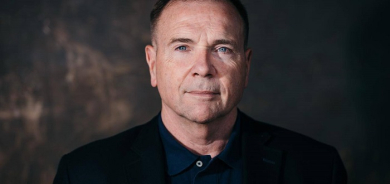
Daniel Serwer to GULAN: Iraq Has the Institutions; What Is Missing Is Political Will
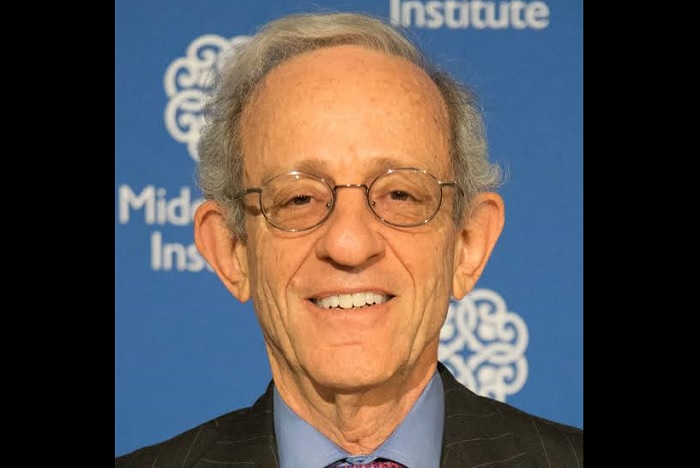
Daniel Serwer discusses diplomacy in the Middle East, lessons from the Dayton peace process, state authority in Iraq, recurring Erbil-Baghdad disputes, democratic governance in the Kurdistan Region, and the future of U.S. civilian engagement.
BY KOBIN FERHAD
In this interview with GULAN Weekly Magazine, Daniel Serwer addresses a set of challenges facing Iraq, the Kurdistan Region, and the wider Middle East. He argues that political will, rather than a shortage of institutions or mediators, remains a central obstacle to resolving disputes. He also discusses the importance of civilian control over armed groups, accountable government, and the potential role of investment and hydrocarbons in the long-term U.S. relationship with Iraq and the Kurdistan Region.
GULAN: Throughout your career, you have emphasized that preventing conflict requires civilian instruments such as diplomacy, mediation, economic assistance, and institution-building, rather than relying primarily on military force. Looking at today's Middle East, which civilian instrument do you believe is most underused in preventing political disputes from escalating into violence?
DANIEL SERWER: The United States and Israel have relied almost entirely on the military instrument in dealing with Iran. In Lebanon and Gaza, there have been some efforts to combine diplomacy with military force, but the results have so far been rudimentary. These have included the exchange of prisoners and hostages in Gaza and the agreement in principle that Lebanese sovereignty should eventually be relied upon in dealing with Hezbollah.
The problem has not been a shortage of mediators. There have been plenty of efforts at mediation. What has been lacking is the political will necessary for diplomacy to produce more substantial results, especially in Israel. In that sense, diplomacy remains underused not because the instrument itself is unavailable, but because it has not been accompanied by sufficient political will.
GULAN: You helped facilitate dialogue between Serbs and Bosniaks and contributed to negotiations connected to the Dayton peace process. What specific lesson from the Balkans could Iraq apply when addressing unresolved disputes among communities that have experienced conflict and deep mistrust?
DANIEL SERWER: The lessons from the Dayton peace process are not all positive. The rigid power-sharing arrangements it produced have held Bosnia back by making effective government difficult.
Iraq, in my view, already has adequate power-sharing arrangements. I therefore do not think the principal problem is the absence of another institutional or power-sharing formula. The greater obstacle has been political will, particularly when it comes to resolving outstanding issues between Erbil and Baghdad. The institutions and arrangements are largely there; what has been missing is the willingness to use them to resolve the disputes that remain.
GULAN: More than two decades after the fall of Saddam Hussein, Iraq continues to face the problem of armed groups exercising political and military influence outside the complete control of state institutions. What institutional reform is most necessary for Iraq to establish effective state authority over the use of force?
DANIEL SERWER: All armed groups need to be brought under state authority and integrated into the Iraqi security forces under a single command. Effective state authority over the use of force is difficult to establish as long as armed groups continue to operate independently of that command.
Regional armed groups might survive, but they would need to operate under clear civilian authority at the regional level. The essential point is that there should be a clear authority and chain of command governing the use of force, rather than armed organizations exercising military power independently of the state or the relevant regional civilian authorities.
GULAN: Disagreements between Baghdad and the Kurdistan Regional Government over oil revenues, the federal budget, salaries, and disputed territories continue to produce recurring political crises. What kind of permanent institutional mechanism could prevent these disagreements from repeatedly destabilizing relations between Baghdad and Erbil?
DANIEL SERWER: I think Iraq already has the permanent institutional mechanisms required. The Council of Representatives and the judicial system are where most of these disputes should be resolved, including the recurring disagreements between Baghdad and Erbil.
Again, I do not see the main problem as the absence of institutions. The problem is political will: first, the willingness to reach agreements, and second, the willingness to implement those agreements once they have been reached. Creating additional mechanisms will not by itself resolve these disputes if the existing institutions are not being used effectively to reach and implement political agreements.
GULAN: In 2017, you argued that Iraqi Kurds needed to prioritize democracy and accountable government while pursuing their national aspirations. Looking at the Kurdistan Region today, do you still believe that stronger democratic institutions are the essential foundation for advancing Kurdish political and national goals?
DANIEL SERWER: I do. Good governance is validating, and I continue to believe that democracy and accountable government are important foundations for the Kurdistan Region as it pursues its political and national aspirations.
I would say the same for Baghdad. This is not a principle that applies only to the Kurdistan Region. Stronger democratic governance and greater accountability are important on both sides. For the Kurdistan Region, advancing its political and national objectives should therefore continue to go hand in hand with strengthening democratic and accountable government.
GULAN: As the United States reassesses the size and purpose of its military presence in Iraq, the future relationship will increasingly depend on diplomatic, economic, educational, and institutional cooperation. Which form of long-term civilian engagement should Washington prioritize to support stability in both Iraq and the Kurdistan Region?
DANIEL SERWER: Like it or not, I think hydrocarbons will provide the long-term basis for all these different forms of cooperation. If Iraq can attract American companies to invest, that investment can underpin broader diplomatic, economic, educational, and institutional cooperation between the United States and Iraq, including the Kurdistan Region.
I would also add that Iraqi Kurdistan is geographically advantaged in a world in which passage through the Strait of Hormuz and the Bab al-Mandab is uncertain. That geographical position could become increasingly useful, and I hope the Kurdistan Region can use that advantage to good effect in addressing some of the problems that have persisted since the Saddam Hussein regime has, thankfully, disappeared.