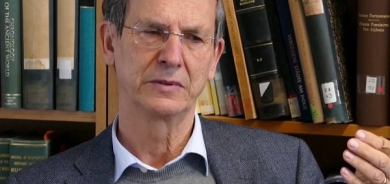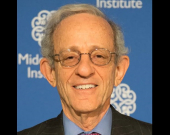
Professor Jenny White to GULAN: “Inclusion Does Not Necessarily Mean Equality”

In an exclusive interview with GULAN Weekly Magazine, Professor Jenny White examines the changing character of Turkish politics, the durability of President Recep Tayyip Erdoğan’s political system, opposition politics, youth mobilisation, and the evolving relationship between nationalism and Kurdish identity. She also discusses Turkey’s pragmatic relationship with the Kurdistan Regional Government and the limits that continue to shape Kurdish political recognition inside Turkey.
About Professor Jenny White
Professor Jenny White is Professor Emerita at Stockholm University and one of the most established scholars of contemporary Turkey, political Islam, nationalism, identity, gender, and social change. She has followed Turkish politics and society since the mid 1970s and has written extensively on the political and cultural transformations that have reshaped the country.
Before joining Stockholm University, she was a professor at Boston University. She has served as president of the Turkish Studies Association and of the Middle East Section of the American Anthropological Association, and her research has been supported by institutions including the MacArthur Foundation, the National Science Foundation, the Social Science Research Council, Fulbright Hays, and Riksbankens Jubileumsfond.
Her major works include Muslim Nationalism and the New Turks, Turkish Kaleidoscope, Money Makes Us Relatives, and Islamist Mobilization in Turkey: A Study in Vernacular Politics, which received the 2003 Douglass Prize for best book in Europeanist anthropology. She holds a PhD from the University of Texas at Austin and has lectured internationally on Turkish politics, political Islam, ethnic identity, nationalism, and gender.
GULAN: In your recent interviews, you described Erdoğan’s system as a “spindle autocracy,” in which personal loyalty replaces institutional competence. How has this transformed Turkish politics, and how durable is the system today?
Professor Jenny White: Turkish political life has been characterised by what I call spindle politics, with autocratic tendencies since its founding. Central leadership figures often remain on the political stage for decades, giving the illusion of stability. Meanwhile, followers break away, shift loyalties from one faction to another, demonise former friends as enemies, and spin out new networks of their own. Strong, visible authoritarian leaders attract followers into their network, where membership is grounded in loyalty and obedience to that single person, not loyalty to the government itself or to a shared goal.
The internal dynamics of spindle politics make it inherently brittle because they breed disobedience and disagreement, such as public criticism and demonstrations, which are seen by the leader as personal betrayals. The offenders are pushed out or leave. Spindle hierarchies consist of supporters who join and are woven into the networks surrounding the leader. They often develop their own networks as well. If they leave, they take those networks with them. Thus, the continuation of the same leaders over long periods creates an illusion of stability while their networks continually fracture around them.
The current situation with the CHP is a perfect example of this. Erdoğan’s attempts to neutralise the party by imprisoning and then replacing the party leader led to the leader splitting off and founding a new party, Yeni Parti, which drew away CHP networks and MPs. There are two leaders of the New Party, the imprisoned İmamoğlu and Özel. It remains to be seen whether there will be a power struggle if İmamoğlu is released. The AKP itself split off from another party.
I believe that the dynamics of spindle politics can quickly scale up national polarisation, possibly into violence, especially if the leadership post is vacated.
When I say there is no shared goal, only loyalty, it is important to mention that nationalism is an overarching principle to which all Turkish leaders, and of course their followers, adhere. It guides their thinking and actions. However, the definition of what is a Turk and what is the Turkish nation has changed radically over time, leading to intense polarisation along those lines. For instance, Kemalists and AKP followers have quite different understandings of Turkey’s national identity, culture, borders, and foreign policy. Moving away from an emphasis on Turkish blood and nominal Sunni Muslim identity within tightly monitored borders, the AKP understands Turkish national identity to be based on the actual performance of Sunni Islam, and the nation to have an imperial Ottoman history, making the larger region and the Muslim world generally an acceptable arena of interest and action.
GULAN: In March 2025, you warned that eliminating Ekrem İmamoğlu as a genuine electoral rival could move Turkey from competitive authoritarianism to full autocracy. Following his continued imprisonment and the judicial intervention in the CHP, do you believe Turkey has now crossed that line?
Professor Jenny White: Yes, I do believe that elections become less meaningful once electoral results are considered fungible, that is, when the government feels free to replace elected officials with its own people. It still remains unclear, however, whether the AKP and President Erdoğan would cede power if they lost elections and whether they would allow themselves to lose. I would like to be optimistic, but I suspect the answer is that they would not accept negative election results or would never allow that to occur.
GULAN: In Islamist Mobilization in Turkey, you showed how political Islam grew through neighbourhood networks and everyday relationships. How has political mobilisation changed after more than two decades of AKP rule, particularly among younger voters?
Professor Jenny White: From what I understand, young people feel they can only get ahead if they have a connection with the AKP. Otherwise, their education does not lead anywhere. Many want to emigrate to Europe. Another problem is that many young people in Turkey are not in any kind of education, job, or apprenticeship and, as such, do not appear in unemployment statistics, which count people actively looking for work. Large numbers of unemployed young people, especially young men, are a dangerous source of social instability.
Do they vote? There are some indications that young people are increasingly apolitical and uninterested in joining organisations, whether political or religious.
GULAN: In Muslim Nationalism and the New Turks, you examined how religion and national belonging became increasingly intertwined and how Turkish national identity shifted away from a strict emphasis on blood toward a Sunni Muslim cultural framework. Has this created more space for Kurdish citizens to express a distinct Kurdish identity, or has it simply produced a different framework of assimilation?
Professor Jenny White: As I mentioned above, the new nationalism of the past twenty years has moved away from a focus on Turkish blood, though Turkish language and Sunni Muslim identity remain central. I think this is a positive development that would allow Kurds to be assimilated without losing their Kurdish identity, though language rights will still be an issue. There are decades of negative anti Kurdish propaganda to overcome as well. Perhaps playing up Kurdish participation in the Ottoman Empire would help the Turkish public situate Kurds within the imagined Turkish origin story.
I would argue that it has done both. Muslim nationalism potentially makes more room for Kurds because it places greater emphasis on shared Sunni Muslim belonging than earlier forms of nationalism centred on Turkish blood. Yet this inclusion remains conditional. Turkish language, Sunni identity, and a state defined national narrative still remain central, meaning that Kurdish identity can be acknowledged only within limits set by the dominant political culture.
The deeper problem is that inclusion does not necessarily mean equality. Kurdish citizens may be more easily incorporated into a broader Muslim national community, but questions of Kurdish language rights, political representation, and the public recognition of Kurdish history remain unresolved. The issue is therefore not only whether Kurds can be included, but whether they can express their identity without being expected to assimilate into an officially defined version of Turkish national belonging.
GULAN: Turkey has developed close economic, energy, security, and political ties with the Kurdistan Regional Government while remaining highly sensitive about Kurdish political autonomy closer to its own borders. How do you understand this distinction? Has Turkey’s relationship with the KRG changed the way Kurdish identity and Kurdish self government are understood in Turkish political discourse?
Professor Jenny White: Turkey’s relationship with the KRG demonstrates that Ankara can pursue pragmatic cooperation with Kurdish actors when this serves its economic, diplomatic, and security interests. However, such cooperation does not necessarily mean that the Turkish state has accepted Kurdish self government as a general political principle, particularly where it might be seen as affecting Turkey’s own Kurdish question.
From the perspective of nationalism, the distinction is important. The KRG can be understood as an external partner within Iraq’s constitutional framework, while Kurdish demands inside Turkey are often judged through the much more sensitive lenses of territorial unity, state authority, and security. In that sense, the relationship may have normalised practical engagement with Iraqi Kurdistan, but it has not automatically removed the deeper anxieties surrounding Kurdish political recognition inside Turkey.
Turkey is sensitive to armed Kurdish movements that seek to obtain or retain autonomy on its borders because it fears that they will embolden or assist a Kurdish secessionist movement within Turkey. Until about twenty years ago, even the mention of Kurdistan was criminalized, so it was a surprise to me when economic and other ties flourished after its establishment within Iraq. I do not know the reason for that, perhaps because the KRG is part of Iraq and, as far as I understand, has not been helpful to the PKK. Similarly, the Syrian Kurdish movement is being assimilated into the new Syrian army and, thus, poses no threat to Turkey. If the PKK is dismantled, as it seems it might be, and a Kurdish agenda for autonomy fades away, then Turkish sensitivity can be expected to wane. However, Kurdish attempts to create some kind of semi autonomy or self government within Turkey likely will raise the same fears. This is a different issue from cultural acceptance of Kurdish identity, which might be possible if the fear fades that something like language rights might escalate into demands for something more that will split Turkey politically.