Professor Dr. Kenneth A. Reinert to Gulan: economic nationalism has become mainstream and something of a default position among main national players
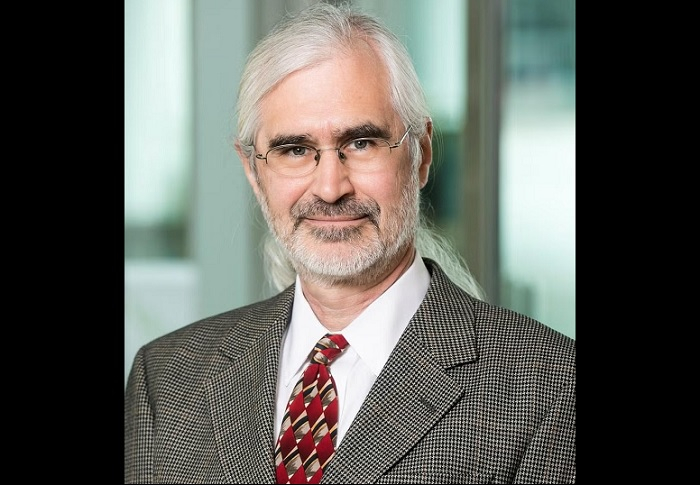
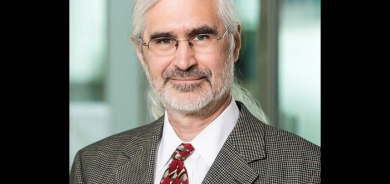
Kenneth A. Reinert is Professor of Public Policy at the School of Public Policy of George Mason University. He received a School of Public Policy Distinguished Teaching Award in 2003 and served as Director of the International Commerce and Policy Program from 2007 to 2010. He is an Associate Faculty of the Center for Emerging Market Policies. Professor Reinert received his Ph.D. in Economics from the University of Maryland and held the positions of Senior International Economist at the US International Trade Commission and Associate Professor of Economics at Kalamazoo College. He has consulted for the World Trade Organization, the World Bank, the OECD Development Centre, and the US Department of Commerce. In an exclusive interview, he answered our questions as follows:
Gulan: What, in your view, are the essential features of economic nationalism? And in its most fundamental form, what does economic nationalism reveal about people's perceptions of the connection between the economy and the country? Do people view an economy as a manifestation of national identity, dignity, and sovereignty, or is it primarily a tool for generating prosperity?
Professor Dr. Kenneth A. Reinert: In the field of economics, economic nationalism is usually associated with protectionism, state-directed industrial investment and technology development, the shunning of multilateral commitments, and zero-sum narratives that tie all of these together. But there is potentially more, most importantly ethnonationalism that defines the nation in terms of a single ethnic group identified via historical narratives that might not be fully factual. Consequently, xenophobia and immigration restrictions can also come into play. Most recently, economic nationalism has manifested in the form of techno-nationalism that undermines open innovation systems in the pursuit of relative technological advantage over rivals.
Gulan: You claim that one of the things fueling economic nationalism is "zero-sum thinking"—the notion that the prosperity of one country must unavoidably come at the expense of another. In light of the current geopolitical rivalry, supply-chain vulnerabilities, industrial overcapacity, and strategic competition with China, when will zero-sum thinking cease to be an economic fallacy and begin to make sense?
Professor Dr. Kenneth A. Reinert: In my view, zero-sum outcomes in economic relations, domestic and international, are largely (though not exclusively) positive-sum. To the extent that they are zero-sum, this is usually because country governments have created institutions that lead to these outcomes. Forced labor and barriers to business entry are examples of this possibility within domestic economies. There is a lot of research in the social sciences suggesting that there is a human tendency to reinterpret positive-sum situations as zero-sum, and that this tendency leads to worse socio-economic outcomes, including conflict. Yes, the pursuit of zero-sum policies among large national players (China, the European Union and the United States) nudges the world in the zero-sum direction, but this is a set of choices, not a preordained outcome. This is why I advocate for a reengagement with multilateral institutions that have been designed to support positive-sum engagement.
Gulan: Through tariffs, industrial policy, "Buy National" tactics, and initiatives to reshore vital industries, economic nationalism has transitioned from the political periphery into mainstream economic policy. Are we seeing the rise of a fundamentally different kind of global capitalism, or are we seeing a transient political response to globalization?
Professor Dr. Kenneth A. Reinert: Yes, economic nationalism has become mainstream and something of a default position among main national players. International economics suggests that this will prove to be costly, and it leaves out the vast majority of countries that do not have the financial resources to play the game. Importantly, counties left out are not just low- and middle-income countries but also include some small high-income countries (e.g., Switzerland). There will be fiscal constraints on industrial subsidies, some of which area already showing up in the major markets for long-term bonds, including in the United States, the United Kingdom, France, Germany and Japan. Large-scale industrials subsidy wars are expensive and cannot go on forever. This reality might lend to transience to the new economic nationalism.
Gulan: You contend that because modern production is so interwoven, economic nationalism may eventually prove to be counterproductive. However, if globalization results in overall advantages while concentrating losses in specific towns, regions, or classes, is globalization itself—or governments' inability to share its profits and pay its losers—the real issue?
Professor Dr. Kenneth A. Reinert: What is at issue here is something that international economists have been emphasizing for decades. Given the vicissitudes of global markets, there must be not only adjustment assistance but robust social safety nets that accompany open international commerce. We have pursued one policy suggestion (increased economic globalization) without the required buttressing policies. So yes, the culprit here is the sharing in “profits” (what economists call “shared growth”) and support of “losers.” But as I have recently argued in a coauthored article with Gelaye Debebe in Global Perspectives, these “losers” are actually a potential source of talent if we were to recognize the importance of inclusive, broad-based talent development, another sort of safety net. There are many policy options available to us, but we appear to lack the imagination and dedication to pursue them.
Gulan: The core of modern economic nationalism is a paradox: while nations seek more economic autonomy, technical leadership is becoming more and more dependent on global supply chains, foreign markets, data flows, money, and scientific cooperation. Can a nation truly attain "self-sufficiency" in sectors like semiconductors, AI, energy, and vital minerals, or is economic sovereignty itself turning into a myth?
Professor Dr. Kenneth A. Reinert: In my view, the idea of self-sufficiency is a mirage, what Malthus called in a different context “a beautiful phantom of the imagination.” Take the health and medical products sector as an example. Estimates suggest that there are perhaps a million such products, most of which involve some sort of global value chains (GVCs). Where would you even start? In the case of semiconductors, self-sufficiency attempts express themselves in the form of “fabs everywhere” strategies. Analysts who work in this realm consider this to be impossible. It is possible to reshore or nearshore some elements of GVCs, but self-sufficiency will remain out of reach. Country governments would do well to recognize this, and the imposition of ever higher tariffs in pursuit of these ends has been very destabilizing to business planning the world over.
Gulan: In essence, your "beyond zero sum" alternative to economic nationalism is a multilateral, rules-based system that can result in positive-sum outcomes. However, how would such system actually function in 2026? Which three organizations, regulations, or tenets would you alter first if you could start over with the global economic order?
Professor Dr. Kenneth A. Reinert: We tend to fall into the trap that certain outcomes in international relations are inevitable. This is not the case. There are no “iron laws” of international relations, despite the claims that there are. And the multilateral system has a half-century pedigree to draw on. The first step is for the United States government to allow the World Trade Organization’s dispute settlement system to function. The rest of the WTO’s membership has emphasized this too many times to count, but the United States remains immovable. But in fact, the United States has benefited from and can continue to benefit from a functioning WTO. Indeed, the WTO was largely designed to the specifications of the United States. Trade in services, intellectual property protection, and allowances for agricultural subsidies were all incorporated into the WTO to advance US interests.
The second institution that needs reengagement is the World Health Organization. The next global pandemic will inevitably emerge, and we need to be ready. Given the viruses know no borders, the global public goods nature of pandemic readiness and response is critical. Evidence of this exists in the approximately 10 million deaths caused by COVID-19, something we must not repeat.
Third, leading countries must plan more effectively for debt crises, particularly in low-income countries, where such crises can have serious impacts on health and food security. Currently, approximately 30 low-income countries are either in debt distress or at high risk of debt distress. The International Monetary Fund’s Common Framework does not appear sufficient to address this, and China’s approach to debt diverges from that of Europe and the United States. The global public good of debt restructuring is proving to be elusive and must be better addressed.
Gulan: Which scenario, ten or twenty years from now, bothers you more: a world where globalization continues but becomes more divided into rival geopolitical blocs, or one where economic nationalism flourishes and globalization significantly retreats? And what would the average person stand to gain or lose in each scenario, as opposed to governments or economists?
Professor Dr. Kenneth A. Reinert: Neither of these scenarios is ideal nor inevitable given that we have a decades-long set of multilateral institutions that proved to be relatively effective in managing international economic relations. However, to answer the question, a more divided globalization with competing blocs would probably be the better option. This has more potential to mesh with the plurilateral option under the WTO where like-minded countries agree to a set of principles on a particular issue. International economists stress the potential of open plurilateral agreements that allow other countries to join, and this would be ideal in a world of blocs. But if I might make this point one more time, recommitting to the multilateral system is the first-best option.